USDA Loan Eligible Areas Near Kansas City: Zero Down in 2027
USDA Loan Eligible Areas Near Kansas City: Zero Down in 2027
Parts of Platte, Cass, and Clay County qualify for zero-down USDA financing. Most buyers have no idea.
They hear "rural loan" and picture a farmhouse at the end of a gravel road. That's not what this is. Some USDA loan eligible areas sit 25 to 40 minutes from downtown Kansas City. We're talking real towns with schools, grocery stores, and newer subdivisions.
I'm Jason DeLong with Heartland Homes KC. I'm a Kansas City real estate agent, investor, and builder. I've built over 100 homes and flipped over 150 homes personally, so I know a thing or two about the process. I've also developed subdivisions across this metro. That gives me a different read on where USDA lines fall and why they matter.
If you want to know whether a specific address qualifies before you fall in love with it, book a quick strategy call with me. We'll check it together.
What Is a USDA Loan, in Plain English?

The program most buyers use is the USDA Section 502 Guaranteed Loan. A private lender makes the loan. The USDA backs it. That backing is why the lender can offer 100% financing.
Here's the short version:
Zero down payment on a primary residence
A 1% upfront guarantee fee, which can usually be rolled into the loan
A 0.35% annual fee, paid monthly as part of your mortgage payment
No hard cap on the loan amount; your income and debt ratios decide what you can borrow
The home must be in an eligible area and your household income must fall under the limit
Compare that to FHA, which requires 3.5% down. On a $300,000 house, that's $10,500 you don't have to bring to the table with USDA.
Who USDA Is Actually Built For
This is not a low-income-only program. The guaranteed loan is designed for moderate-income households, up to 115% of area median income. In the Kansas City metro, that covers a lot of working families. Two teachers. A nurse and an electrician. A young couple with one kid.
You also don't have to be a first-time buyer. You generally just can't already own a home that adequately meets your needs.
Where Are the USDA Loan Eligible Areas Near Kansas City?

USDA defines "rural" by population, location, and access to mortgage credit. As a general rule, towns of 10,000 people or fewer that sit outside the urban core qualify. Some larger towns can still qualify under special rules.
The practical result is an outer ring around Kansas City. The urban core is out. The edges are in.
A local review in late September 2026 ran city hall addresses from 25 metro towns through USDA's lookup tool. Kearney and Smithville to the north, Oak Grove and Odessa to the east, and Peculiar and Harrisonville to the south all landed in eligible territory. Belton, Raymore, and Grain Valley city hall addresses came back ineligible.
Here's how that breaks down in the three counties most buyers ask me about.
USDA Loan Platte County Options
Southern Platte County is mostly urbanized. Parkville, Riverside, and the KC North neighborhoods near the airport corridor generally won't qualify.
The opportunity is farther north and west. Small towns like Weston, Camden Point, Dearborn, and Edgerton, plus unincorporated acreage, are the kind of places that tend to sit inside the eligible zone. That's where you find lifestyle properties, a few acres, and room to breathe. Check every address on the official map before you write an offer.
USDA Loans in Clay County
Kearney and Smithville are the headline towns here. Both have grown fast, and both still show up as eligible at the city hall level.
Smaller communities farther out, like Lawson and Holt, are worth checking too. Liberty, Gladstone, and North Kansas City are part of the urban footprint, so plan on those being out.
USDA Loan Cass County Options
Cass County is where buyers get surprised most. Peculiar and Harrisonville landed in eligible territory in that September review. Smaller towns like Garden City, Archie, and Cleveland are worth a look as well.
Belton and Raymore are the trap. Their city hall addresses came back ineligible. But edges of town can behave differently than the center, so don't assume either way.
The Street-by-Street Problem
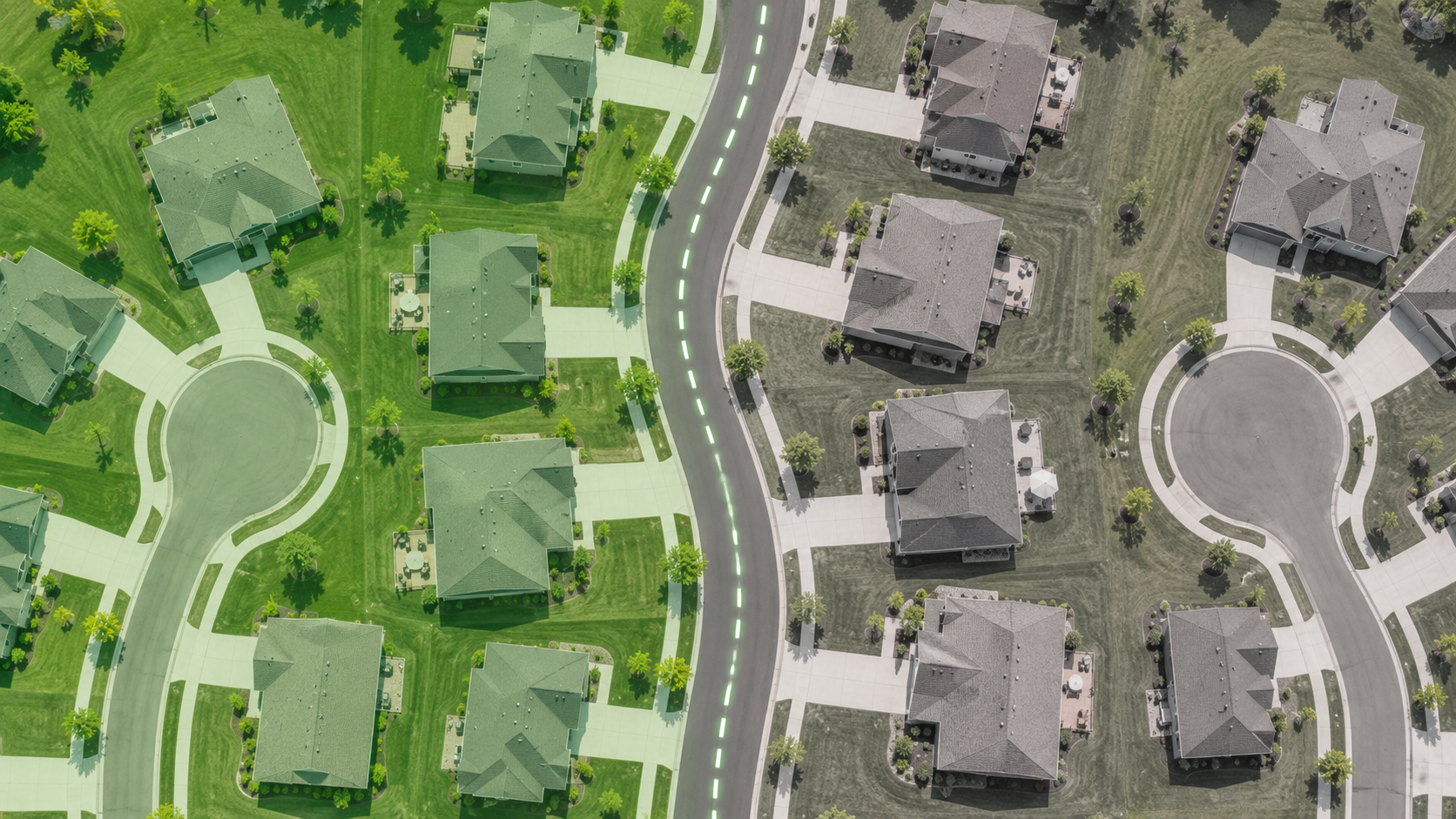
USDA boundaries don't follow subdivision lines. I've watched a boundary cut right through a development. One side qualifies. The other doesn't.
This makes sense once you've been on the builder side. Land economics push new construction outward. Developers build where lots pencil out, and that's often right where the USDA line sits. So some of the newest homes in the metro end up on the edge of eligibility.
The rule is simple. Verify the exact address, every time.
USDA Loan Income Limits 2027: What to Expect
USDA updates income limits once a year. The current limits took effect on July 13, 2026, through USDA Procedure Notice 657.
For the Kansas City, MO-KS metro area, which includes Platte, Clay, and Cass County, the current guaranteed loan limits are:
Households of 1 to 4 people: $128,100
Households of 5 to 8 people: $169,100
The Kansas City metro gets a higher limit than most of Missouri and Kansas because local wages run higher.
What about 2027? Based on the pattern, expect the next update around mid-2027. Until USDA publishes new numbers, the current limits govern. Historically, these numbers tend to move up as area incomes rise, but don't bank on a specific increase.
How USDA Counts Your Income
This is where people trip up. USDA looks at household income, not just borrower income. Every adult earning money in the home counts, even if they aren't on the loan.
The good news is that USDA uses adjusted income. Certain deductions, like allowances for dependents and qualifying childcare costs, can lower the number that gets measured against the limit. If you're close to the line, have a USDA-approved lender run the full calculation before you rule yourself out.
How to Use the USDA Eligible Map Missouri Buyers Rely On
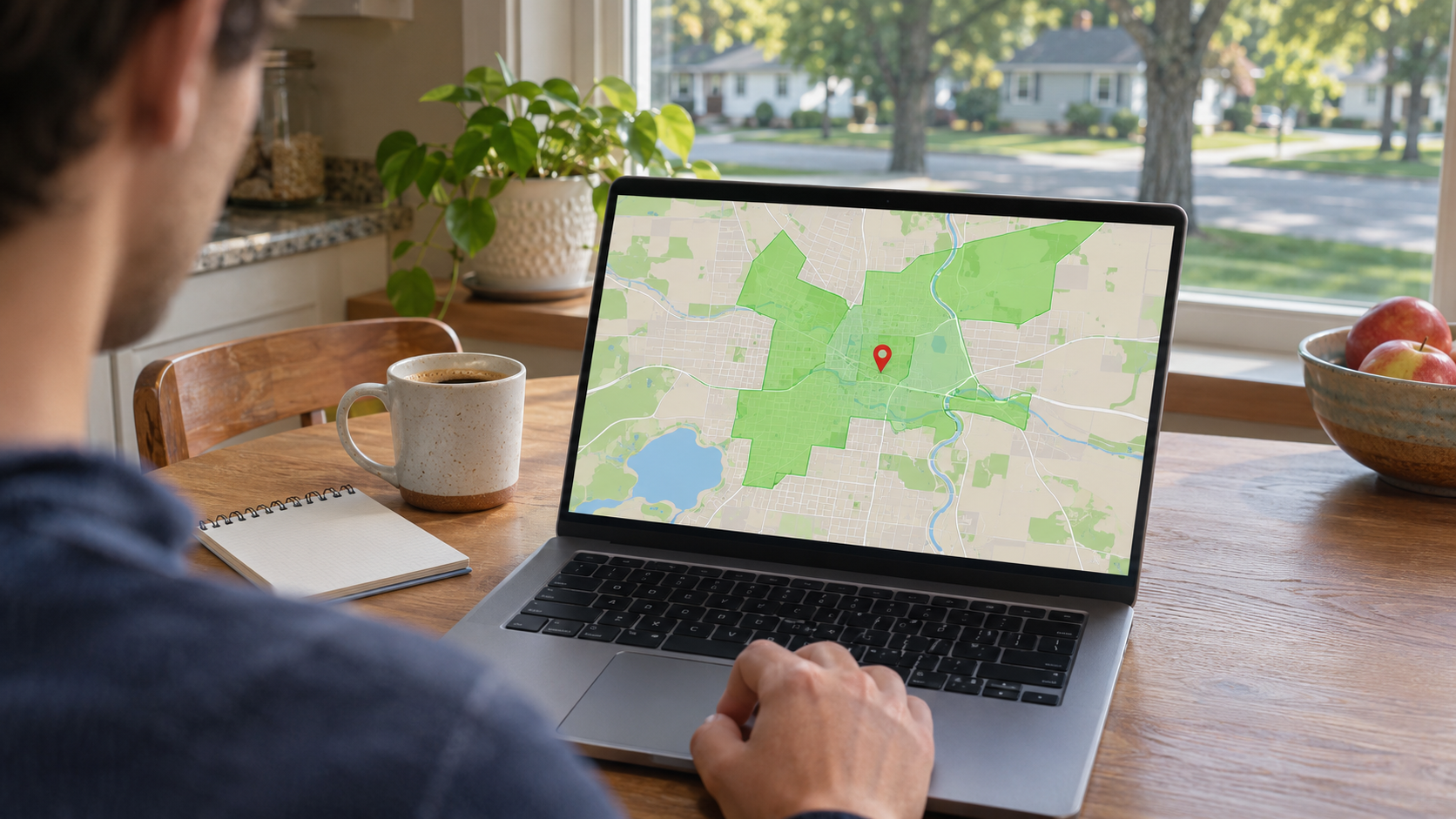
The USDA runs an official Income and Property Eligibility site. It's free and takes about two minutes.
Here's the process I walk clients through:
Go to the USDA Income and Property Eligibility site
Choose Single Family Housing Guaranteed
Select Property Eligibility and type in the exact address
If the address is eligible, run the Income Eligibility tool with your household size and income
Take both results to a USDA-approved lender for a real pre-approval
One warning. The map gets reviewed periodically, especially after each census. Missouri went through a review after the 2020 census. Areas can gain or lose eligibility, so don't rely on a screenshot from three years ago.
The Real Costs of a Zero Down Home Loan Rural Buyers Should Know
Zero down does not mean zero cash. You'll still have closing costs, an inspection, an appraisal, and prepaid items like insurance and taxes.
There are ways to close that gap. USDA allows seller concessions, and you can often finance the upfront guarantee fee into the loan.
Here's a simple example on a $300,000 home:
Upfront guarantee fee: $3,000, financed into the loan
Starting loan amount: about $303,000
Annual fee: roughly $88 per month in year one
That annual fee lasts the life of the loan. On FHA, mortgage insurance also typically sticks around when you put less than 10% down, and it costs more. So USDA usually wins that comparison.
Condition Matters More Than Buyers Think
The home has to be safe, sound, and sanitary. The appraiser will flag peeling paint, broken systems, and safety issues. A true fixer-upper usually won't make it through.
As a guy who has flipped a lot of houses, I'll be blunt. If the house needs a roof, a furnace, and a foundation repair, USDA is the wrong tool. That's a cash or renovation-loan deal.
What This Means If You're Selling in an Eligible Area

Most USDA content is written for buyers. Sellers are the ones leaving money on the table.
If your home sits in a USDA eligible area, your buyer pool is bigger than you think. A zero-down buyer can often afford the payment but not a big down payment. That's demand most listings never market to.
Here's how I'd play it:
Confirm eligibility on the official map and say so in the listing
Price with USDA buyers in mind, including room for reasonable seller concessions
Fix the items that would trip a USDA appraisal before you hit the market
Market to lenders and agents who work USDA buyers, not just the general public
That's the kind of detail baked into our Heartland Homes KC 100-Point Marketing Plan. Most agents list a house. We build demand before it hits the market.
Not sure what your home is worth to this buyer pool? Start with a free home value report.
If you're planning to sell it yourself, read our guide for selling a home for sale by owner in Kansas City, MO. USDA buyers come with extra paperwork and appraisal standards, so know what you're signing up for.
And if your house needs too much work to pass a USDA appraisal, you have options. Before you call random cash home buyers Kansas City has plenty of, see what real cash offers look like for your home. Then compare that against a Fix It and List It approach. Maximize your net, not just your price.
My Take: The Blind Spots I See Every Week
USDA is a great tool. It's not always the right one. Here's what buyers miss.
Buyers Fixate on Zero Down
Zero down is powerful. But the commute, the property taxes, and the lifetime annual fee are real too. Run the full monthly number, not just the cash-to-close number.
Buyers Don't Look Where the Value Is
Most lists of the best neighborhoods in Kansas City stop at the urban core and the big suburbs. They skip places like Kearney, Smithville, Peculiar, and Harrisonville. Those are some of the most underrated Kansas City neighborhoods for families who want space and a payment that works.
Timelines Can Run Longer
USDA loans typically go through the lender's underwriting and then a USDA review. That extra step can add time. Build a cushion into your closing date, and work with a lender who closes USDA loans regularly.
Sellers Ignore the Buyer Pool
If you're selling in an eligible area and your listing doesn't mention it, you're marketing to fewer buyers than you could be. That's a pricing and strategy problem, not a market problem.
USDA Loan FAQs for Kansas City Buyers
Are there USDA loan eligible areas near Kansas City, Missouri?
Yes. The urban core is ineligible, but much of the outer ring qualifies. Towns like Kearney, Smithville, Peculiar, Harrisonville, Oak Grove, and Odessa recently showed up as eligible. Always verify the exact address on the USDA map.
What are the USDA loan income limits for 2027 in Kansas City?
The current limits are $128,100 for households of 1 to 4 people and $169,100 for households of 5 to 8 people. These took effect July 13, 2026. USDA typically updates limits once a year, so watch for new numbers around mid-2027.
Can I get a USDA loan in Platte County or Cass County?
In many parts, yes. Northern and western Platte County and towns like Peculiar and Harrisonville in Cass County tend to qualify. Urbanized areas like Parkville, Belton, and Raymore generally don't. Check each address.
Do I have to be a first-time homebuyer to use USDA?
No. You generally can't currently own a home that adequately meets your needs, and the home must be your primary residence.
Can I use a USDA loan on new construction?
Yes, as long as the property is in an eligible area and meets USDA and lender requirements. Some of the newest subdivisions around the metro sit right on the edge of eligibility, so check early.
Ready to Find Your Zero-Down Path in Kansas City?
USDA eligibility is one of the most overlooked tools in this market. For buyers, it can mean getting into a home years sooner. For sellers in eligible areas, it can mean more buyers and a stronger net.
The key is knowing exactly where the lines fall and how to use them. That's what we do every day at Heartland Homes KC.
Whether you're buying, selling, or just trying to figure out your options, book a strategy call with me here. Bring an address. We'll run it together and map out your best move.


