
Things to Do in Kansas City Summer 2026: The Local List | Heartland Homes KC
Things to Do in Kansas City This Summer 2026: The Local's Real List
The best things to do in Kansas City in summer 2026 are the Shark Tunnel at SEA LIFE in Crown Center, the newly connected Berkley Riverfront, First Fridays in the Crossroads Arts District, and the Saturday morning River Market. What makes this summer different is access. The KC Streetcar's Riverfront Extension opened on May 18, 2026, completing a free 6.5-mile line from the Berkley Riverfront all the way to UMKC. The entire list below is now reachable without a car and without paying for parking.
Here is the part most summer guides will not tell you: the world just left town.
Kansas City hosted six FIFA World Cup matches at Arrowhead between June 16 and the quarterfinal on July 11. Hundreds of thousands of visitors came through. And now, in the back half of July, they have mostly gone home. But everything the city built to get ready for them is still here. The streetcar still runs to the river. The pavilion is still standing. The riverfront is still open. And the crowds are gone.
That is the best-kept secret of this particular summer. Kansas City spent a decade and a few billion dollars getting ready for a moment, and right now, that moment belongs to locals again.
I've built over 100 homes and flipped over 150 homes personally, so I know a thing or two about the process. I also have an architecture degree, which means I cannot walk through this city without reading it. So this is not a list of tourist stops. It is a list of the places that are genuinely worth your Saturday, plus the reason each one feels the way it does. If you want to talk about any of it, or about what it means for your street, grab a spot on my calendar here.
1. The Shark Tunnel at SEA LIFE, Crown Center
Start here, and start early. The ocean tunnel at SEA LIFE Kansas City is still, hands down, the best ninety minutes you can give a kid in this city. You stand in a curved acrylic tube while sharks and rays move over your head, and every single time, the room goes quiet.
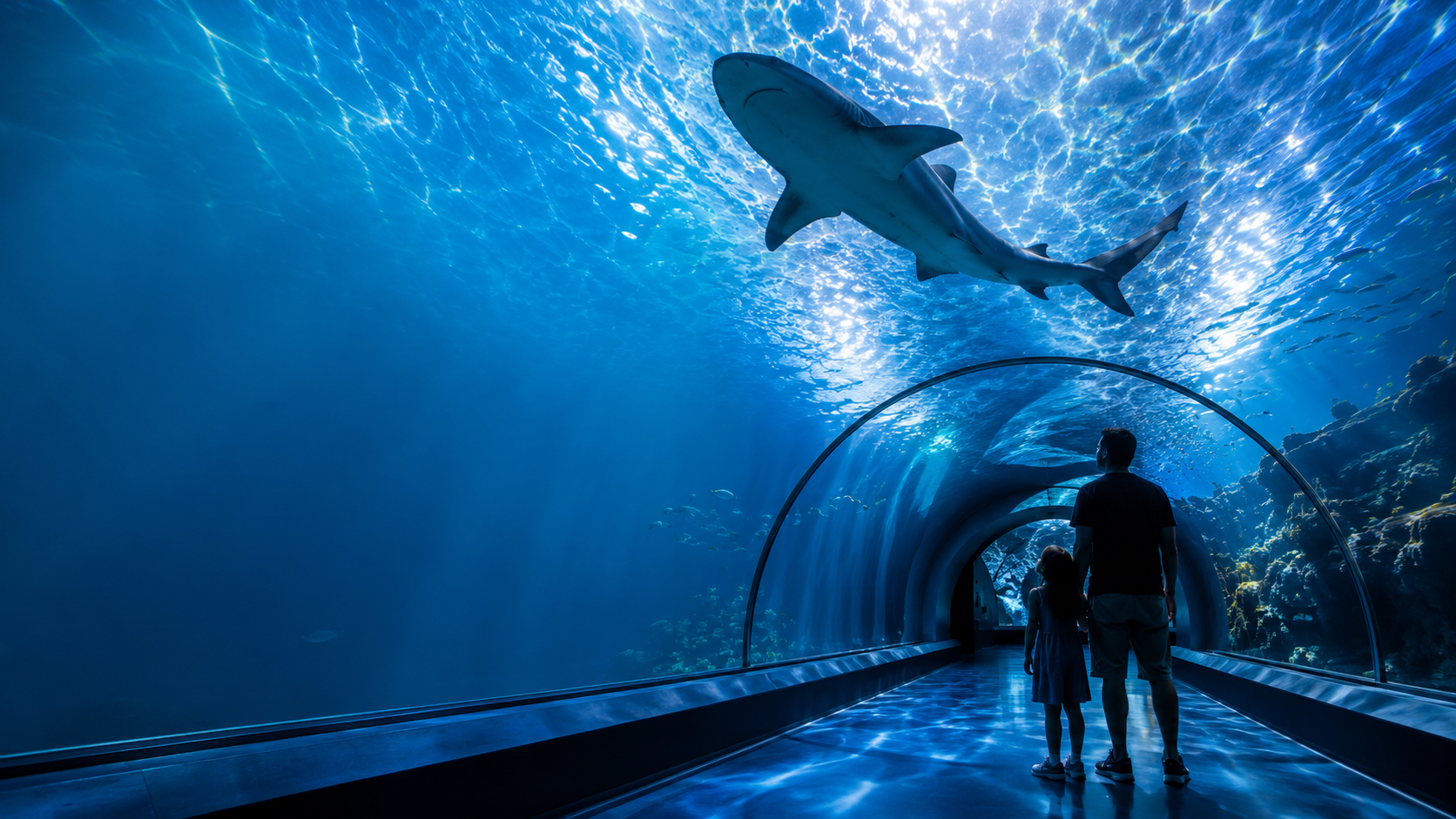
Gemini prompt: "Photorealistic interior of a curved acrylic aquarium ocean tunnel, a shark gliding overhead, blue caustic light rippling on the walls, silhouettes of a parent and child looking up in wonder, cinematic, shallow depth of field, no text."
Canva finishing: White overlay text lower-left: "Best 90 minutes in KC." Thin gold accent bar.
Here is the locals' version of this stop. Go on a weekday morning, right at opening, before the strollers arrive. Then walk out into Crown Center Square and let the kids run through the fountains. Crown Center is climate-controlled, which in a Kansas City July is not a small consideration. When it is 96 degrees and the humidity is doing what Missouri humidity does, an indoor aquarium and a shaded square are not a compromise. It is the correct call.
And take the streetcar. Union Station is a stop, and Crown Center connects by the enclosed link. You will not circle for parking once.
2. The Berkley Riverfront: Kansas City's Brand New Front Door
If you have not been down to the riverfront since last year, you have not seen it. I mean that literally. It is a different place.
On May 18, 2026, the KC Streetcar's Riverfront Extension opened. It is only seven-tenths of a mile of track, and it cost $62 million, and it changed everything about how this part of the city works. For a hundred years, the riverfront was the part of Kansas City you could see but not get to. Now you step on a free streetcar at 51st Street, and it carries you to the edge of the Missouri River.
What to actually do down there
Berkley Riverfront Park has real grass, real river views, and a trail that runs along the water. CPKC Stadium sits right there, purpose-built for the Kansas City Current, with a beer garden and a restaurant in the development around it. On a July evening when the sun drops behind the bluffs and the river goes gold, there is no better place in this city to be standing.
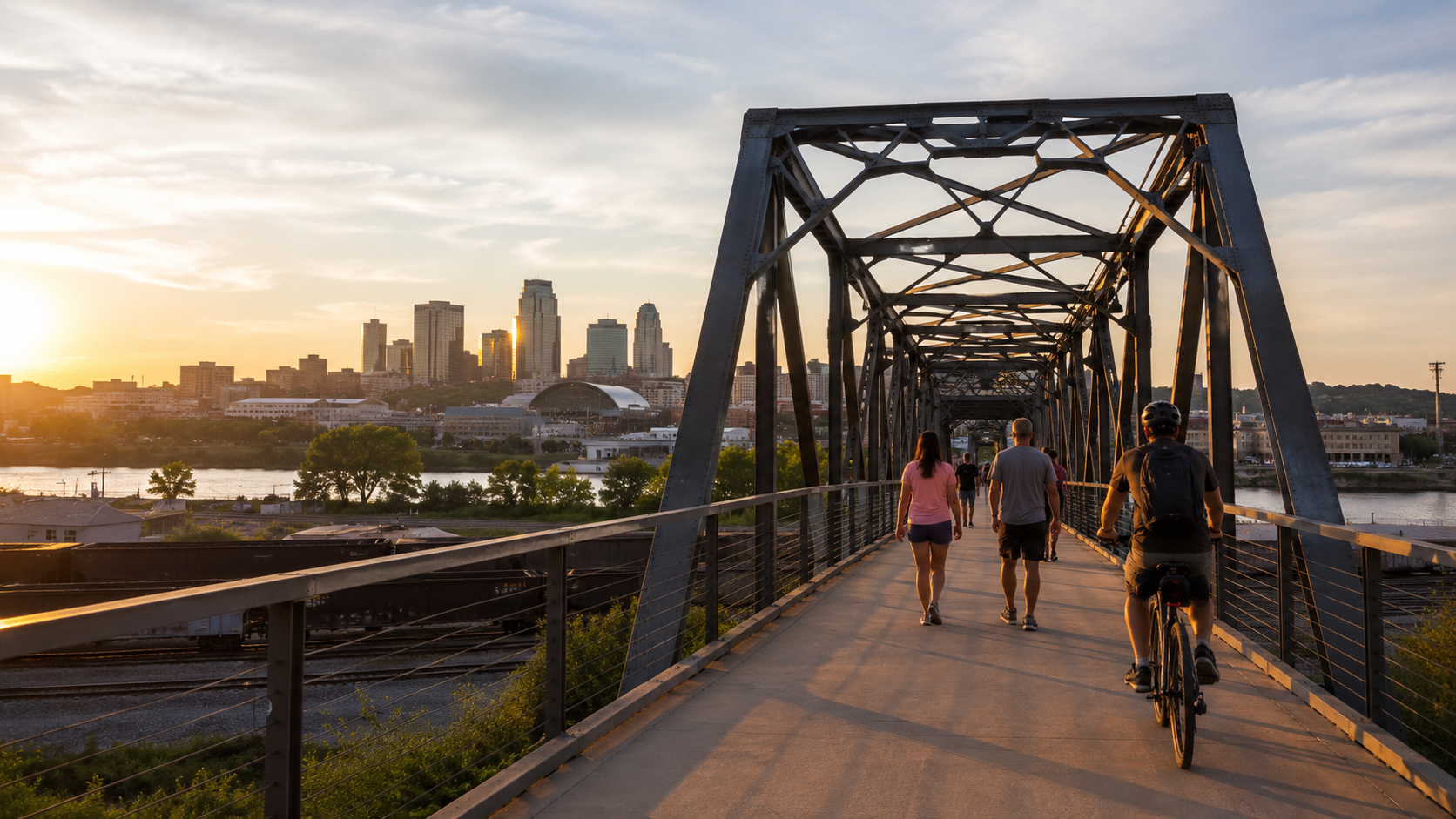
Go at golden hour. Take the streetcar up, walk the Grand Boulevard Bike and Pedestrian Bridge back toward the River Market, and you have just done the best free hour in Kansas City. That bridge is new, too, opened in early May 2026, and it exists purely so people can walk to the river safely. Somebody fought for years to make that happen.
An architect's note on the CPKC Pavilion
Stand at the Riverfront streetcar stop and look up.
The canopy over that platform is the CPKC Pavilion, and it is worth thirty seconds of your attention. The metal was designed by a local team led by Burns and McDonnell with fabrication by Zahner, both Kansas City firms, and Zahner in particular is one of the best architectural metal shops in the world. Museums fly them in. They are eight minutes from downtown.
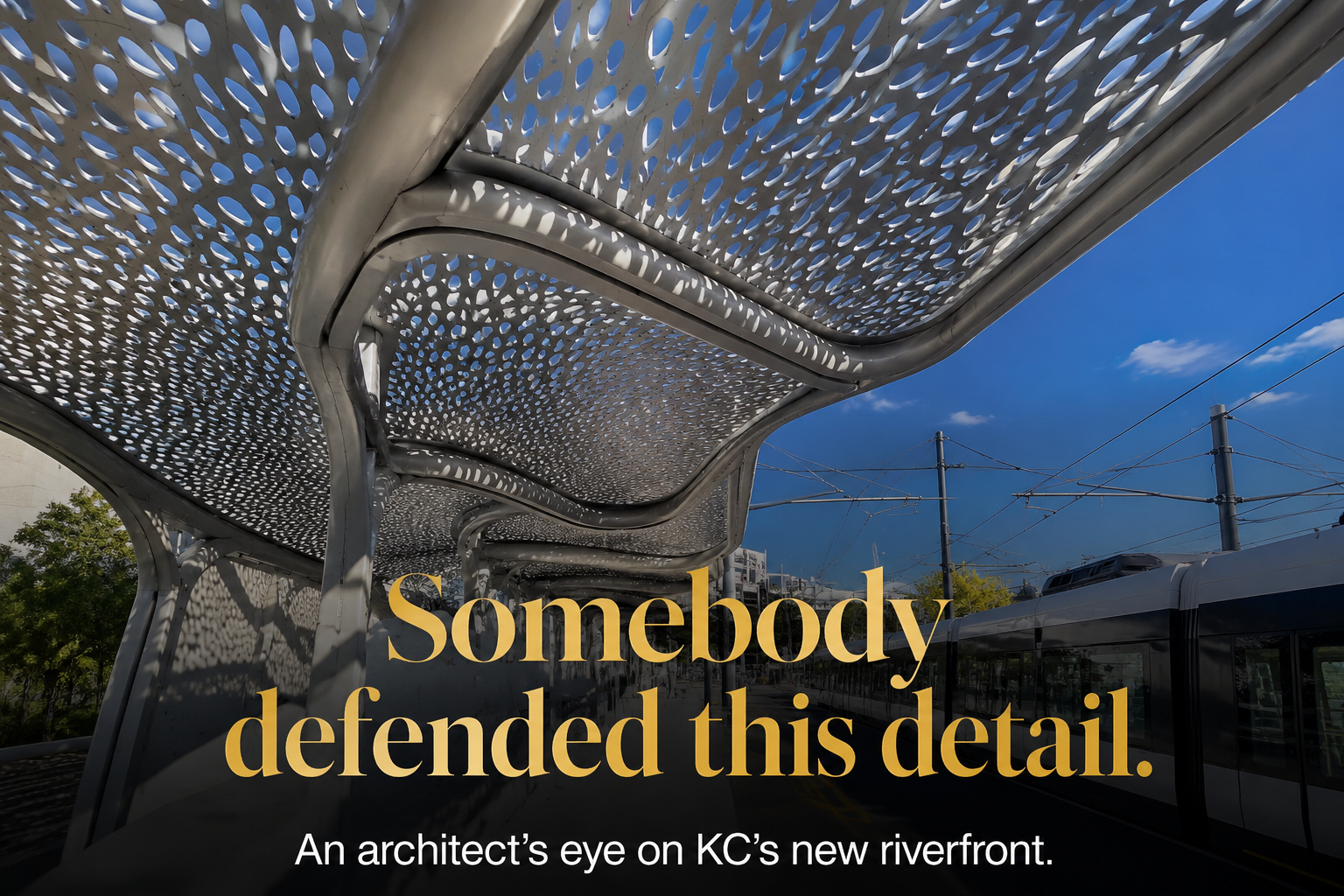
The form is meant to read like the movement of the river. And here is what I notice, having spent twenty-five years around buildings and job sites: they did not value-engineer the ending. Most transit stops are a shed roof and a bench, because the last item on a $62 million budget is the thing nobody defends. Somebody defended this one. That canopy is a city telling you it thinks you deserve a nice place to wait.
That is the whole story of Kansas City's riverfront in one small metal roof. Bring your kid, point up, and tell them the people who built that live here.
3. The Crossroads Arts District, and Why It Feels Right
First Friday is still the answer. On the first Friday of every month, the galleries open, the streets fill, the food trucks line up, and the Crossroads turns into the best street party in the Midwest. Go in August when the evenings finally soften.
But go on a normal Tuesday too, and pay attention to how it feels.
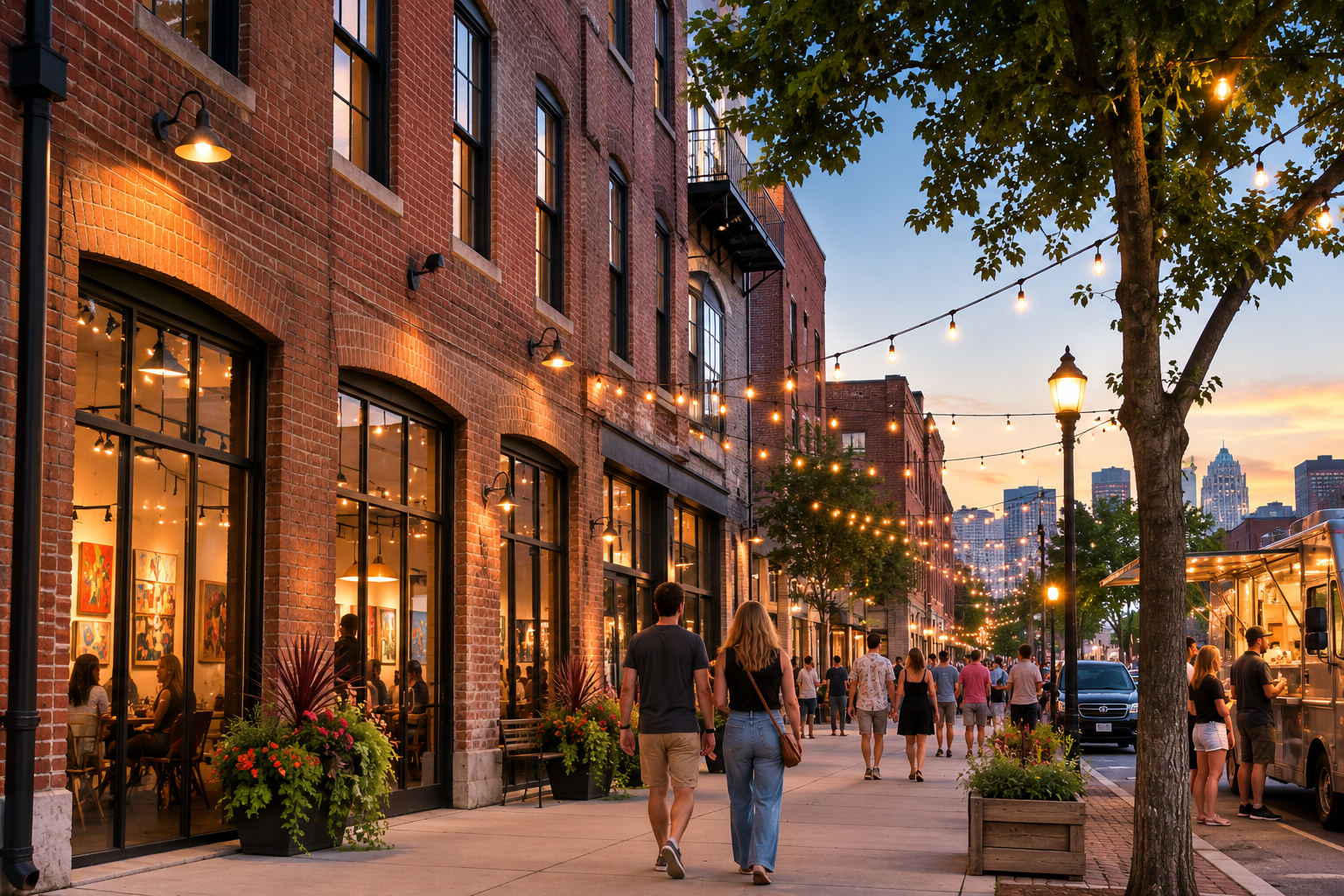
Here is something I think about constantly as a builder. The Crossroads works because of its bones. Those are old warehouse buildings, two to five stories, built right up to the sidewalk, with tall ground floors and big windows. That is a proportion that makes humans comfortable. You feel held but not crowded. Nobody planned that as charm. It is a leftover from an era when buildings had to be that shape because of daylight and freight.
Now watch what happens when new construction goes into a district like that. The good projects read the block first. They match the height, they hold the street edge, they put something interesting at eye level. The bad ones drop a suburban building downtown with a parking podium at the sidewalk, and you can feel the block die for forty feet as you walk past it.
Kansas City is getting this mostly right, and the streetcar is why. When there is a rail on Main Street, developers build to the street instead of to the parking lot. The Main Street Extension opened in October 2025 at a cost of around $350 million, running 3.5 miles south to UMKC, and ridership more than doubled after it opened. That is not a transit statistic. That is a land-use statistic. Every one of those riders is a person walking past a ground floor instead of driving past a garage door.
If you want to see how that plays out on the ground, browse what is actually selling across the metro on my Kansas City neighborhoods and featured listings page.
4. The River Market on a Saturday Morning
The oldest part of Kansas City is having its best summer in a century.
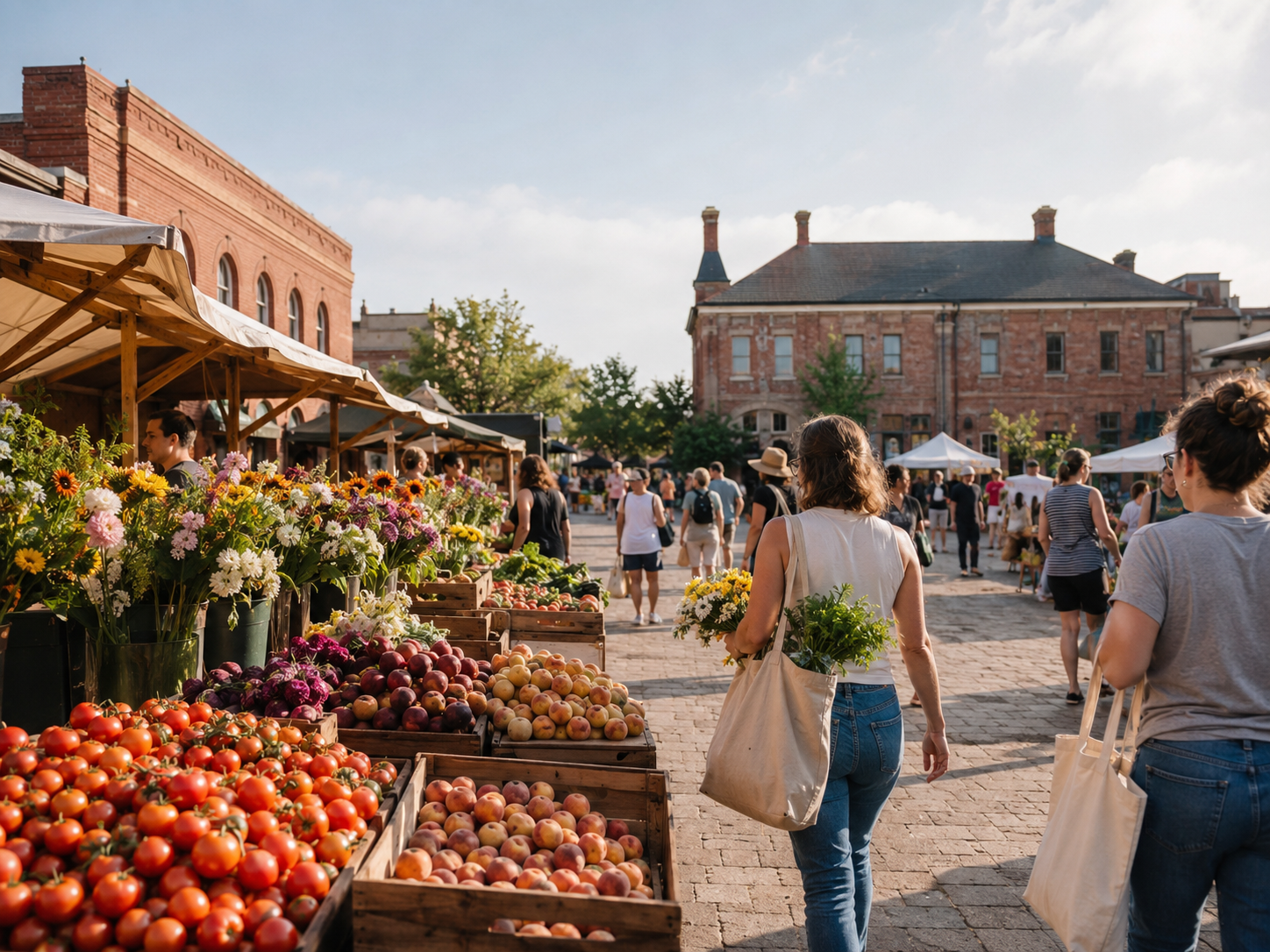
City Market on a Saturday is produce, flowers, people, and about nine languages happening at once. Get there before 9 a.m., get a coffee, do a loop with no plan, and buy the tomatoes. That is the whole activity. It has been the whole activity since 1857, and it has never needed improving.
What is new is that River Market is no longer the end of the line. It is the middle. The streetcar keeps going north to the river now, which means a Saturday can be market, then riverfront, then back down to the Crossroads for dinner, and you never touch a car.
5. Ride the Whole Thing for Free (Seriously, This Is the Move)
Let me put the summer 2026 play in one paragraph.
The KC Streetcar is free. Not discounted. Free. It now runs 6.5 miles from Berkley Riverfront Park to UMKC, connecting the River Market, downtown, the Crossroads, Union Station, Crown Center, midtown, and the Plaza area. Start at one end in the morning, work your way to the other, and get off whenever something looks good. That is a full day, it costs nothing, and it is the single best thing to do in Kansas City this summer that almost no visitor knows about.
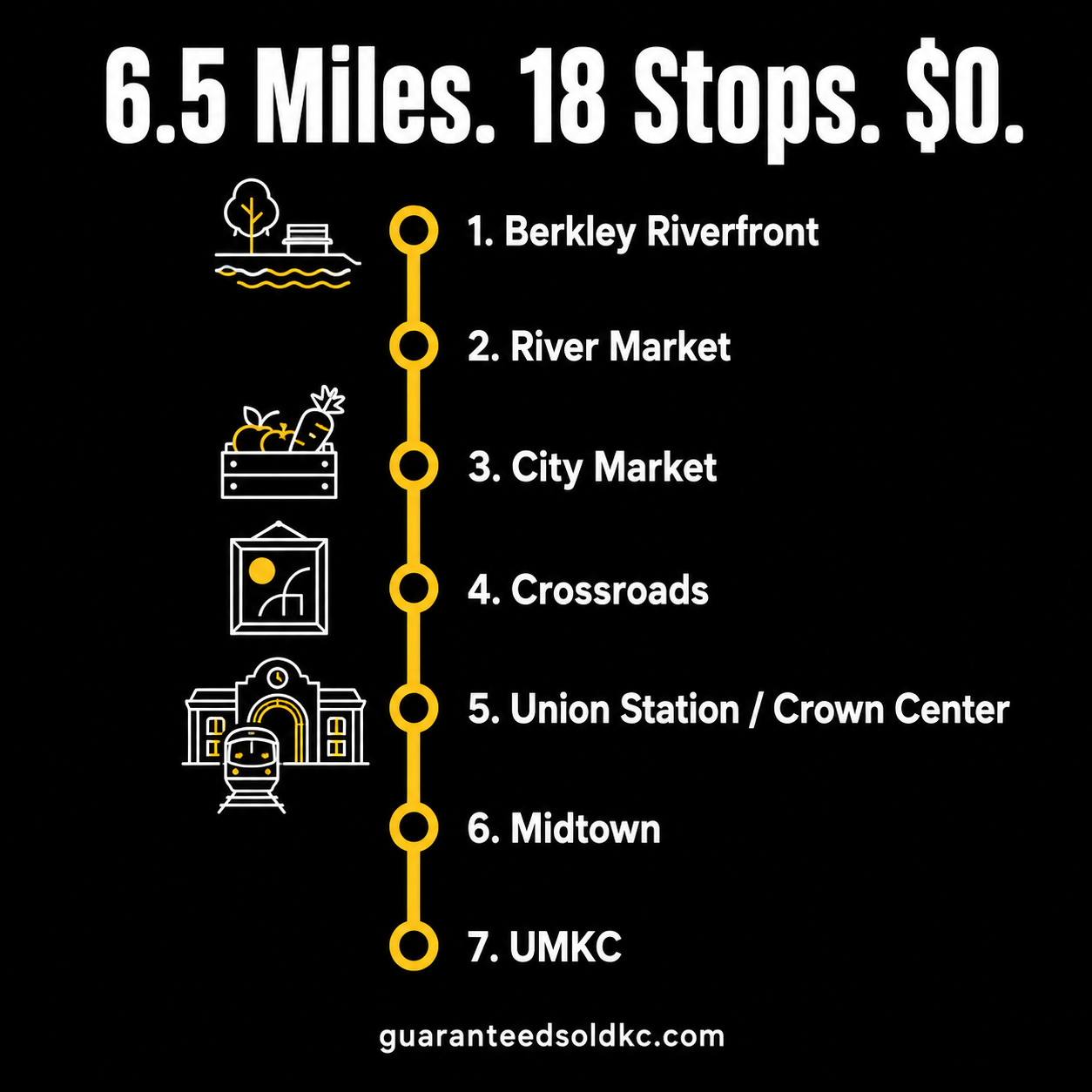
You can see the full route and the expansion history on the KC Streetcar Authority's expansion page, and the city's broader development pipeline is public at the Kansas City Planning and Development Department. The multi-billion-dollar buildout of this city's transit and residential corridors is not a rumor. It is a published plan.
What 25 Years of Building Taught Me About Why Some KC Places Feel Good
I want to tell you why I notice this stuff, because it is the only reason this list is different from the other forty you could read.
I studied architecture at Kansas State and went to work designing before I ever sold a house. Then, between roughly 2005 and 2009, I developed somewhere between 25 and 30 subdivisions across this metro. I was not writing about construction. I was pulling permits, arguing with engineers about grades, and standing in mud at 6 a.m.
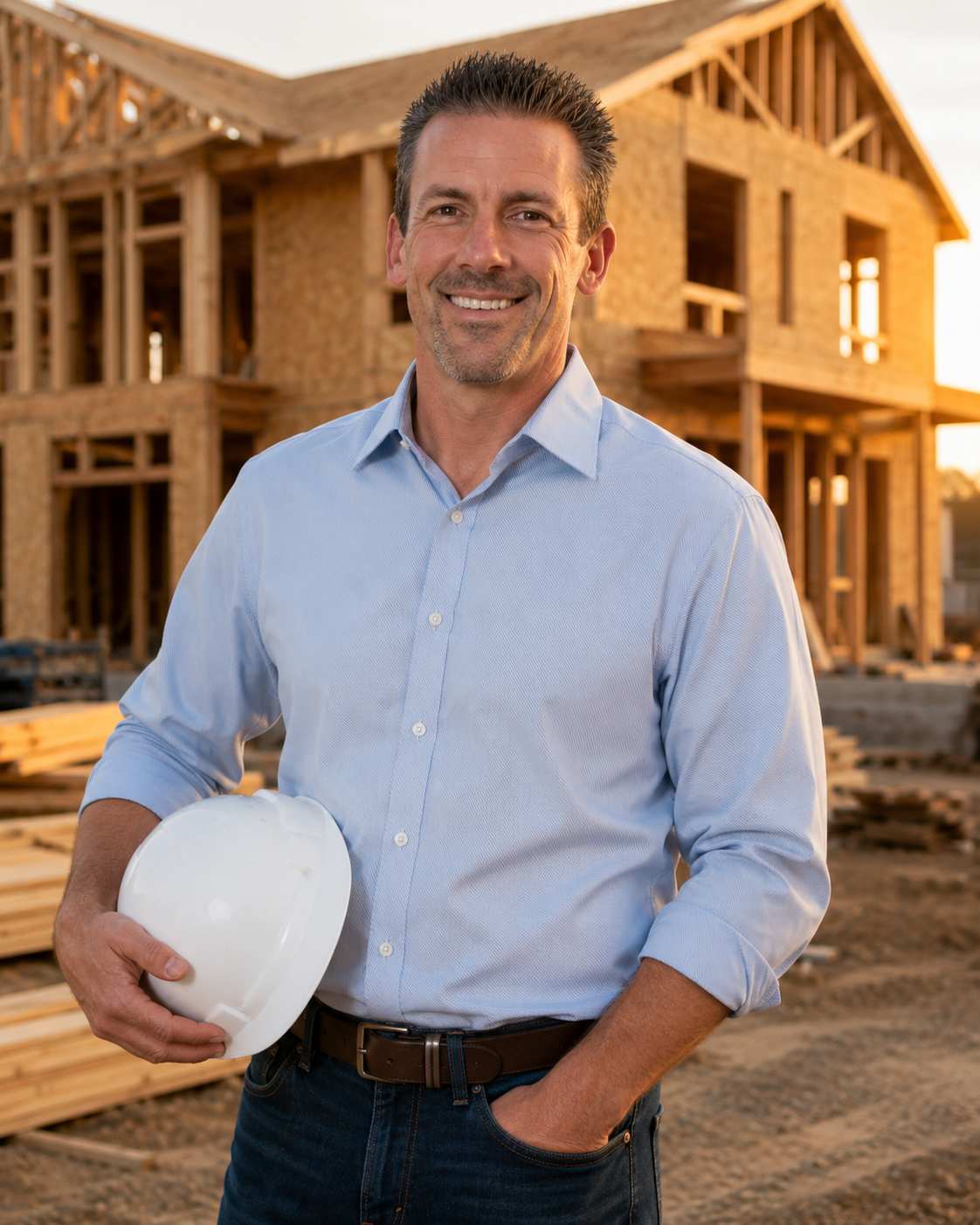
Here is the lesson that era beat into me, and I paid full price for it.
In the boom, we built what the spreadsheet said to build. Maximize lots per acre. Curved streets, cul-de-sacs, garage forward, front door tucked back behind the garage where nobody sees it. It penciled beautifully. And some of those places, twenty years later, still feel like nothing. You cannot walk anywhere. Nobody is on the sidewalk because there is no destination at the end of the sidewalk. The value held, but the life never showed up.
Meanwhile, the parts of Kansas City that were laid out in 1910 by people with no spreadsheet at all, tight blocks, front porches, a corner store you can walk to, are the parts everybody now wants to live in and pays a premium to enter.
That is not nostalgia. That is a measurable pricing fact, and it took me a hundred houses to fully believe it.
So when I walk the Crossroads or stand under that pavilion at the riverfront, I am not admiring the design. I am recognizing that somebody in this city finally learned the same lesson and is spending real money acting on it. The streetcar, the walkable riverfront, the pedestrian bridge, the ground-floor retail on Main. Those are not amenities. Those are the fundamentals that make a place hold its value for fifty years instead of twenty.
In 2025, I worked on the planning for Moss Farms, a 95-lot villa development in Platte County. Looking back, I would have pressure-tested the final home-price range and buyer demand earlier, before locking in the lot and product mix. In development, what works on a spreadsheet does not always match what buyers will absorb fastest.
What This Summer Actually Means If You Live Here
Here is the part that matters after the fun is over.
Everything above is infrastructure, and infrastructure is the slowest, most reliable driver of property value there is. A restaurant opens and closes. A streetcar line runs for sixty years. When a city spends $350 million on the Main Street Extension and $62 million connecting the riverfront, it is making a fifty-year bet on where the demand goes. Those bets do not show up in your home value this quarter. They show up over a decade, and they are already showing up along Main.
Best neighborhoods in Kansas City to be watching right now
If I am paying attention to anything this summer, it is this. The riverfront and River Market, because the streetcar just made them reachable and the development pipeline is nowhere near finished. The Crossroads, because new construction there is finally being built with the street in mind instead of the parking count. The Main Street corridor between downtown and the Plaza, because a doubled ridership number is a demand signal that developers read before Zillow does. And the Northland, because it does what nowhere else in the metro does, which is offer new construction and land at a price a normal family can actually reach.
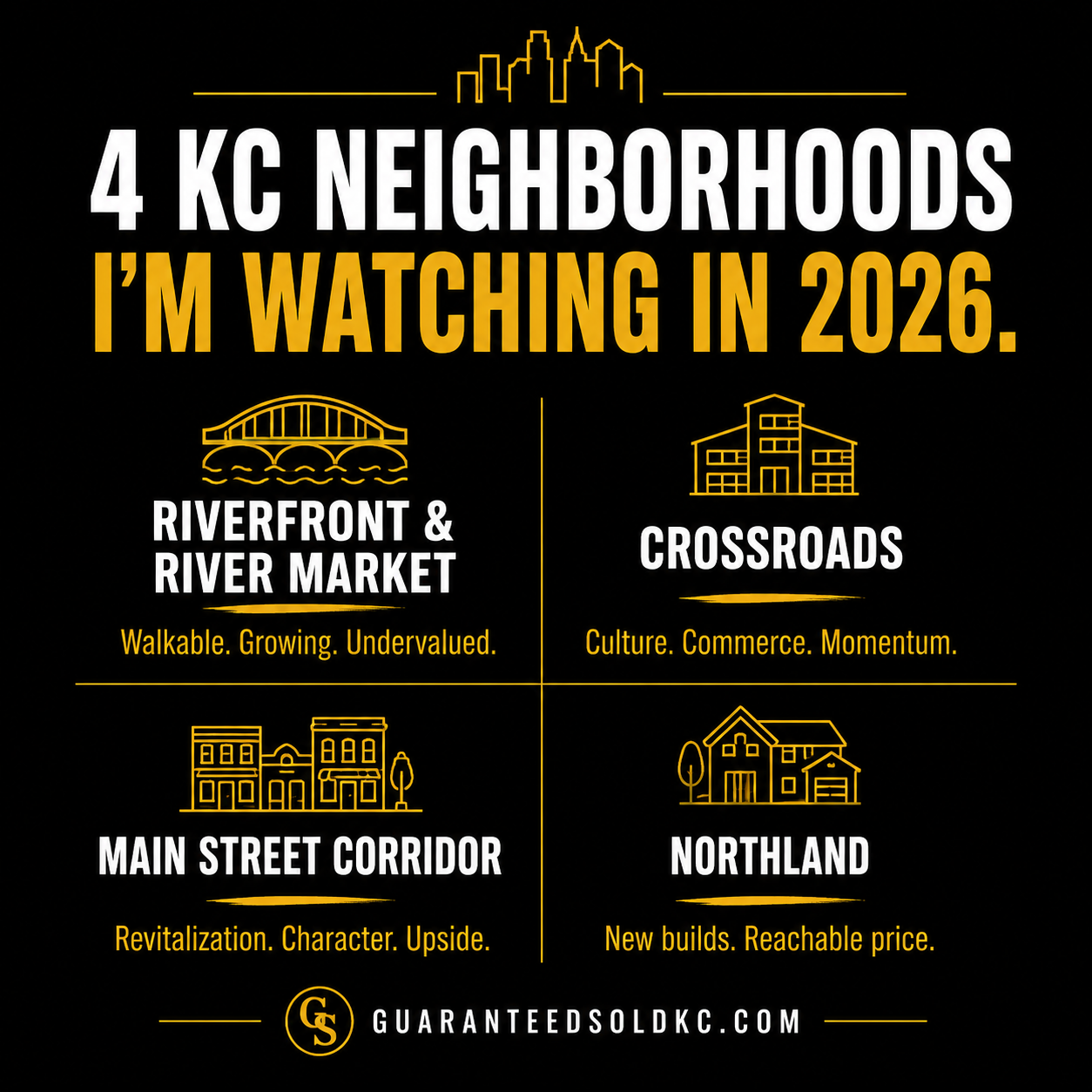
None of that means you should do anything today. It means that if you own a home in this city, the ground under it moved this year, and you probably do not know by how much. Get a real value on your home here, not a portal guess. It takes two minutes, and it is the only honest starting point for any decision you make later.
Navigating New Construction With a Kansas City Real Estate Agent
One last thing, since you made it this far.
New construction is the one part of this market where having the right Kansas City real estate agent changes the actual number, and most buyers do not realize it. You walk into a builder's model home, and the friendly person at the desk works for the builder. Not for you. Their job is to protect the builder's margin. Nobody in that room is reading the plat, checking the grade, questioning the allowance schedule, or asking what happens on the empty lot behind you.
I have been the guy behind that desk. I have built the subdivisions. I know which upgrades are worth paying for and which ones are pure margin, because I priced them. That is not a sales pitch. It is just the accident of having spent my career on both sides of the table.
Whether you are buying a new build, weighing what your current home is worth after the year this city just had, or you just want to know if any of this affects your street, book a straight-talk call here. No pressure, no pitch, just a real conversation about a city that is genuinely changing.
Go ride the streetcar first, though. It is free, the sharks are waiting, and the crowds are gone.
About Jason DeLong, Heartland Homes KC
Jason DeLong is a Kansas City real estate agent, investor, and developer with an architecture degree from Kansas State University and more than 17 years in the KC market. He has personally built over 100 homes, flipped over 150 properties, and developed dozens of subdivisions across the metro. Heartland Homes KC serves buyers and sellers across the Kansas City metro on both sides of the state line, with a seller-first approach built on options rather than one path.


