
Short Term Rental Rules Kansas City: 2026 Owner's Guide
Short Term Rental Rules in Kansas City: What Owners Need to Know in 2026
If you are running an Airbnb or VRBO in the metro, the short term rental rules Kansas City enforces are no longer a suggestion. The ordinance has teeth. Operate without the right paperwork and you can get fined for every day you stay out of compliance. I run short term rentals myself through Shore to Mountain Stays, and I sell and underwrite them for clients as a Kansas City real estate agent, so I watch this ordinance closely. Here is what is actually required before you list a single night. If you would rather skip the reading and talk it through, you can schedule a call.

Is Airbnb Legal in Kansas City?
Yes. Airbnb is legal in Kansas City, MO. But legal and unregulated are two different things. The city treats any rental of a home, a unit, or part of a unit for less than 30 consecutive days as a short term rental. That covers almost every Airbnb and VRBO listing in town. Anything 30 days or longer is a different animal and falls outside these rules.
So the real question is not whether Airbnb is legal here. It is whether your specific property qualifies, and whether you have registered it. Those are the two spots where people get burned.
The Kansas City STR Ordinance in Plain English
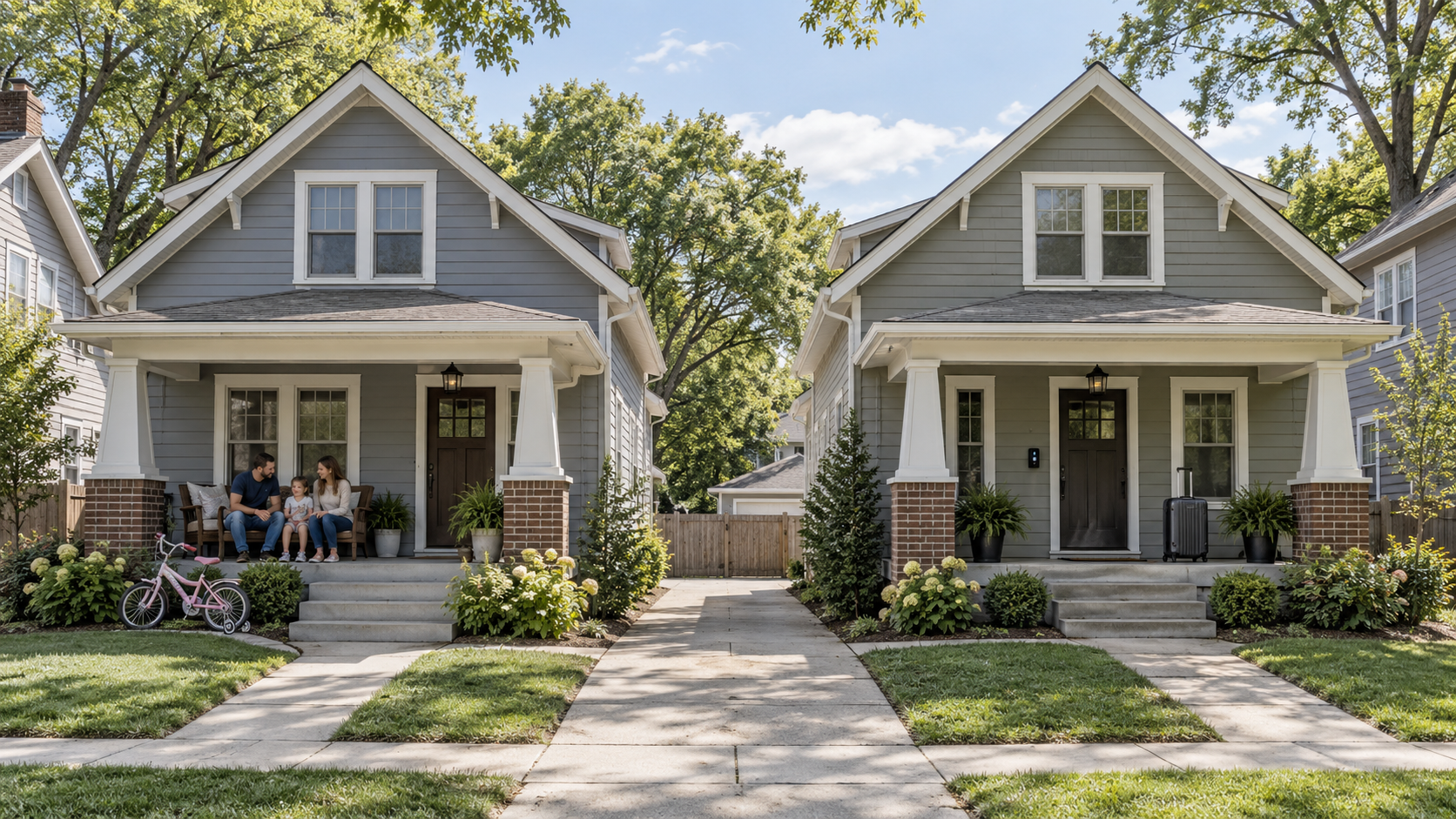
Kansas City rewrote its short term rental framework in 2023 and updated it again under Ordinance No. 250965. Enforcement now lives in the Neighborhood Services Department. That detail matters. It is the same department that handles code and property violations, so this is not a sleepy planning office anymore.
The ordinance sorts every short term rental into two buckets. Which bucket you land in decides how hard your path is.
Resident Short Term Rentals
A resident STR is a property where someone actually lives as their primary residence for at least 270 days a year. Think of an owner renting a spare room, a basement suite, or the whole house while they travel.
Resident STRs get the easy road. They are allowed in residential neighborhoods across Kansas City, and they skip the zoning and density restrictions that tie up investors. If you live in the home, you clear most of the hurdles before you start.
Non-Resident Short Term Rentals
A non-resident STR is the investor model. Nobody lives there full time. It exists to be rented. This is where the Airbnb regulations Kansas City passed get strict, and where most of my investor clients need a reality check before they buy.
Non-resident short term rentals face four hard limits:
They are banned in residentially zoned areas. They can only operate in commercially zoned areas.
The 1,000-foot rule. In a structure with one or two units, you cannot register if another non-resident STR already sits within 1,000 feet of a single-family home or duplex.
The 12.5 percent rule. In a building with three or more units, no more than 12.5 percent of the units can be short term rentals.
No city incentives. If the property takes a tax abatement or similar city incentive, it cannot register as a non-resident STR while that incentive is active.
There is one more line that trips people up. On a parcel with a single principal dwelling, you get one short term rental. Not two. Not the main house plus the guest house both listed on Airbnb.
Properties that were properly permitted before June 15, 2023 are grandfathered. They are exempt from the zoning and density limits, as long as that approval never lapsed or got revoked. If you are buying an existing STR, confirming grandfathered status is worth real money. Verify it before you close, not after.
The STR Permit Kansas City Requires

Most people call it an STR permit Kansas City or a short term rental license. The city is picky about the word. Officially it is a registration, not a permit or a license. The practical effect is the same. No valid registration, no legal operation.
Here is what the registration involves:
You apply online through the CompassKC portal.
The fee is $200 per year, per unit. Every unit needs its own application, so you cannot bundle a fourplex into one filing.
The property gets inspected.
The registration is good for one year and must be renewed. You can reregister starting 30 days before it expires.
It is not transferable. When a registered STR sells, the new owner starts their own application from scratch.
One rule people ignore until it bites them. Your advertising has to display your city issued registration number, and it is against the ordinance to advertise a rental that is not compliant. The city can find your listing as easily as a guest can.
What You Need Before You Apply
Gather these first. Missing documents are the top reason applications stall.
Proof you can possess the property, such as a warranty deed, a lease, or documented right to possess the unit.
A short term rental tax account. You register through QuickTax, set up a separate STR account for each property, then pull a tax clearance letter.
Notarized affidavits. Resident and non-resident filings each require their own set, including owner consent affidavits if you are not the owner.
For resident STRs, two proofs of primary residence. Options include vehicle registration, tax returns, voter registration, or a utility bill.
Taxes You Owe on a Kansas City STR
Registration is only half of the compliance picture. Kansas City voters approved a tax package that hits every night you rent.
A 7.5 percent Transient Boarding and Accommodation Tax on the rental.
A $3.00 per room-night occupancy fee for transient guests.
Both are filed quarterly through the city's online tax system.
You also have to keep records for the trailing year. That means rental dates, number of nights rented, and any complaints, all ready to hand over if the city asks. Treat your books like the city will one day want to see them, because that is exactly the posture the ordinance takes.
What Happens If You Skip Registration
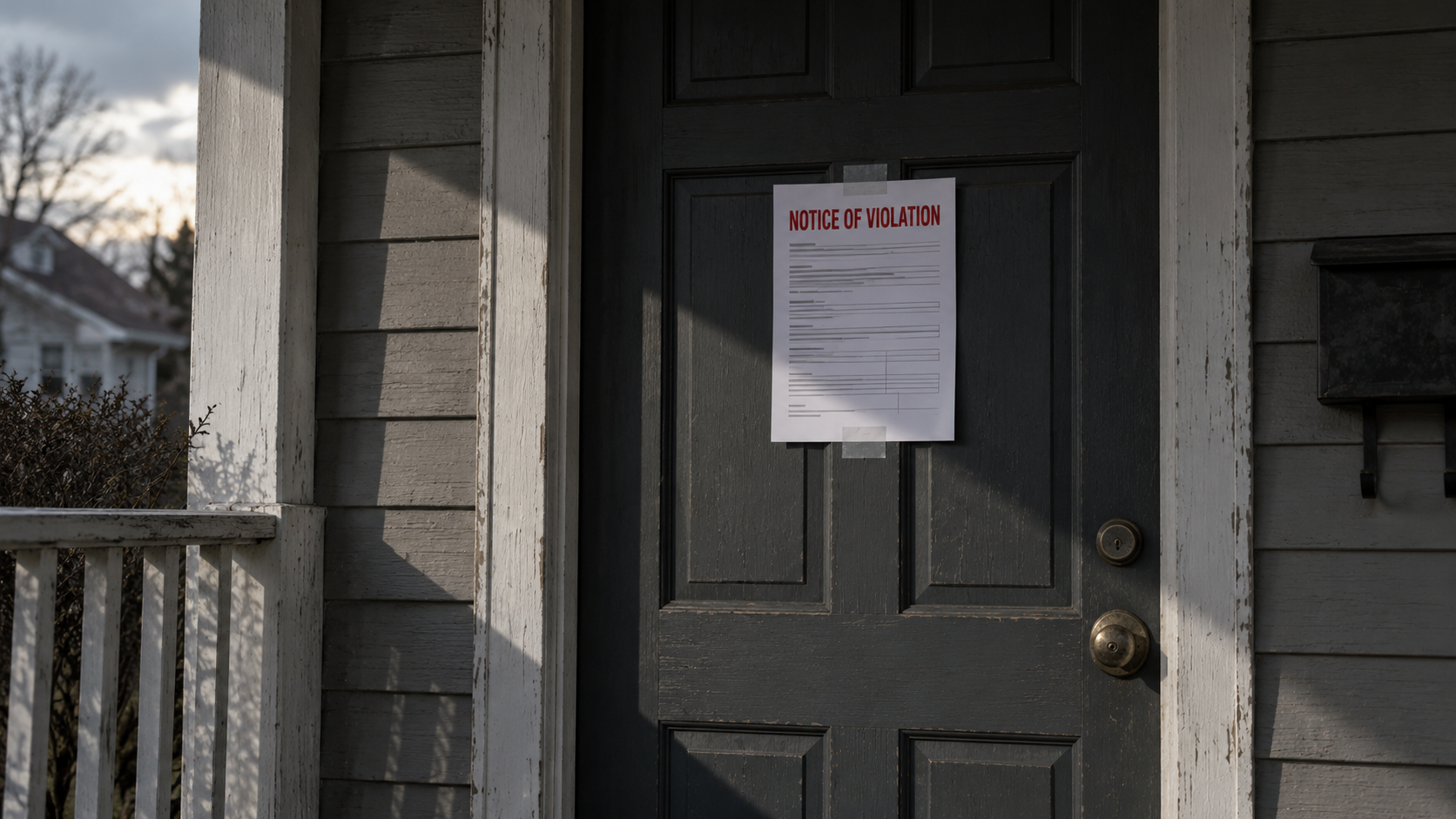
This is the part that changed. For years, enforcement was thin. A city audit found that the large majority of short term rentals had been operating without a permit at all. That gap is the reason the ordinance got rewritten with sharper teeth.
Run an unregistered STR now and you are exposed to ordinance violations and fines from $200 to $1,000. The detail that hurts is this. Each day you operate without approval can count as a separate violation. The math stacks fast. A few weeks of ignoring the rule can turn into a number that erases a whole season of bookings.
The World Cup Window Has Closed
You may have heard about a cheaper option tied to the 2026 World Cup. It was real, and it is now over. Kansas City offered a Major Event Short Term Rental Registration at $50 instead of $200, valid only from May 3 through July 31, 2026. It was a short window built around the tournament, not a permanent discount, and the city was clear that it was not loosening eligibility for the event. With that window closed, the standard registration and the standard rules are what apply for the rest of 2026.
How These Rules Change Your Investment Math

Here is where my architecture and investor background earns its keep. The ordinance quietly reshapes which deals actually pencil.
If you want a non-resident STR, you are shopping commercial zoning, or you are buying something already grandfathered. That narrows the field, and it changes price. A grandfathered, cash-flowing STR is worth a premium over a lookalike house that would have to fight the zoning and density rules to ever get registered. Two nearly identical properties can carry very different values based on one registration status.
For new buyers, run the compliance check before you underwrite the deal, not after. Confirm the zoning. Confirm nothing else inside 1,000 feet blocks you. Confirm no city incentive sits on the parcel. Then build the $200 registration, the inspection, and the 7.5 percent tax into your numbers from day one. A deal that looks great at a projected 12 percent return can look very different once you model it honestly against the ordinance.
If your STR plan does not survive the rules, you still have options. Some of the best neighborhoods in Kansas City perform better as long-term or mid-term rentals than as nightly stays once you factor in the restrictions. If you are weighing a market entry, browsing current listings across Kansas City neighborhoods is a smart first move, and knowing your property's real value tells you whether to hold, convert, or sell.
And if the ordinance killed the plan and you just want out cleanly, that is a conversation too. We can put a straight cash offer in front of you. For owners searching for cash home buyers Kansas City wide, that is often the cleanest exit when a property no longer fits the strategy.
Buying or Selling a Short Term Rental in KC? Let's Talk Strategy

The short term rental rules Kansas City enforces are not a reason to quit. They are a reason to be precise. The owners who win here register correctly, price for the real rules, and know their exit before they need it.
At Heartland Homes KC, we live in this market as both agents and operators. If you are buying an STR, I will pressure test the compliance before you sign. If you are selling one, our 100+ point marketing plan makes sure buyers actually see the grandfathered value you built. Either way, schedule a call and let's map your next move.
A Quick Note on Accuracy
Ordinances change, fee amounts get adjusted, and your specific property may have quirks I cannot see from here. This is a practical guide, not legal advice. Before you list, confirm the current requirements directly with the City of Kansas City, and for anything gray, loop in an attorney. Getting it right up front is a lot cheaper than a stack of daily fines.


