
Selling a House That Needs Repairs in Kansas City: What It Costs
Selling a House That Needs Major Repairs in Kansas City
Foundation, roof, mold, or hoarding. I've bought all four. Here's what they actually cost you at sale.
I'm Jason DeLong with Heartland Homes KC. I've built over 100 homes and flipped over 150 homes personally, so I know a thing or two about the process. I also have an architecture degree from Kansas State. That means when I walk into a house with a cracked basement wall or a sagging roofline, I'm not guessing. I'm pricing it.
Here's the truth most sellers never hear. Selling a house that needs repairs in Kansas City is not a question of if. Almost every house sells. The real question is how much of the problem the buyer makes you pay for, and whether that number is fair.
This guide breaks down the four big repair categories I see most often. You'll learn what each one really costs to fix in the KC metro, what buyers actually deduct for it, and which selling path puts the most money in your pocket.
If you'd rather talk through your specific house, you can schedule a call with me here. No pressure, just numbers.
The Real Cost of a Repair Is Not the Contractor's Bid
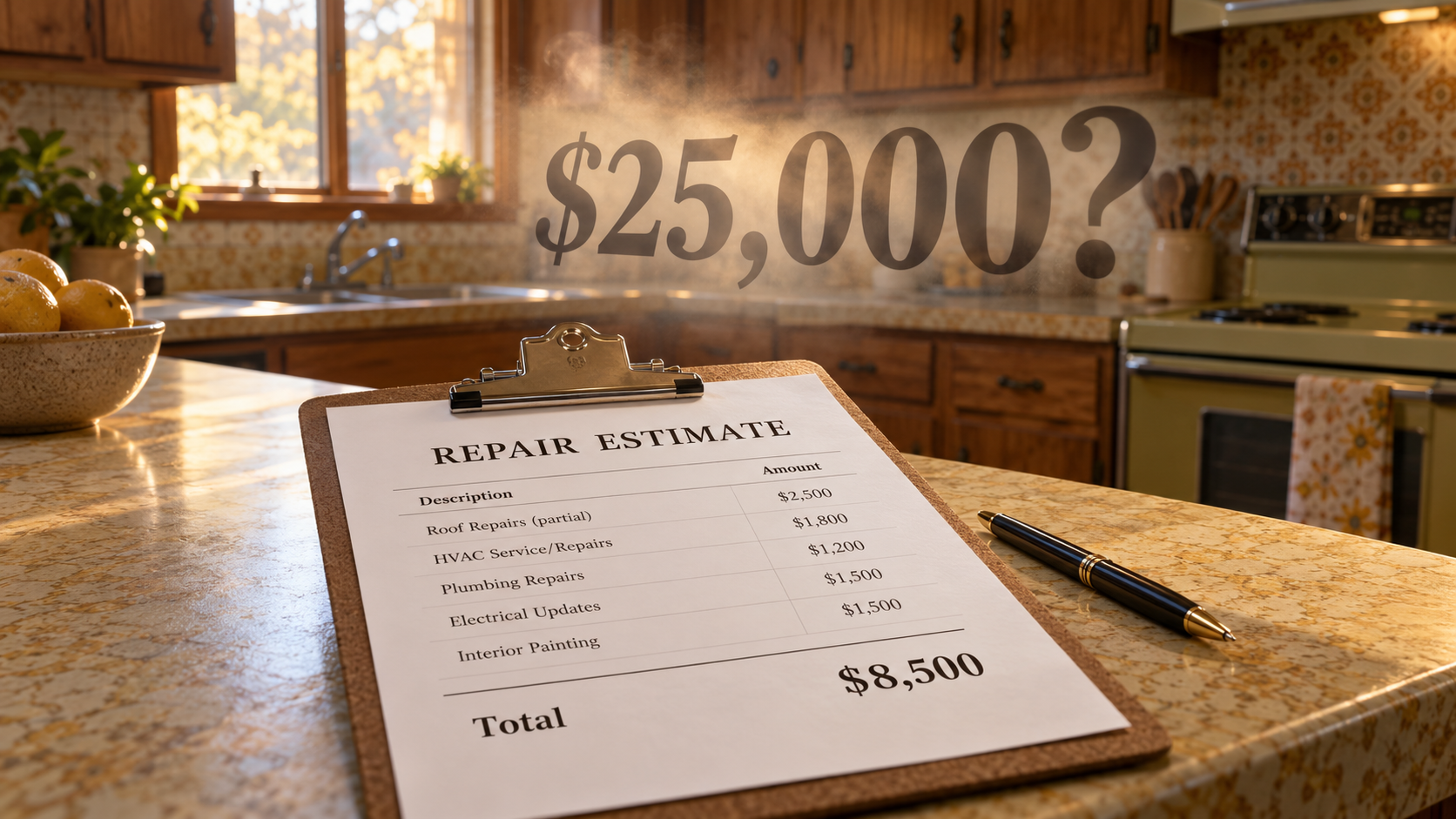
When a buyer finds a major defect, they don't deduct the repair estimate. They deduct the repair estimate plus their fear.
Think of it as the fear premium. A $12,000 roof rarely costs a seller just $12,000 at the negotiating table. By the time a buyer adds a cushion for surprises, their time, and the hassle, that number can easily grow to $18,000 or $20,000.
That's why selling a house that needs repairs takes strategy, not just a price cut. Three things drive what you actually lose:
The size of the repair. A $3,000 fix and a $30,000 fix attract very different buyers.
The uncertainty. Buyers pay more for problems they can measure. They punish problems they can't.
Who your buyer is. A first-time buyer with an FHA loan and an investor with cash see the same crack completely differently.
Your job is to shrink the uncertainty and match the house to the right buyer. Let's walk through how that plays out with each type of damage.
How to Sell a House With Foundation Issues in Kansas City
Foundation problems scare buyers more than anything else on this list. They also tend to be the most misunderstood.
Kansas City sits on expansive clay soil. It swells when it's wet and shrinks when it's dry. Most homes here also have basements, so movement shows up as bowing walls, stair-step cracks, and doors that won't close. It's one of the most common issues in older Kansas City homes.
What foundation repair costs in KC
Missouri foundation repairs average around $8,600, with most jobs falling between roughly $4,200 and $13,000. Major structural work with piers can run past $25,000. A simple crack seal can be a few hundred dollars. A bowed wall that needs wall anchors or a rebuild is a completely different animal.
What buyers deduct for it
This is where sellers lose the most money. Without a professional evaluation, the buyer assumes the worst case. A $9,000 pier job turns into a $30,000 price objection.
Foundation issues also kill financing. FHA and VA appraisers often flag structural movement. That can knock a big chunk of your buyer pool out before they ever make an offer.
My advice if you need to sell a house with foundation issues
Get a structural engineer's report first. It typically costs a few hundred dollars. It turns an unknown fear into a known number.
Get a repair bid from a reputable foundation company. Many offer transferable warranties, which buyers love.
Decide if the repair adds more than it costs. Sometimes fixing it nets you more. Sometimes a cash buyer is the cleaner path.
As a builder, I'll tell you this plainly. Most foundation issues in Kansas City are fixable. The ones that hurt sellers are the ones nobody bothered to measure.
My House Needs a New Roof. Can I Sell It?
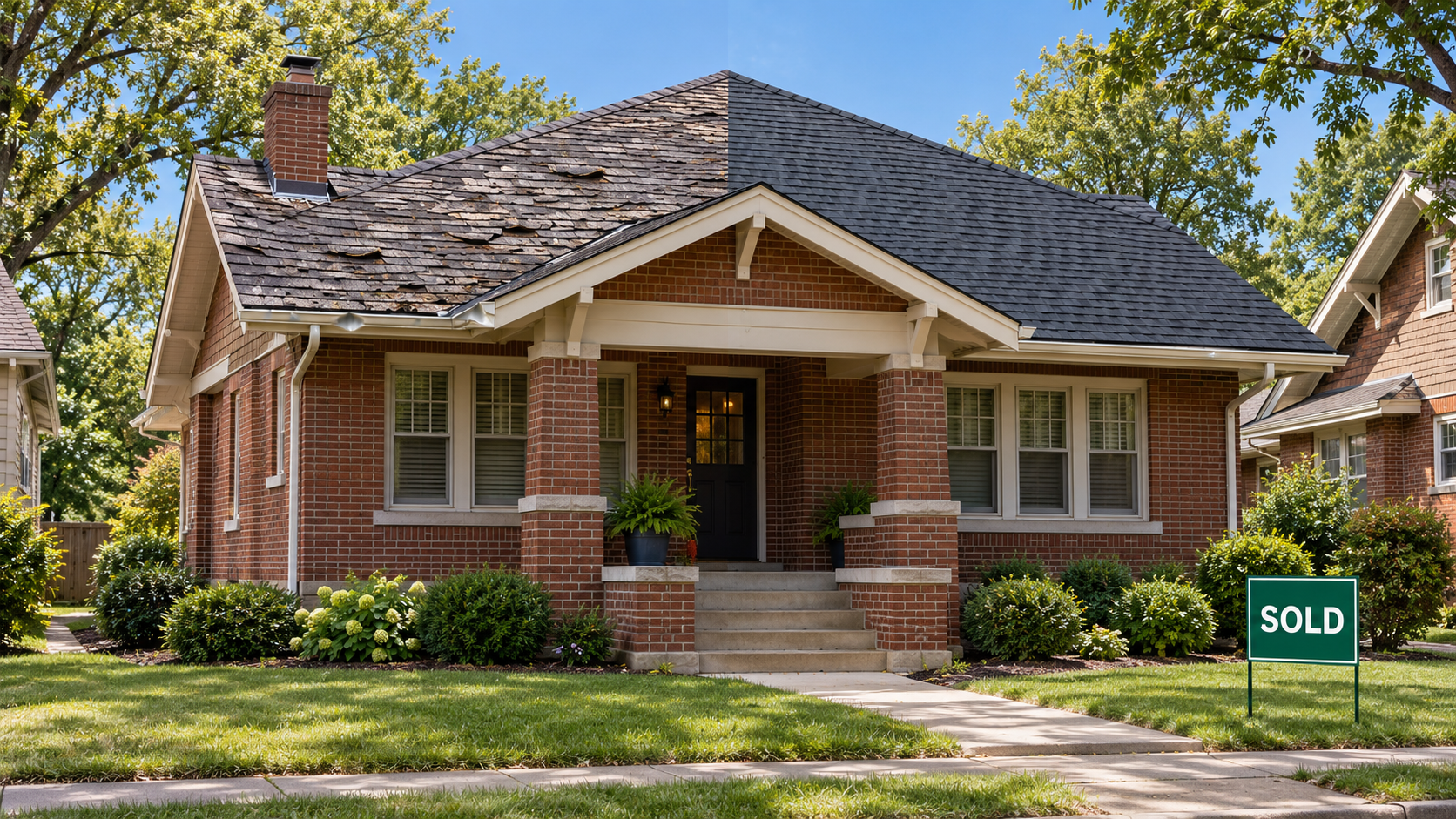
Yes. And of the four problems in this guide, a roof is usually the easiest to solve.
Roofs are predictable. Buyers understand them. Contractors can bid them in a day. That makes the fear premium smaller than it is for foundation or mold.
What a roof replacement costs in Kansas City
A full asphalt shingle replacement on a typical 2,000 square foot roof in Kansas City runs roughly $10,500 to $14,000. Expect surprises once the old shingles come off. Rotted decking is common, and each sheet adds cost.
How a bad roof affects your sale
Financing. FHA and VA loans often require a roof with remaining life. A worn-out roof can stop a deal at appraisal.
Insurance. Many buyers can't get affordable coverage on an old roof. That pushes them to walk.
Perception. Water stains on ceilings make buyers wonder what else they can't see.
Should you replace the roof before selling?
Often, yes. A new roof is one of the few repairs that buyers notice and value. It also opens up every loan type.
KC hail is also worth a look. If your roof has storm damage, check your homeowner's policy before you assume you're paying out of pocket.
If cash is tight, this is exactly what our Fix It & List It program was built for. We handle the roof with no upfront cost to you, so you sell with the upgrade instead of the objection.
Selling a House With Mold
Mold is the most emotional repair on this list. The word alone makes buyers think about their kids' health, not their budget.
The good news is that mold is almost always a symptom. The real problem is water. Fix the moisture source, remediate properly, and mold becomes a solved problem.
What mold remediation costs in Kansas City
Small, contained areas can be handled for a few thousand dollars. Larger jobs in the KC area often price out at roughly $10 to $20 per square foot. Whole-house remediation can reach $10,000 to $30,000 when walls, insulation, and HVAC are involved.
Why mold costs more at sale than it does to fix
Mold has the biggest fear premium of the four. Buyers can't see behind the drywall, so they price in the worst case. Some won't even tour the house.
Here's what shrinks that fear:
Find and fix the water source first. A leaking roof, poor grading, or a failed sump pump. Otherwise the mold comes back.
Use a licensed remediation company. Keep the scope of work and invoices.
Get clearance testing. A post-remediation report turns "there was mold" into "there was mold, and here's proof it's gone."
That paper trail is worth real money. It's the difference between a buyer walking away and a buyer making an offer.
Hoarder House Sale in Kansas City

A hoarder house is different from the other three. The problem usually isn't one repair. It's that nobody can see the house at all.
These sales almost always come with a story. An estate after a parent passes. A family member who needs to move into care. Adult kids living two states away trying to handle it all. That's a lot of weight on top of a real estate transaction.
What a hoarder house really costs you
The cleanout is only the first layer. Costs scale with volume, and a full-house job can mean multiple dumpsters and a crew for days. Then come the hidden costs:
Unknown damage underneath. Stacked items hide leaks, rot, pests, and flooring damage.
Odor and sanitation. Some homes need professional cleaning before anyone can safely walk through.
Time. Every month the house sits, you're paying taxes, insurance, and utilities.
Your options for a hoarder house
You can clear it, clean it, and list it. That usually maximizes price, but it takes time and money up front.
Or you can sell it exactly as it sits. Investors and cash home buyers in Kansas City buy hoarder houses regularly. You take what you want and leave the rest.
There's no wrong answer here. The right one depends on your timeline, your budget, and how much energy your family has left. I'll show you both numbers side by side so you can decide.
Can You Sell a Damaged House As Is in Missouri?
Yes. But "as is" does not mean "say nothing."
Missouri doesn't have a statute forcing every seller to fill out the standard disclosure form. In practice, though, most buyers and their agents insist on it. Missouri's standard purchase contract expects a completed Seller's Disclosure Statement shortly after contract acceptance.
More important, you can't hide a known defect. If you know the basement leaks or the foundation was patched, and you conceal it, you're opening yourself up to a lawsuit after closing.
Here's how I coach sellers to handle it:
Disclose what you know. Honesty protects you and builds buyer trust.
Attach reports and receipts. Engineer letters, remediation clearances, and warranties all reduce fear.
Remember lead paint rules. Homes built before 1978 require a federal lead-based paint disclosure.
Talk to a real estate attorney if you're unsure about a specific issue.
Selling a damaged house as is works best when the buyer knows exactly what they're getting. Transparency doesn't lower your price. Surprises do.
4 Ways to Sell a House That Needs Repairs in Kansas City

Most agents give you one option: list it and hope. Most cash home buyers in Kansas City give you one option too: their number. At Heartland Homes KC, we lay out several paths side by side so you can pick the one that nets you the most.
1. Take a cash offer as is
This is the fastest, simplest path. No repairs, no showings, no cleanout. Our Cash Offers+ program gives you a market-value cash offer today and can close in 7 to 14 days. In some cases, you may even keep part of the upside.
Best for: hoarder houses, major foundation problems, estates, and sellers on a tight timeline. You can request your cash offers here.
2. Fix It & List It
We make the repairs that matter most, with no upfront cost to you. Then we list the house to retail buyers at full market value.
Best for: roofs, cosmetic damage, and contained mold where the repair adds more value than it costs.
3. List it as is on the open market
You list with full disclosure and let the market price the problem. With the right marketing, you can attract both investors and handy retail buyers at once. That competition protects your price.
This is where our 100-Point Marketing Plan earns its keep. Pre-market buzz, honest pricing tiers, and targeted investor outreach turn a "problem house" into a competitive one.
4. Repair it yourself, then list
This can produce the highest sale price. It also carries the most risk. Contractor delays, change orders, and holding costs eat into your net fast. I only recommend this if you have the cash, the time, and a reliable crew.
Not sure where your house lands? Start with a free home value estimate. Then we'll compare your net under each option.
How Investors Actually Price Your House

I analyze 10 to 12 deals every week. Here's the exact formula most investors use. Knowing it puts you on equal footing at the table.
Maximum Allowable Offer (MAO) = 70% of After Repair Value minus repairs
The After Repair Value (ARV) is what the house would sell for fully fixed. The 30% gap covers the investor's holding costs, selling costs, and profit.
A simple example
Say your house would be worth $250,000 fully renovated. It needs about $40,000 in work, including a roof and some foundation repair.
70% of $250,000 is $175,000
Subtract $40,000 in repairs
The investor's max offer is about $135,000
Now compare that to Fix It & List It. Sell at $250,000, take out the same $40,000 in repairs, and you're looking at roughly $210,000 before closing costs.
That's a gap of about $75,000. Sometimes speed and certainty are worth that gap. Often they're not. You should see both numbers before you decide.
Why location changes everything
ARV depends heavily on where the house sits. The same repair bill lands very differently in the Northland, Johnson County, or an urban core neighborhood. Browse our featured listings across Kansas City neighborhoods to see how the best neighborhoods in Kansas City compare on price.
Frequently Asked Questions
Can I sell my house in Kansas City if it needs major repairs?
Yes. You can sell to a cash buyer as is, list it as is with full disclosure, or make key repairs before listing. The best choice depends on the repair type, your timeline, and your bottom line.
Who buys houses for cash in Kansas City without repairs?
Investors, flippers, and cash home buying programs all buy houses in any condition. Compare more than one offer. Cash offers can vary by tens of thousands of dollars on the same house.
Is it better to fix a roof or sell as is?
Usually, replacing the roof makes sense. It opens up FHA and VA buyers and removes a major objection. If you can't pay up front, a program that covers repairs with no upfront cost can help.
How much does foundation damage lower home value?
It depends on the severity and how well it's documented. A professional engineer's report and repair bid usually keep the discount close to actual repair cost. Without them, buyers often deduct far more.
Do I have to disclose mold when selling a house in Missouri?
If you know about it, you should disclose it. Missouri sellers can't conceal known material defects, even in an as-is sale. Remediation records and clearance testing help protect your price.
How fast can I sell a hoarder house in Kansas City?
A cash sale can close in as little as 7 to 14 days, with no cleanout required. A traditional listing after cleanout and repairs usually takes longer.
Get Your Numbers Before You Decide

A house with problems is still an asset. The mistake is accepting the first number someone throws at you, or assuming a full renovation is your only path.
As a Kansas City real estate agent who has also been the investor on the other side of the table, I'll show you every option with real math. Cash offer. Fix It & List It. As-is listing. Then you choose what fits your family and your timeline.
Schedule a call with me and we'll walk through your house together. Foundation, roof, mold, or hoarding, I've seen it, and I'll tell you straight what it's worth.
Jason DeLong, Heartland Homes KC


