Mortgage Rates Kansas City 2026: Wait or Buy New Construction?
If you've been sitting on the sidelines waiting for mortgage rates in Kansas City to drop, I have some hard news. Waiting has cost most KC buyers more in appreciation than they would have saved in interest. And the rest of 2026 is not shaping up to rescue the "wait and see" crowd.
I'm Jason DeLong with Heartland Homes KC. I've built over 100 homes and flipped over 150 homes personally, so I know a thing or two about the process. I've sat on the builder side of the table and the buyer side. In this post, I'll break down where rates are, where they're likely headed, and why new construction may be your best move right now. If you'd rather talk through your situation directly, schedule a quick call with me here.
Where Mortgage Rates in Kansas City Stand Right Now

Rates just had a rough month. Freddie Mac reported the 30-year fixed averaged 6.95% as of September 17, 2026, up from 6.76% the week before. A year ago, it averaged 6.26%. Freddie Mac
That was not a small move. CNN described the one-week jump as the largest in about 16 months, and it marked a fourth straight weekly increase. Norada Real Estate
The daily numbers are even closer to the line. Mortgage rates hit 7% on Friday, their highest level in more than a year. Money
Here's the part that stings. Rates actually dipped earlier this year. The Freddie Mac 30-year average briefly fell to 5.98%, its first sub-6% reading in three and a half years. The low lasted about a week before the climb resumed. Mathis Mortgage
One week. That was the window the "I'll buy when rates hit 5" crowd was waiting for. Most of them missed it.
Current Mortgage Rates in Missouri: What Your Quote Will Actually Look Like
Missouri rates track the national averages closely. Your personal quote will depend on credit, down payment, loan type, and points.
As of this week, national daily averages looked like this:
30-year fixed: 6.99% APR Money
30-year FHA: 7.71% APR Money
30-year VA: 6.75% APR Money
15-year fixed: 6.41% APR Money
Keep in mind that the Freddie Mac survey is a best-case benchmark. It focuses on conventional, conforming purchase loans for borrowers who put 20% down and have excellent credit. If you're putting 5% down with a 680 score, your number will look different. Freddie Mac
The takeaway: shop at least two or three lenders. Then compare those quotes against what a builder's preferred lender is offering. More on that below.
What Buyers Should Expect for the Rest of 2026
The Fed Just Went the Other Direction
Most buyers assumed 2026 would be the year of rate cuts. The opposite happened. On September 16, the Federal Reserve voted 12 to 0 to raise the federal funds rate by a quarter point to a range of 3.75% to 4%. Federal Reserve
It may not be the last hike. The Fed's dot plot showed 16 of 18 participants expecting another increase, with four seeing two more as possible. CNBC
What's driving it? Stubborn inflation, pushed higher recently by energy prices. Fox Business
What the Forecasters Say Now
Remember when forecasters promised sub-6% rates by the end of 2026? A year ago, Fannie Mae projected mortgage rates would end 2026 at 5.9%. Fannie Mae
That forecast aged badly. Both Fannie Mae and the MBA now call for 6.8% by year-end. And even that requires things to improve. The MBA's fourth-quarter forecast of 6.8% would require some softening in Treasury yields and inflation expectations over the coming weeks. AmericanbankerScotsman Guide
My Read on the Next 90 Days
I'm not an economist. I'm a builder and investor who has watched a lot of cycles. Here's my honest take:
Plan on rates somewhere between the mid-6s and low-7s for the rest of 2026.
A drop into the 5s before January would take a real economic surprise.
The next Fed meeting is in late October. With no FOMC meeting until then, the calendar offers little to push rates sharply either way this month. The Mortgage Reports
If you're building your plan around a rate that nobody credible is forecasting, you don't have a plan. You have a hope.
Should I Wait for Rates to Drop? Run the Real Math

This is the question I get more than any other. Let's put numbers on it instead of feelings.
First, the KC price picture. The Heartland MLS median sales price was $349,900 in July 2026, up 3.9% from a year earlier. Through the first seven months of 2026, the median was $335,000, compared with $320,000 in the same period of 2025. EmetropolitanEmetropolitan
Inventory is still tight. Months of supply dropped from 2.8 to 2.6, which generally points to seller-leaning conditions. Emetropolitan
The Buyer Who Waited Last Year
Here's a simple example using 10% down and principal and interest only.
A year ago, a median-priced KC home ran about $336,800. At 6.26%, the payment was roughly $1,868 per month.
Today, that same median home is about $349,900. At 6.95%, the payment is roughly $2,085 per month.
That buyer now pays about $216 more every month. They also pay about $13,100 more for the house and need more cash at closing. They lost on price and on rate.
The Buyer Thinking About Waiting Now
Let's be generous and assume rates fall a full half point over the next year. That's more optimistic than the major forecasts.
Buy today at $349,900 and 6.95%: about $2,085 per month.
Wait a year for 6.45%, but prices rise 3%: the house costs about $360,400 and the payment is about $2,040.
You'd save roughly $45 a month. You'd also pay about $10,500 more for the house. That's not a win. That's a wash with extra risk.
And a half-point rate drop on a $315,000 loan is only worth about $104 per month. It would take over eight years of those savings to cover 3% appreciation on a $350,000 home.
The bottom line: if you buy now and rates drop, you can refinance. If you wait and rates don't drop, you've got nothing but a higher price.
Why New Construction Is the Smartest Play in a 7% Market
This is where my builder background matters. Right now, new construction may offer better financing than anything you'll find on a resale home.
Builders Protect Their Comps
Here's something most buyers don't know. A builder rarely wants to cut a home's base price. It upsets buyers who already paid full price in the community and drags down the comparable sales every remaining home is measured against. Movement Mortgage
I've built subdivisions. That logic is real. So instead of cutting price, builders pay to lower your rate. A rate buydown or closing cost credit lets a builder advertise a lower monthly payment without officially reducing the price. Movement Mortgage
What Builders Are Offering Right Now
Incentives are everywhere. In September, 66% of builders reported using sales incentives, up from 63% in August. Another 38% cut prices, the highest share in eight months, with an average reduction of 6%. NMP
The dollars are large. John Burns Research estimates buydowns, closing costs, and design credits combined run roughly 7% to 8% of the sale price. PulteGroup reported incentives at 10.9% of gross sales price in the first quarter of 2026, against a historical norm near 3% to 3.5%. TBO
Builders are also feeling the squeeze. NAHB builder confidence fell 3 points to 32 in September. Low confidence means motivated sellers. Motivated sellers negotiate. HousingWire
Rate Buydown Explained in Plain English
A rate buydown is simple. Someone pays money upfront to lower your interest rate. On new construction, that someone is usually the builder.
There are two main types.
Temporary Buydown (2-1)
Your rate starts lower and steps up. Example on a $400,000 new build with 10% down ($360,000 loan) at 6.95%:
Year 1 at 4.95%: about $1,922 per month
Year 2 at 5.95%: about $2,147 per month
Year 3 and beyond at 6.95%: about $2,383 per month
The builder covers the difference, roughly $8,400 in this example. It's great breathing room while you settle in. But you must qualify for and be able to afford the full payment.
Permanent Buydown
Your rate is lowered for the life of the loan. Using the same $360,000 loan, a hypothetical buydown to 5.49% drops the payment to about $2,042. That's about $341 less every month.
To get that same payment through a price cut at 6.95%, you'd need to knock roughly $51,500 off the loan. That's why buydowns often beat price cuts for monthly affordability.
Buydown vs. Price Cut: How to Choose
Neither one wins every time. Here's how I think about it:
Choose the buydown if you plan to stay 7+ years and want the lowest payment now.
Choose the price cut if you expect to refinance soon, since a buydown's value disappears when you refi.
A lower price also means a lower tax base and a smaller loan balance forever.
Sometimes you can negotiate a smaller buydown plus closing cost help. Ask.
Watch Outs Before You Sign
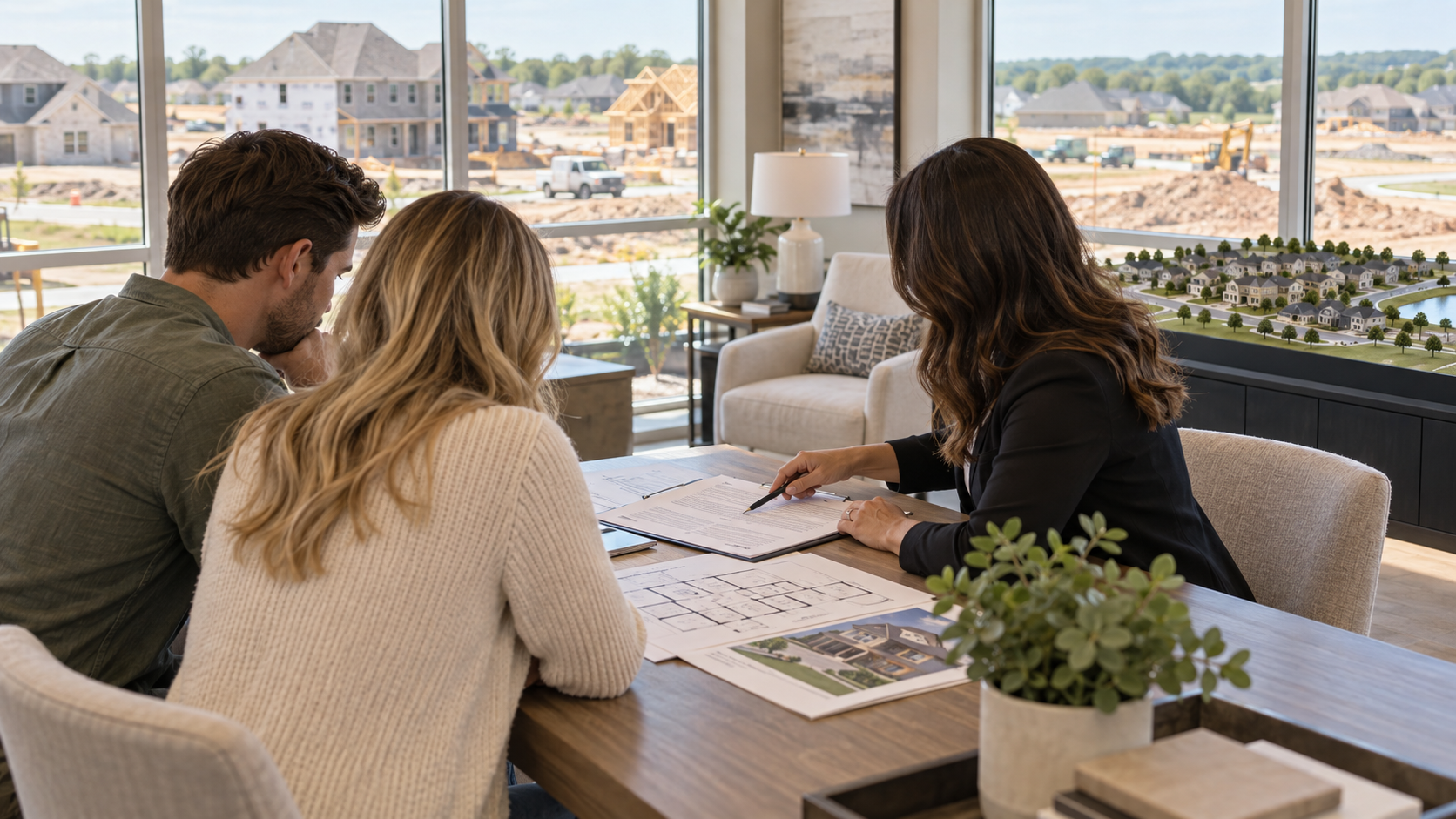
Compare the preferred lender's APR, not just the rate. Fees can hide in the fine print.
Get an outside quote so you know what the incentive is actually worth.
Check whether the base price was padded to fund the incentive. Look at resale comps nearby.
Read the lot premium and upgrade pricing carefully. That's where margin lives.
Refinance Later: Does "Marry the House, Date the Rate" Still Hold Up?
You've heard the line. Buy the house you love, then refinance when rates fall. It's not wrong. It's just incomplete.
Here's the brutally honest version:
It only works if rates actually fall. 2026 proved they can go up instead.
Refinancing costs money, usually thousands in closing costs.
You need equity and solid credit when the time comes.
Only buy a payment you can live with forever, not one that requires a refi to survive.
Treat a future refinance as upside, not the plan. If rates drop, great. If they don't, you still own a home you can afford in a market that keeps appreciating.
Where to Look: Kansas City Neighborhoods With New Construction Momentum
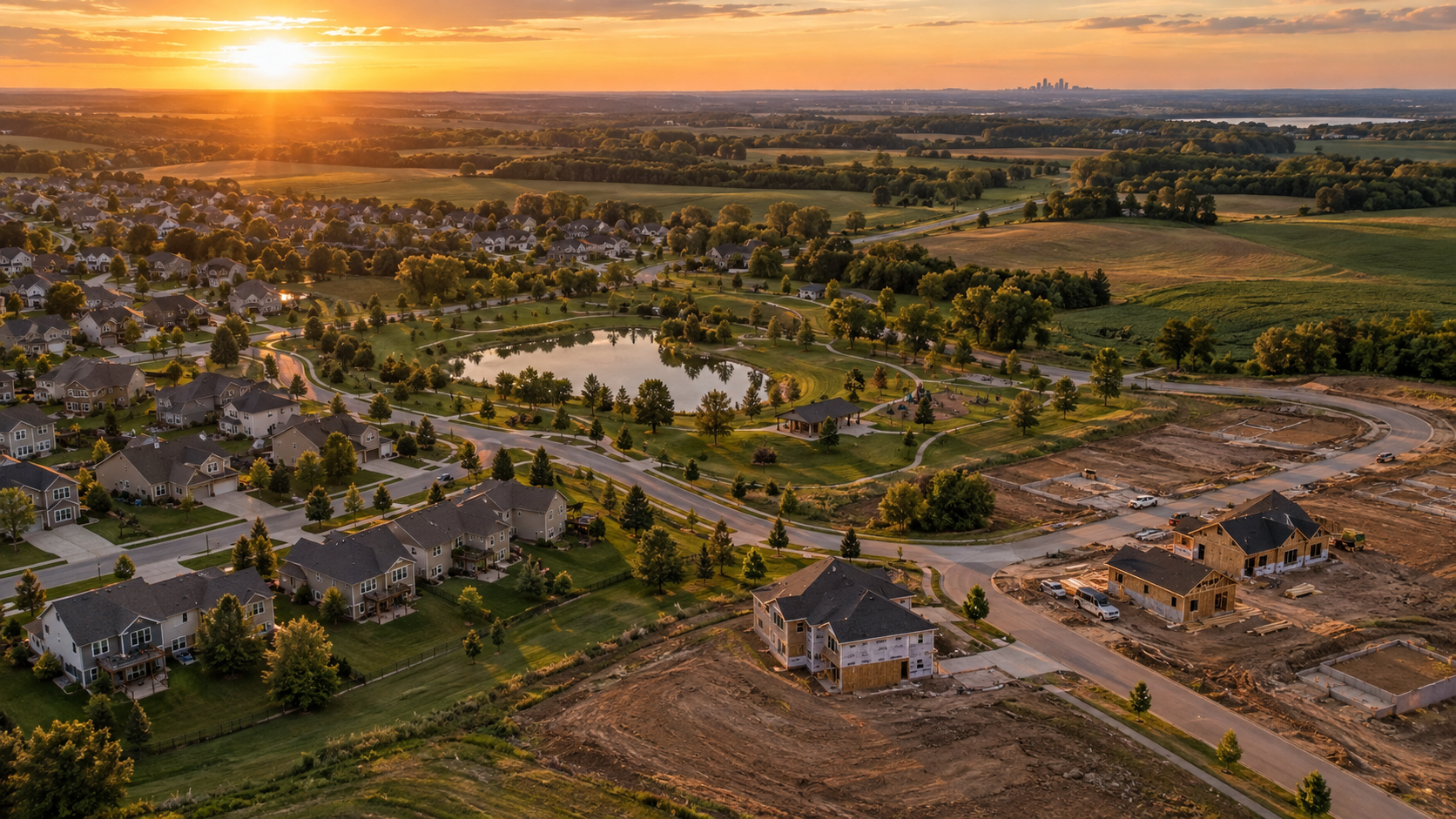
New construction in the metro is concentrated in the growth corridors. The Northland, including Platte and Clay counties, is one. South Johnson County, Lee's Summit, and the Liberty area are others.
Each area prices differently. Each builder runs different incentives. The best neighborhoods in Kansas City for you depend on schools, commute, lot size, and your payment target.
You can browse current homes across Kansas City neighborhoods on my featured listings page. As a Kansas City real estate agent with a builder's eye, I can also help you evaluate construction quality, floor plans, and lot selection before you commit.
Already Own a Home? Your Equity Is Part of the Rate Strategy
Many new-construction buyers need to sell their current home first. That's where the plan can fall apart if you don't sequence it right.
Start by knowing your number. Get a free home value estimate here. That equity can fund a bigger down payment, which lowers your payment and may improve your rate.
If you need to move fast to lock a builder incentive, speed matters. Many builders don't love home-sale contingencies. You can request cash offers on your current home and compare them side by side. I work with cash home buyers Kansas City sellers can trust, and I'll show you the net on every option.
If you have time and want top dollar, we list it with the Heartland Homes KC 100+ Point Marketing Plan. The goal is maximizing your net, not just the sale price.
A Simple Game Plan for the Rest of 2026
Get pre-approved now so you can move when the right home shows up.
Set your budget on a payment you can hold without a refinance.
Tour new construction and ask every builder about buydowns and closing credits.
Get an outside lender quote to compare against the builder's offer.
Know your current home's value and your selling options before you sign a build contract.
Watch the late October Fed meeting, but don't let it freeze you.
Frequently Asked Questions
What are mortgage rates in Kansas City right now?
As of mid-September 2026, the 30-year fixed averaged 6.95% nationally per Freddie Mac. Kansas City and Missouri quotes typically land close to that, depending on credit and down payment.
Will mortgage rates go down before the end of 2026?
It's unlikely to be dramatic. Fannie Mae and the MBA both project about 6.8% by year-end. The Fed raised rates in September and signaled another hike may come.
Should I wait for rates to drop before buying in Kansas City?
For most buyers, no. KC prices are still rising, and buyers who waited over the past year paid more on price and on rate. You can always refinance later if rates fall.
How does a builder rate buydown work?
The builder pays upfront to lower your interest rate, either temporarily (like a 2-1 buydown) or for the full loan term. It lowers your monthly payment without cutting the home's recorded price.
Is new construction a good deal in 2026?
It can be one of the better deals in the market. Most builders are offering incentives right now, and many are also cutting prices. Always compare the builder's financing against an outside lender.
Let's Build Your Plan
Rates are not coming to save anyone this year. The buyers who win in 2026 will be the ones with a clear strategy: the right home, the right incentive, and the right sequence for selling what they already own.
That's exactly what we do at Heartland Homes KC. I bring an architect's training, a builder's experience, and an investor's math to every buyer I work with. Schedule a call with me today and let's run your numbers.


