Kansas City Rental Property Cash Flow: Real 2026 Numbers
Kansas City Rental Property Cash Flow: Real Numbers for 2026
Most metros stopped cash flowing two rate hikes ago. Kansas City still does, but not the way the podcast bros describe it. The easy money deals from 2021 are gone. What is left is a market where a rental still pencils if you buy right, and turns into a slow bleed if you buy at retail and hope. I have built over 100 homes here and flipped more than 150, and I underwrite ten to twelve deals a week. So this is not theory. Below is what Kansas City rental property cash flow actually looks like at today's rates, with a real deal broken down line by line.
If you want to skip the reading and just talk through a specific property, book a call here and we will run the numbers together.
Why Kansas City Still Cash Flows When Most Metros Don't

The whole game comes down to one ratio. Rent divided by purchase price. When rent is high relative to price, the property covers its own costs. When price runs ahead of rent, you feed it every month.
Kansas City has always had a friendly rent to price ratio because our home prices stayed sane while our rents kept climbing. As of mid 2026, the Heartland MLS median sale price sits around $349,900 across the metro. But investors do not buy the median. They buy in the cash flow pockets where entry prices run $150,000 to $250,000 and rents hold up.
Here is the national context that matters. Median rent across the metro sits near $1,370 for apartments, and single family homes rent higher. Metro cap rates land in the 5 to 7 percent range depending on class and location. Coastal markets are stuck under 4 percent. That gap is the entire reason out of state money keeps flowing into Kansas City neighborhoods. You are getting paid a real yield for owning a real asset in a stable economy.
The catch nobody puts in the thumbnail is this. Rates changed the math. Investment property loans in September 2026 are running 7.4 to 7.9 percent, roughly half a point to a full point above owner occupant rates. That extra interest eats a chunk of the cash flow that used to be automatic. So the deals still work, but the margin for error shrank. Buying right is no longer optional. It is the whole strategy.
The Rent to Price Ratio That Actually Matters in KC
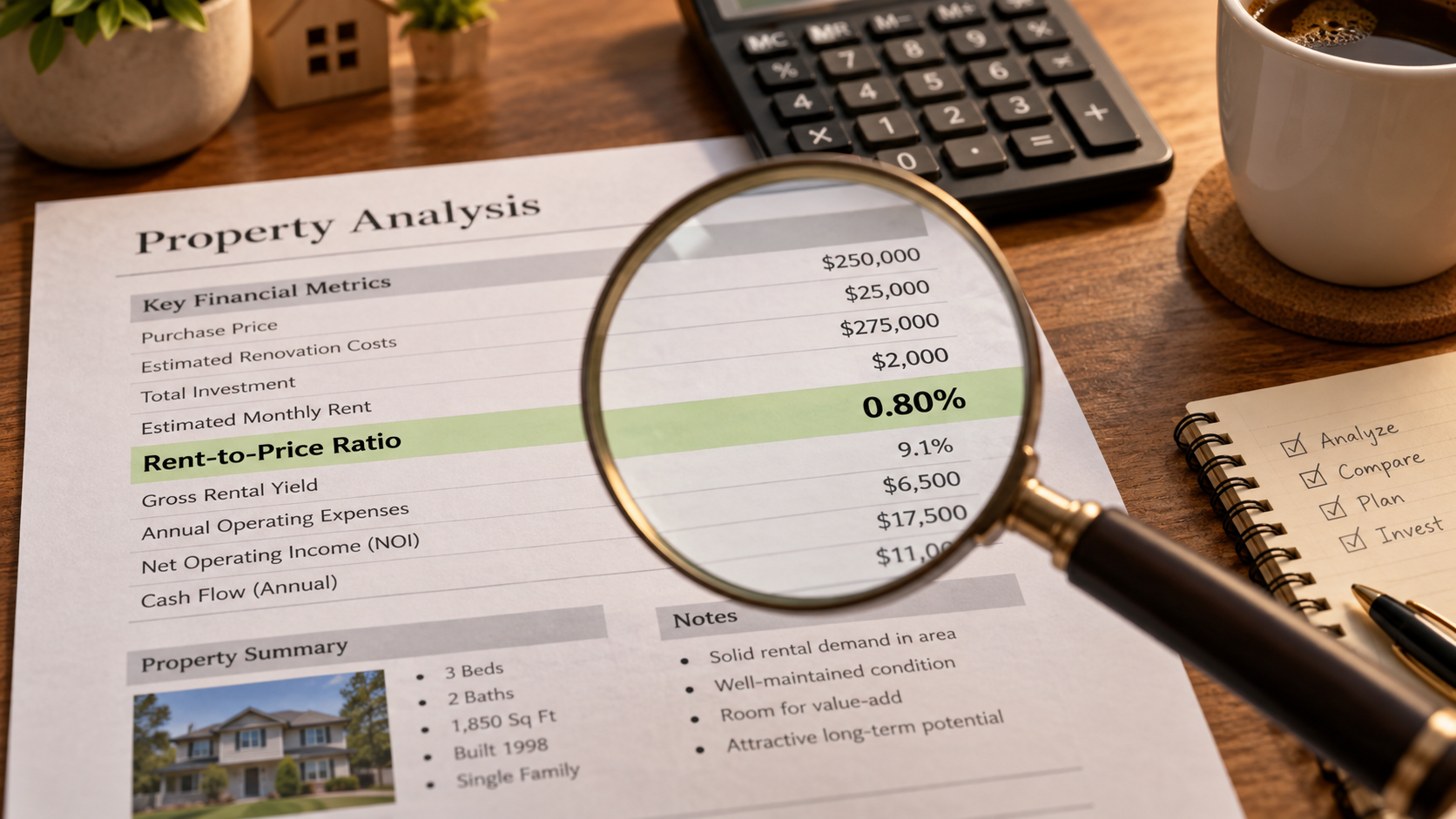
Forget the old 1 percent rule. Nobody hits a true 1 percent monthly rent to price ratio in a decent Kansas City neighborhood anymore, and chasing it will drag you into war zones where the spreadsheet lies to you.
What I look for in 2026 is a rent to price ratio around 0.85 to 0.95 percent in a stable, financeable, tenant friendly area. That means a $175,000 house renting for roughly $1,500 to $1,650. That range is the sweet spot where the property carries itself, the neighborhood holds value, and you are not signing up for constant turnover.
Ratios above 1 percent still exist here. They live in the roughest pockets of the urban core. On paper they look incredible. In practice the vacancy, the turnover, the maintenance, and the eviction risk quietly delete the yield advantage. A vacant month or one bad tenant wipes out a year of that extra return. I would rather own a boring 0.9 percent deal in a place people actually want to live.
Best Neighborhoods to Buy Rental Property in Kansas City
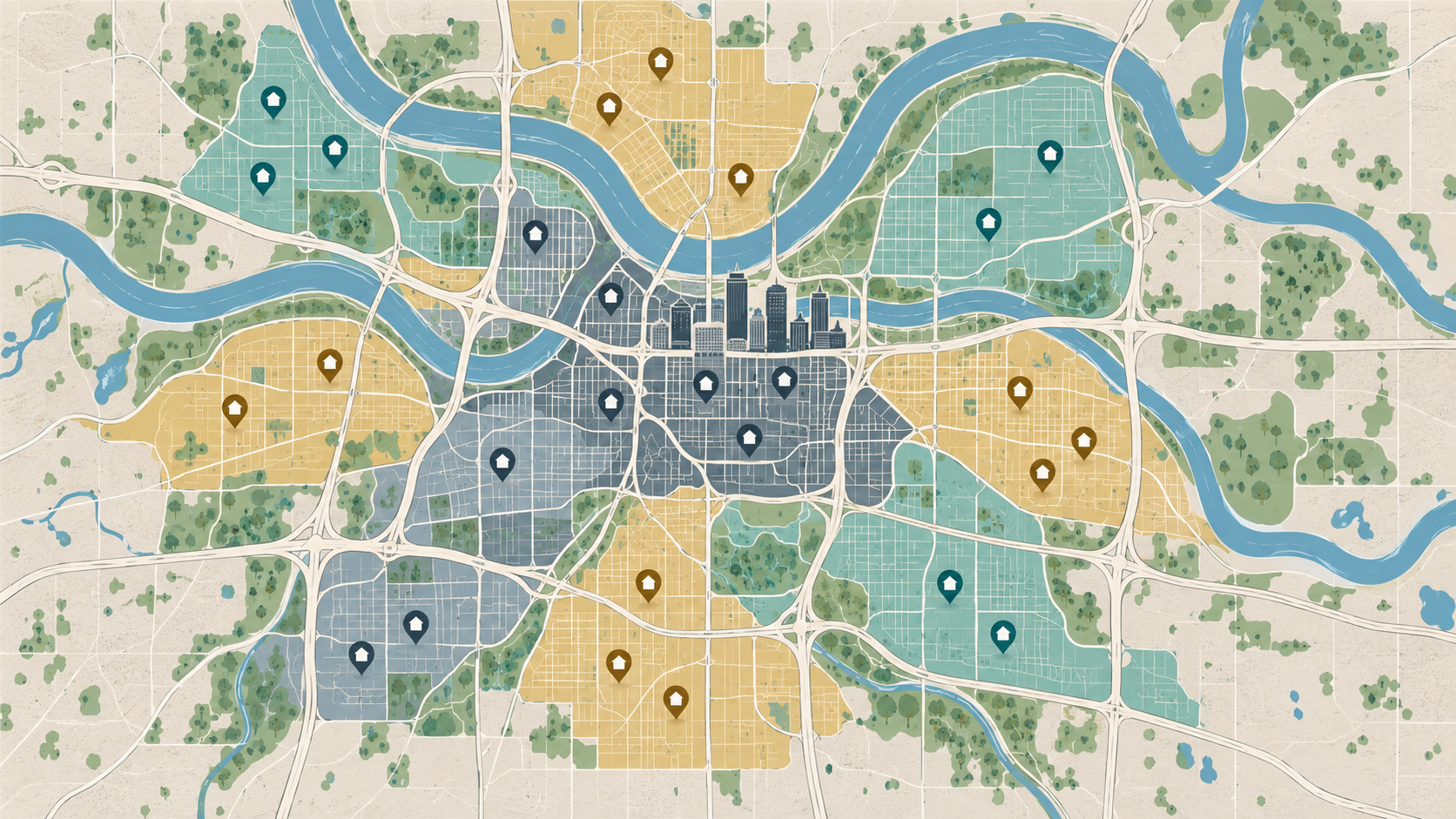
Where you buy determines whether you are a cash flow investor or an appreciation investor. Pick your lane before you shop, because the same dollar behaves completely differently across the metro. Here are the Kansas City neighborhoods that make sense for buy and hold right now.
Cash Flow First
These areas give you the strongest rent to price ratios and the fastest path to positive monthly income.
Independence: Affordable single family homes, steady rental demand, entry prices that still leave room for yield. This is the headliner for cash flow.
Raytown: Right next door to Independence with a nearly identical profile. Solid rents, reasonable prices.
Grandview and South KC pockets: Lower entry points for investors willing to manage tightly and screen hard.
North Kansas City: Compact, walkable, and holding rental demand well.
The operator note on all of these: cash flow neighborhoods punish sloppy management. Tight tenant screening, fast maintenance response, and realistic vacancy reserves matter more here than anywhere else in the metro.
Balanced Cash Flow and Growth
If you want a little of both, these run roughly $225,000 to $370,000 and blend monthly income with appreciation.
Gladstone: My favorite hybrid pick. Strong demand, stable values.
Blue Springs: Family oriented, good schools, steady tenants.
Liberty: Northland growth story with room to run.
Waldo: Deep rental pool from young professionals, higher entry cost, better long term equity.
Appreciation Plays
Brookside, Lee's Summit, Overland Park, Leawood, and Prairie Village run $325,000 and up. Cap rates compress to 4 to 5 percent because high prices squeeze the ratio. These are ten year equity plays with premium tenants, not cash flow machines. Buy here for the long game, not the monthly check.
If you want to see what is actually on the market across these areas, browse our featured Kansas City neighborhood listings.
A Real Kansas City Rental Deal, Broken Down at Today's Rates
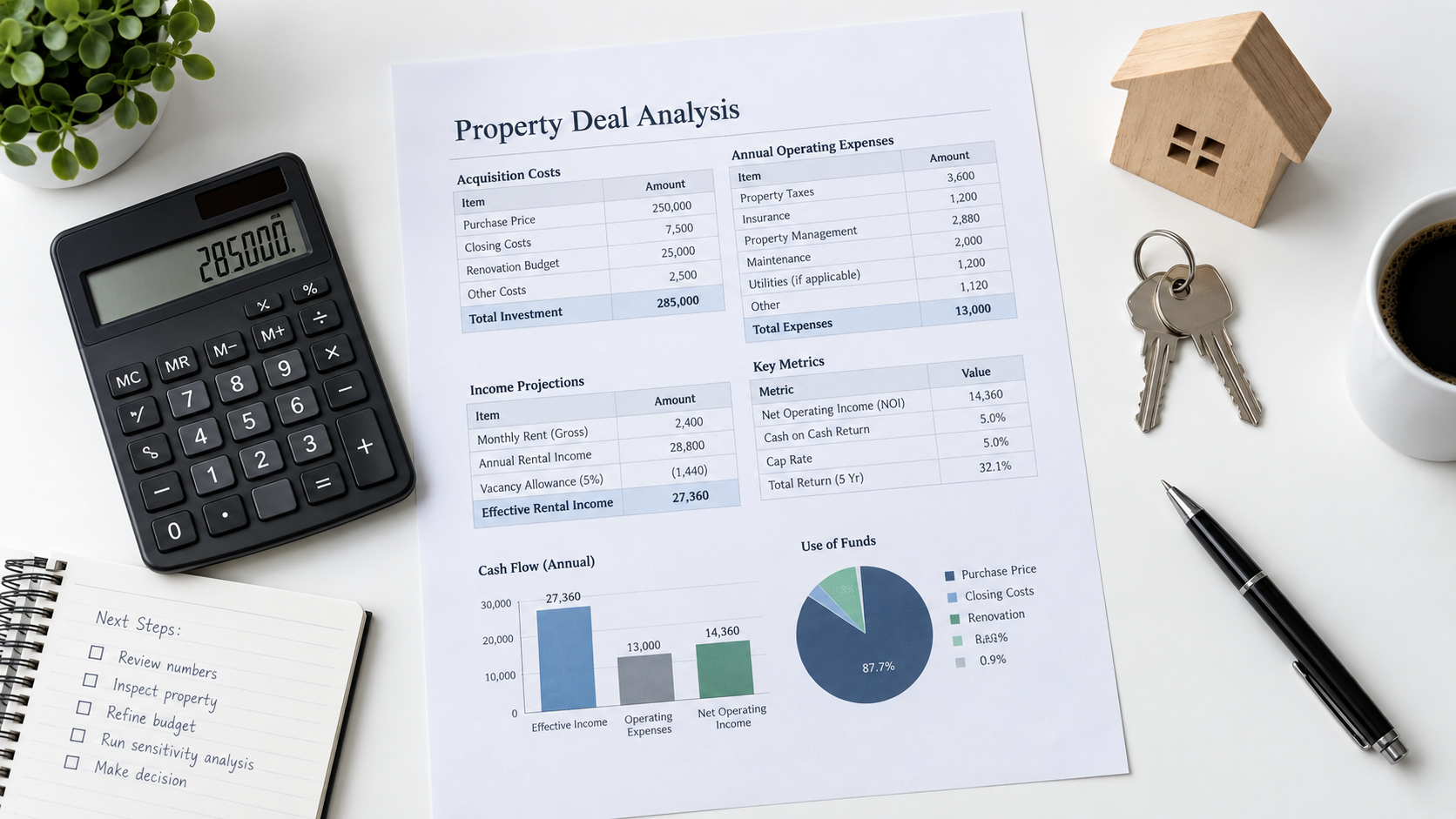
Enough context. Here is a real deal structure that reflects how I actually buy in 2026. Not a fantasy. A financeable single family rental in an Independence style cash flow area, bought below market because that is the only way the numbers sing right now.
The setup:
Purchase price: $175,000, bought roughly $40,000 under its $215,000 as-is value through investor sourcing
Down payment at 25 percent: $43,750
Loan amount: $131,250
Interest rate: 7.5 percent on a 30 year investment loan
Market rent: $1,600 per month
Now the monthly expenses, the part most YouTube math skips entirely:
Principal and interest: $918
Property taxes: about $182
Insurance: about $117
Property management at 8 percent: $128
Maintenance reserve at 5 percent: $80
Vacancy reserve at 5 percent: $80
Capital expenditure reserve at 5 percent: $80
Add it up and your total monthly outflow runs about $1,585 against $1,600 in rent. That leaves you roughly $15 a month in true cash flow after every honest reserve is funded.
Fifteen dollars. I am not going to insult you by pretending that is a home run. That is the reality of financing a rental at 7.5 percent, and it is exactly why buying at retail is a trap right now. If you paid full $215,000 for that same house, you would be feeding it a couple hundred dollars a month, every month.
Why This Deal Still Wins Even at $15 a Month

Here is where the veteran perspective separates from the beginner panic. Cash flow is only one of four ways this property pays you. Beginners fixate on the monthly number and miss the other three levers entirely.
Lever one is cash flow. Thin, as shown. Call it break even after reserves.
Lever two is principal paydown. Your tenant pays down about $1,210 of your loan balance in year one alone, and that number grows every year. That is equity landing in your pocket that never shows up in the monthly cash flow line.
Lever three is appreciation. Kansas City home values are forecast to rise 2 to 4 percent in 2026. On a $175,000 house, even a modest 3 percent is about $5,250 of value in year one.
Lever four is the equity you captured the day you bought. Buying that house $40,000 under value means you started with $40,000 in forced equity before you collected a single rent check. This is the architecture background and the investor mindset doing the heavy lifting. I do not buy rentals at retail. I buy them the way I underwrite a flip, with room baked in.
Stack it up. Cash flow plus principal paydown plus appreciation comes to roughly $6,600 in year one on about $52,000 all in. That is a 12 to 13 percent return before you even count the day one equity. Count that captured equity and the first year return is off the charts. The $15 monthly cash flow was never the point. It was the ticket to ride.
That is the honest 2026 answer. Kansas City rental property cash flow is real, but it is thin on a financed deal at retail pricing. The wealth is in the total return, and the total return depends entirely on how well you buy.
Cap Rate and What It Really Tells You in Kansas City
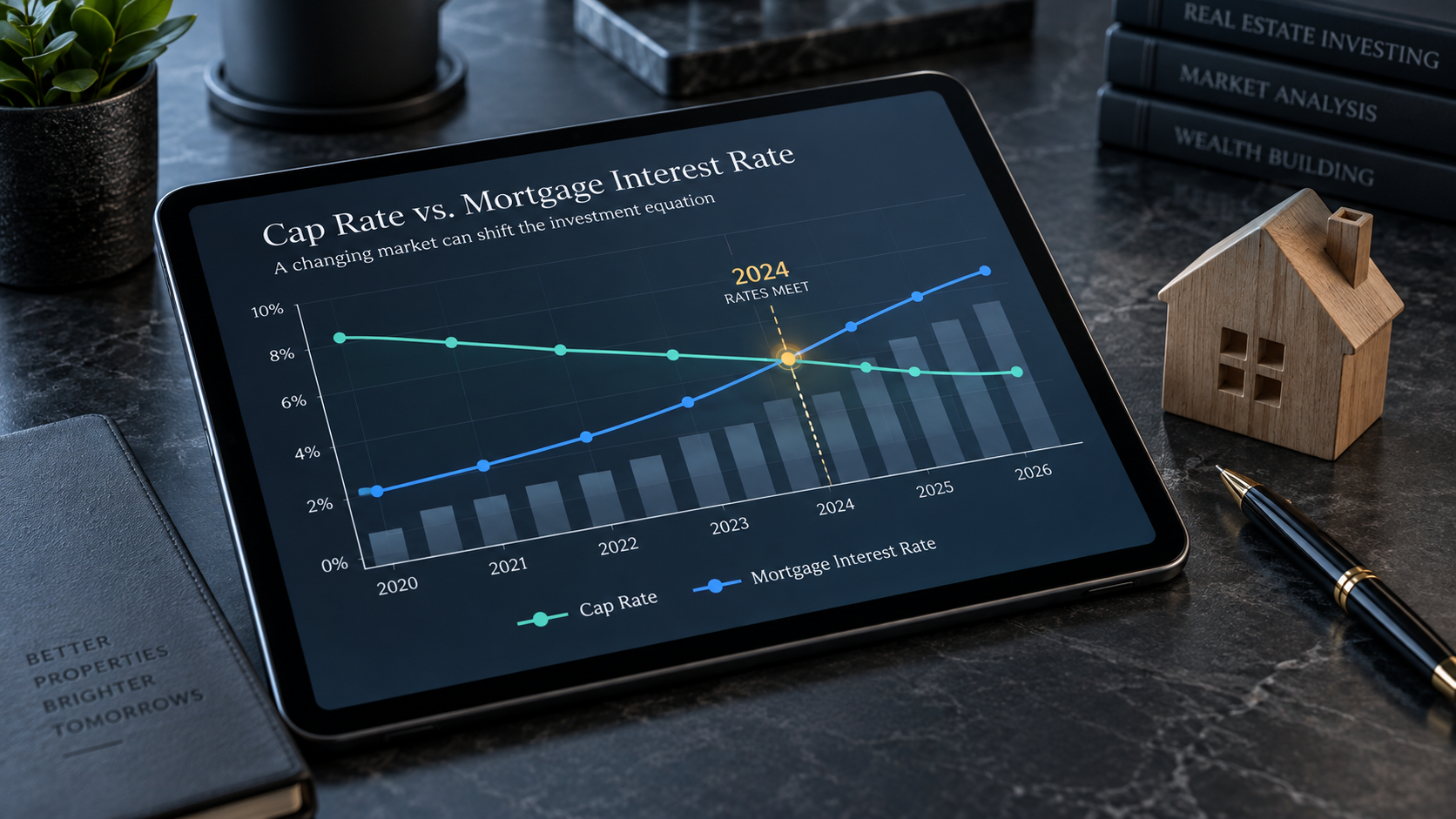
Cap rate is net operating income divided by purchase price. It strips out financing so you can compare properties apples to apples. In the deal above, the property throws off about $10,900 in net operating income against a $175,000 price, which lands the cap rate near 6.2 percent.
For context, Kansas City cap rates by area look like this in 2026. Jackson County markets like Independence and Gladstone run 6 to 7 percent because prices are low relative to rents. Johnson County markets like Overland Park run 4 to 5.5 percent because high prices compress the ratio even though the absolute rents are higher.
One warning. Cap rate does not include your mortgage. A 6 percent cap rate looks great until you finance it at 7.5 percent, and suddenly you understand why cash flow got so tight. When your borrowing cost is higher than your cap rate, leverage works against your monthly number even while it builds long term wealth. That is the single most important concept in 2026 rental investing, and it is the one most new investors never internalize.
The Mistakes That Kill KC Rental Deals in 2026

I watch these same errors sink deals every week. Avoid all five and you are ahead of most investors in the market.
Skipping reserves. If your analysis has no line for vacancy, maintenance, and capex, your analysis is fiction. That roof will need replacing whether or not you budgeted for it.
Buying at retail. At 7.5 percent money, paying full market price for a rental is how you volunteer for negative cash flow. You have to buy with a margin.
Chasing the highest cap rate. The 8 percent cap rate in the roughest block is a management nightmare in disguise. Boring beats bloody.
Ignoring management cost. Whether you pay a manager 8 percent or self manage, that time and money is real. Do not pretend it is free.
Overestimating rent. Zillow's rent estimate is a starting guess, not gospel. Pull real comps for that exact street and property type.
How to Actually Find a Deal That Cash Flows
The deals that pencil in 2026 are not sitting on the open market waiting for you. The retail buyer paying full price took those off the table. The rentals that work come from buying below value, which means you need access to off market inventory, motivated sellers, and accurate rehab and rent numbers.
This is where being an investor and a Kansas City real estate agent under one roof at Heartland Homes KC actually matters. I am not just pulling MLS listings for you. I am underwriting each property the same way I underwrite my own acquisitions, with as-is value, repair cost, and true rent all pressure tested before you wire a dime.
If you already own property and want to know what it is worth in today's market, start with a real home value estimate. If you are a seller weighing your options rather than a buyer, we also make cash offers on Kansas City homes, which is often where the best off market rental inventory comes from in the first place. And if you want to understand the full system I use to move properties and source deals, take a look at our 100+ Point Marketing Plan.
The Bottom Line on Kansas City Buy and Hold in 2026

Kansas City still cash flows. That part of the story is true and it separates us from most of the country. But the version where you buy any house at any price and print money is over. At 7.4 to 7.9 percent investment rates, the monthly cash flow on a financed retail deal is thin to negative. The money is made on the buy, and the wealth compounds through principal paydown, appreciation, and the equity you capture at purchase.
Buy right, reserve honestly, manage tightly, and pick the neighborhood that matches your goal. Do that and Kansas City remains one of the best buy and hold markets in America. Skip those steps and you will learn an expensive lesson about leverage.
If you want to run the numbers on a specific property or figure out which strategy fits your capital, schedule a call and we will build the deal together.


