Inspection Anxiety: Why KC Buyers Choose New Construction | Jason DeLong
WE NEED TO TALK ABOUT THE INSPECTION ANXIETY
There is a specific kind of quiet that settles over a home buyer during the escrow period. You have gone through the excitement of house hunting, your offer was finally accepted, and you are officially under contract. The hard part is over. Or so you thought.
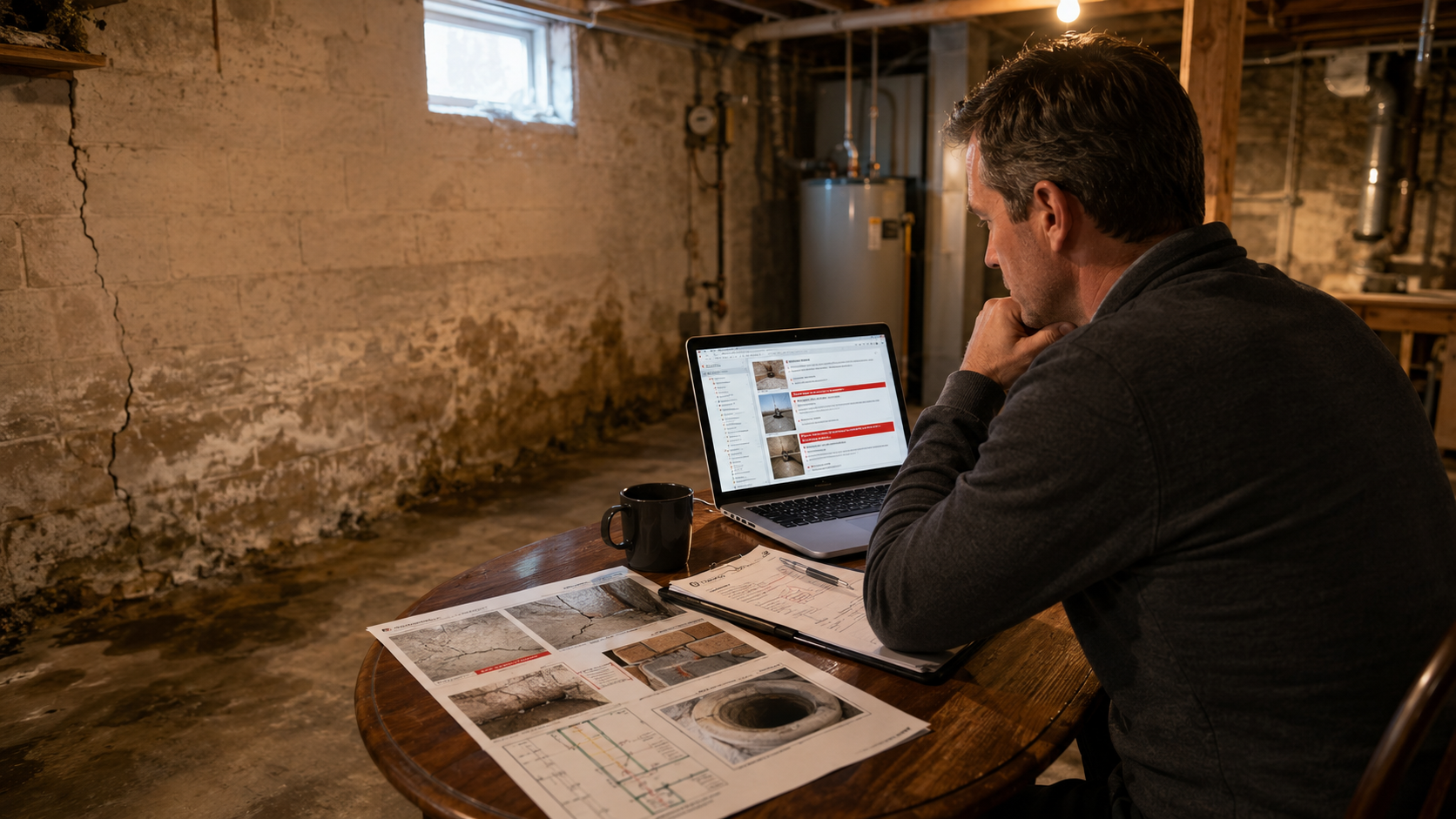
Then comes the home inspection.
For the next few days, you wait. When the email finally hits your inbox, it is a 60-page PDF filled with high-resolution, close-up photos of things you did not even know existed under a house. Reading a home inspection report on an older property feels less like a real estate document and more like waiting on a scary medical diagnosis.
Your eyes skip past the minor notes about a loose doorknob and go straight to the bold red text:
- Evidence of historical foundation movement along north and east walls. Step cracking consistent with differential settlement. Recommend structural engineer evaluation.
- Active water penetration observed at northwest basement corner. Efflorescence and staining consistent with recurring seasonal intrusion.
- Clay sewer lateral showing root intrusion and partial collapse per camera scope. Excavation and replacement likely required.
If you have lived in Kansas City for any length of time, you know our local joke: there are two types of older homes here, those with foundation issues and those that are going to have foundation issues. Our infamous local clay soil expands and contracts like an accordion with the changing seasons, putting immense pressure on old stone and cinderblock basements decade after decade.
I've built over 100 homes and flipped over 150 homes personally, so I know a thing or two about the process. And I will tell you: what that inspection report is really handing you is not a list of repairs. It is a list of unknowns. And in real estate, unknowns are where money quietly disappears.
THE COST OF THE UNKNOWN
Discovering a crumbling foundation or a collapsed clay sewer line under a century-old home in Brookside or old Overland Park is not just stressful. It is financially paralyzing. It turns a milestone that should be joyful into a series of expensive, emergency weekend phone calls to structural engineers and plumbers.
Suddenly, the budget you set aside for custom furniture or updated paint is swallowed up by steel piers, French drains, and main line excavations. You are not paying for things you can see and enjoy. You are paying to keep the house from sinking.
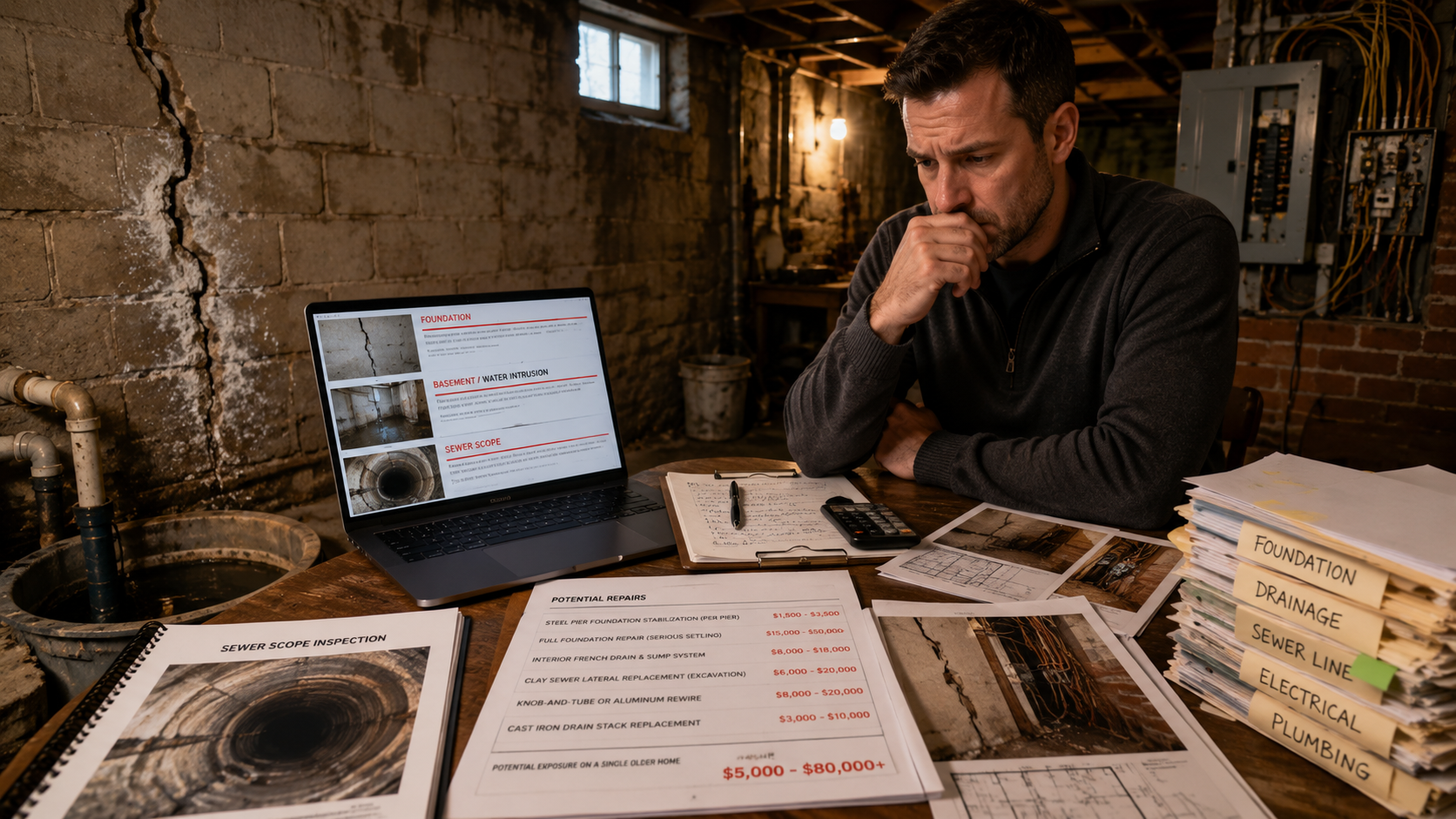
What older KC home inspections commonly uncover:
Steel pier foundation stabilization (per pier): $1,500-$3,500
Full foundation repair (serious settling): $15,000-$50,000+
Interior French drain and sump system: $8,000-$18,000
Clay sewer lateral replacement (excavation): $6,000-$20,000
Knob-and-tube or aluminum rewire: $8,000-$20,000
Cast iron drain stack replacement: $3,000-$10,000
Potential exposure on a single older home: $5,000-$80,000+
Not every older home carries this kind of exposure. Some have been lovingly maintained and selectively updated by owners who understood what they had. But the buyers who come to me after a bruising inspection negotiation all describe the same feeling: a deal that looked clean on paper turned into a financial stress test the moment the inspector got under the crawlspace.
THE ULTIMATE SHIELD: THE BUILDER'S WARRANTY
This exact brand of inspection anxiety is driving a significant wave of buyers to look at new construction homes across the Kansas City Metro. And the reason is not just aesthetics or open floor plans. It is the warranty.
When you buy a brand-new home, the inspection process changes completely. You are not looking for hidden, decades-old disasters. Instead, you are looking at freshly poured concrete foundations wrapped in modern waterproofing membranes. You are looking at schedule 40 PVC sewer lines that have never seen a tree root in their life. You are looking at electrical panels installed last month, not last century.
But the real game-changer is what comes after closing.
New construction builder warranties in Kansas City typically follow a 1-2-10 structure:
1 Year - Workmanship
Cosmetic defects, minor finish issues, and workmanship items. Paint, trim, fixtures, and visible installation quality.
2 Years - Systems
Major mechanical systems, including electrical, plumbing, and HVAC. The infrastructure your household depends on every day.
10 Years - Structure
The structural integrity of the home itself. Foundation, framing, and load-bearing walls. The exact things that keep older home buyers up at night.
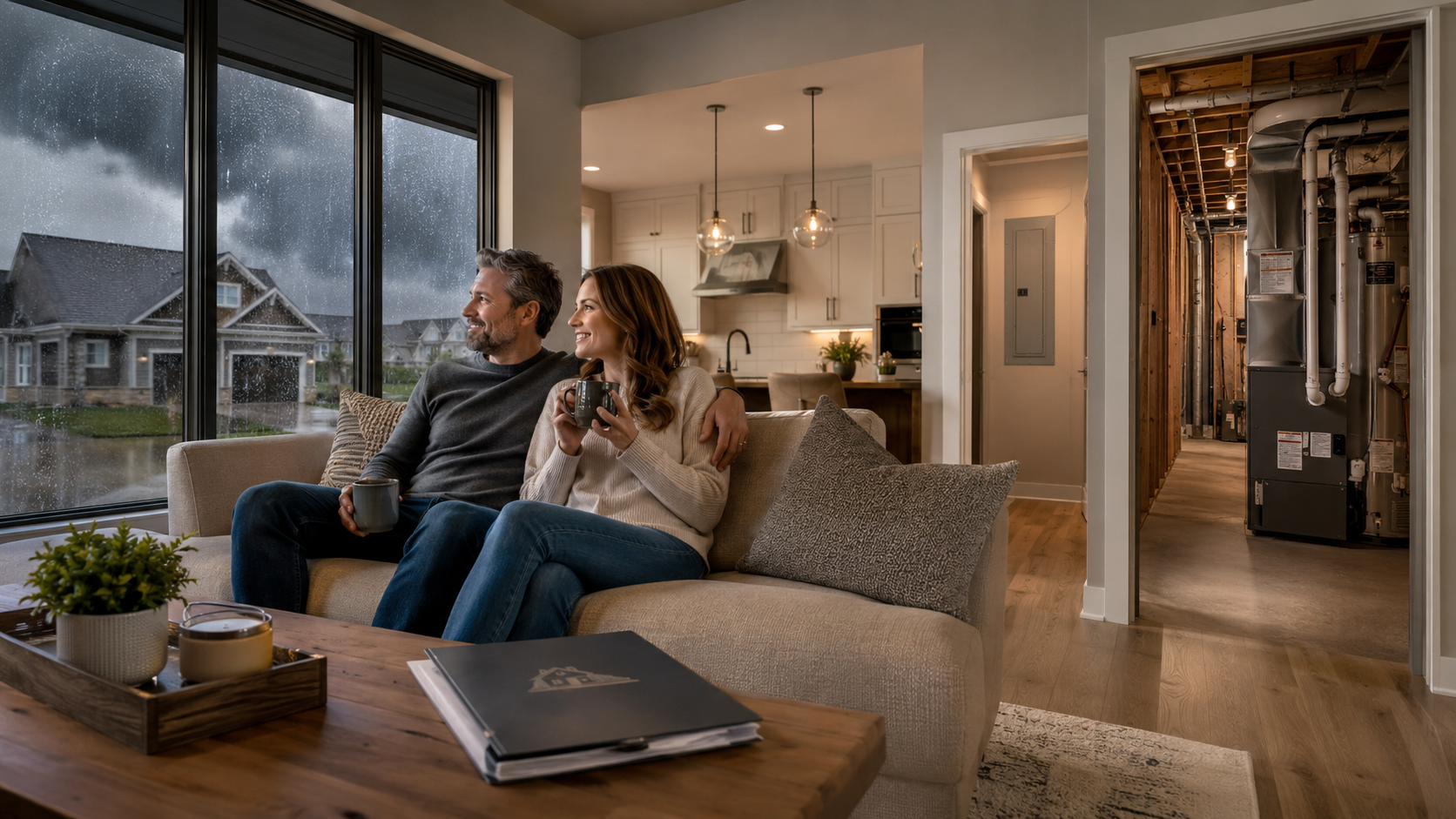
Imagine waking up on a rainy midwestern spring morning, hearing a massive thunderstorm roll through, and not feeling a single shred of panic about whether your basement is taking on water. That level of peace of mind does not come from a vintage house. It comes from modern engineering and a builder who stands behind their work with a legally binding warranty.

WHAT THIS MEANS FOR YOUR BUYING DECISION
None of this means older Kansas City homes are bad buys. Waldo, Brookside, Valentine, Westside, and the historic Northland pockets have real character that no new build can fully replicate. For the right buyer, with a realistic contingency budget and an appetite for the process, an older home is absolutely worth it.
But the decision deserves honest math, not just emotional pull. Before you fall in love with original hardwood floors, get clear on what the inspection might reveal and what it would cost to address it. Model the worst-case scenario. If you can live with that number, buy the house. If that number would wreck your financial stability, the new construction conversation is worth having.
A builder warranty does not just protect your home. It protects your sanity, your savings account, and the version of homeownership you actually imagined when you started this process.
FREQUENTLY ASKED QUESTIONS
Q: Why do older homes in Kansas City have so many foundation problems?
A: Kansas City sits on expansive clay soil that swells when wet and shrinks when dry, cycling with every season. That constant movement puts relentless pressure on older stone and cinderblock foundations, causing cracking, shifting, and water infiltration over decades. It is one of the most common and costly issues in KC's older housing stock, and it is the reason our local real estate community has a running joke about it.
Q: What does a new construction builder warranty cover in Kansas City?
A: Most Kansas City new construction builder warranties follow a 1-2-10 structure: one year on cosmetic and workmanship defects, two years on major systems including electrical, plumbing, and HVAC, and ten years on structural integrity. This replaces the uncertainty of buying an older home, where no warranty exists on any existing system or structure.
Q: How much does foundation repair cost in Kansas City?
A: Costs vary significantly by severity. Minor crack injections may run $1,500 to $5,000. Steel pier installation for serious differential settling typically runs $15,000 to $50,000 or more depending on the number of piers required. A full foundation replacement on a century-old home can exceed that range considerably. These costs are rarely covered by standard homeowners insurance policies.
Q: What should I do if my Kansas City home inspection reveals foundation issues?
A: Get a second opinion from a licensed structural engineer before accepting any repair estimate. Engineers charge $300 to $800 for an independent evaluation and have no financial stake in recommending repairs. Use the findings to negotiate a price reduction or seller-paid remediation before closing. If the structural engineer confirms serious issues and the numbers do not work after negotiation, walking away is a legitimate and often smart decision.
Q: Is new construction a good option for first-time buyers in Kansas City?
A: New construction can be an excellent fit for first-time buyers because the builder warranty removes the biggest financial risk of early homeownership: an unexpected major repair in the first few years before equity has had time to build. New builds also offer modern energy efficiency, lower utility costs, and systems built for current technology demands. The primary tradeoff is a higher purchase price and less established neighborhood character.
---
Jason DeLong | Heartland Homes KC | eXp Realty
Licensed in Missouri and Kansas


