
How to Buy a House in Kansas City Without Getting Outbid in 2026
The agents who win offers in Kansas City are not doing it with the highest price. Here is how they are actually doing it.
If you have lost more than one offer in Kansas City lately, you are not doing something wrong. You are just playing the wrong game. Most buyers in this market are competing on the same field, using the same playbook, looking at the same houses 48 hours after everyone else already has. That is a losing position before you write a single word of an offer.
There is a different way to play this. It involves understanding where inventory comes from before it hits Zillow. It involves knowing how the foreclosure pipeline in Missouri actually works. And it involves working with a Kansas City real estate agent who has been buying, building, and analyzing distressed properties in this metro for nearly two decades.
I am Jason DeLong with Heartland Homes KC. I have personally built over 100 homes and flipped over 150 homes in Kansas City, so I know a thing or two about this process. I have watched buyers lose offer after offer because they were waiting for the market to come to them. And I have watched other buyers build real equity by learning to see inventory before the crowd does.
If you are ready to stop losing and start winning, schedule a call here so we can look at your specific situation.
Here is the complete picture.
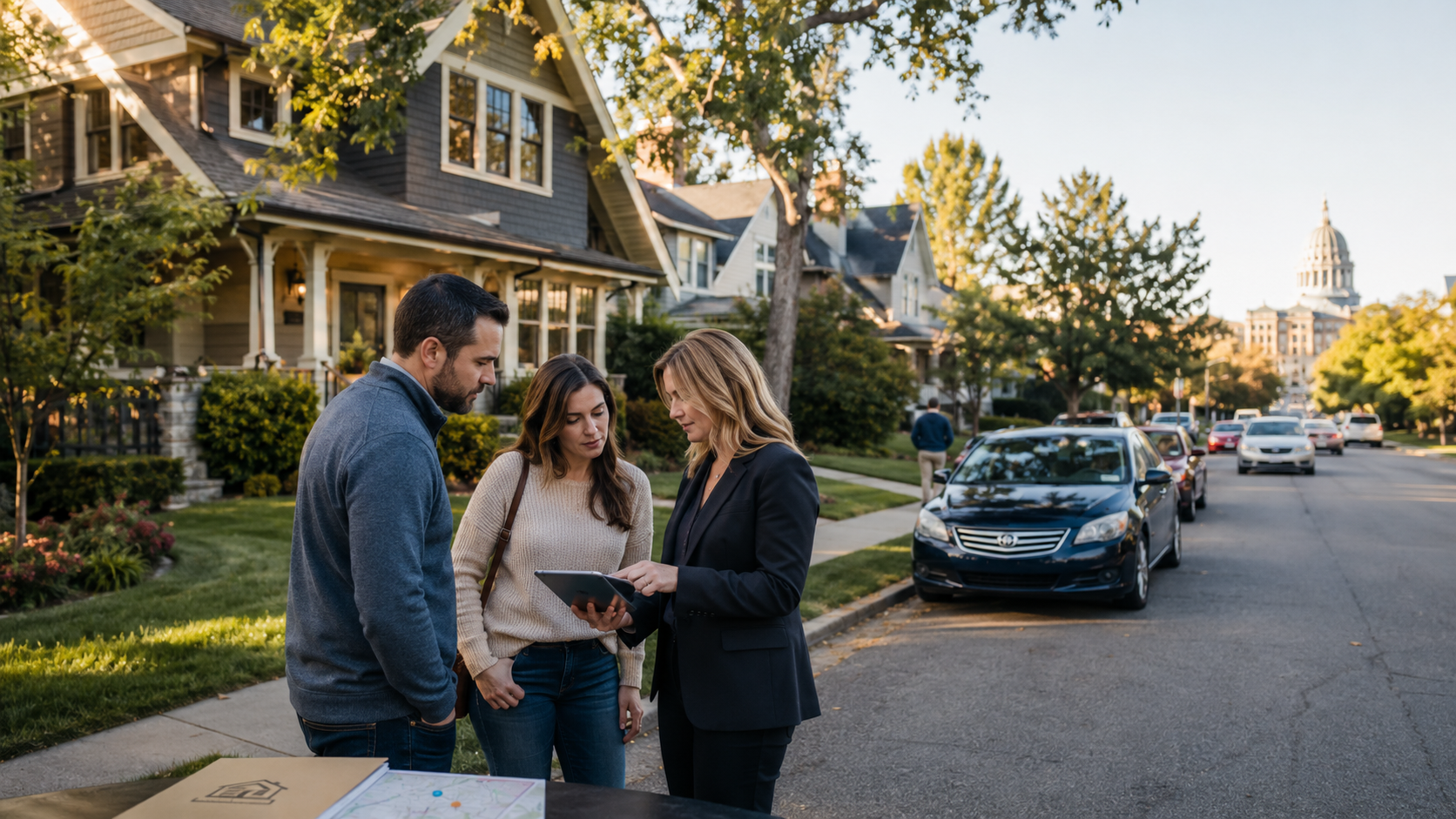
Why Kansas City Buyers Keep Losing Offers in 2026
Let's start with the market reality because the numbers matter here.
The Kansas City metro enters the second quarter of 2026 with a median sales price of $330,000, inventory of just 7,495 homes, and a supply level sitting at 2.3 months. Sellers in April received an average of 98.1 percent of their original list price. That is not a balanced market. That is a seller's market with a backlog of buyers waiting on every new listing that hits the MLS. Emetropolitan
The rate lock effect is one of the primary reasons inventory has not recovered to pre-2020 norms. Sellers who bought or refinanced at 3 percent rates have limited financial incentive to sell and take on a new mortgage at current rates, which continues to constrain supply. Magnoliakcgroup
Translation for buyers: the houses you want are scarce, the competition is real, and the traditional approach of searching portals and scheduling showings a day later puts you at a structural disadvantage before you ever write an offer.
The buyers winning right now are not simply offering more money. They are finding inventory earlier. They are submitting cleaner offers with stronger terms. And some of the sharpest buyers I work with are tapping into one of the most overlooked inventory sources in the entire market: the foreclosure pipeline.
What the Foreclosure Pipeline Looks Like in Kansas City and Why Buyers Miss It
Most buyers think foreclosure means auction. They picture a courthouse steps sale where you pay cash on the spot with no inspection and hope for the best. That picture is not entirely wrong, but it is incomplete. And the incomplete version is what keeps most buyers away from one of the best opportunities in this market.
Missouri uses a non-judicial foreclosure process, which means lenders can sell a property without going through court. Kansas City homeowners facing foreclosure can go from the first notice of sale to losing their house in as little as 30 days. Once a homeowner hits 120 days past due, the trustee publishes a notice of sale. From that first missed payment to the auction typically takes 5 to 6 months. Kcdefensecounsel
That 5 to 6 month window is where smart buyers who work with the right agent can find a real opportunity. There are three distinct stages in that pipeline, and each one carries different risk, different competition levels, and different upside.
Stage One is pre-foreclosure. This is the period after a homeowner falls behind on payments but before the bank has completed the process. The homeowner still holds title. They are often motivated to sell. In many cases, they are willing to accept a price below retail market value because avoiding a foreclosure on their credit record is worth real money to them. A buyer who reaches the seller during this window is not fighting 10 other offers. They may be the only buyer in the conversation.
Stage Two is the auction. Foreclosure sales in Missouri are cash only. No financing is allowed at the auction itself. This is where most retail buyers drop out entirely, and honestly, for most non-investors, that is the right call. Auctions carry title risk, condition unknowns, and require same-day cash that most buyers cannot produce. Kcdefensecounsel
Stage Three is REO, which stands for real estate owned. This is the property after the bank has taken it back through completed foreclosure. The bank now owns it and is trying to sell it. These properties do hit the MLS in most cases, but they come with as-is terms, specific bank processes, and condition variables that scare off enough buyers to keep competition meaningfully lower than a typical retail listing.
For most buyers I work with, pre-foreclosure and REO are the two stages worth understanding deeply. That is where the real opportunity lives without the cash-only and title-risk exposure of the auction stage.
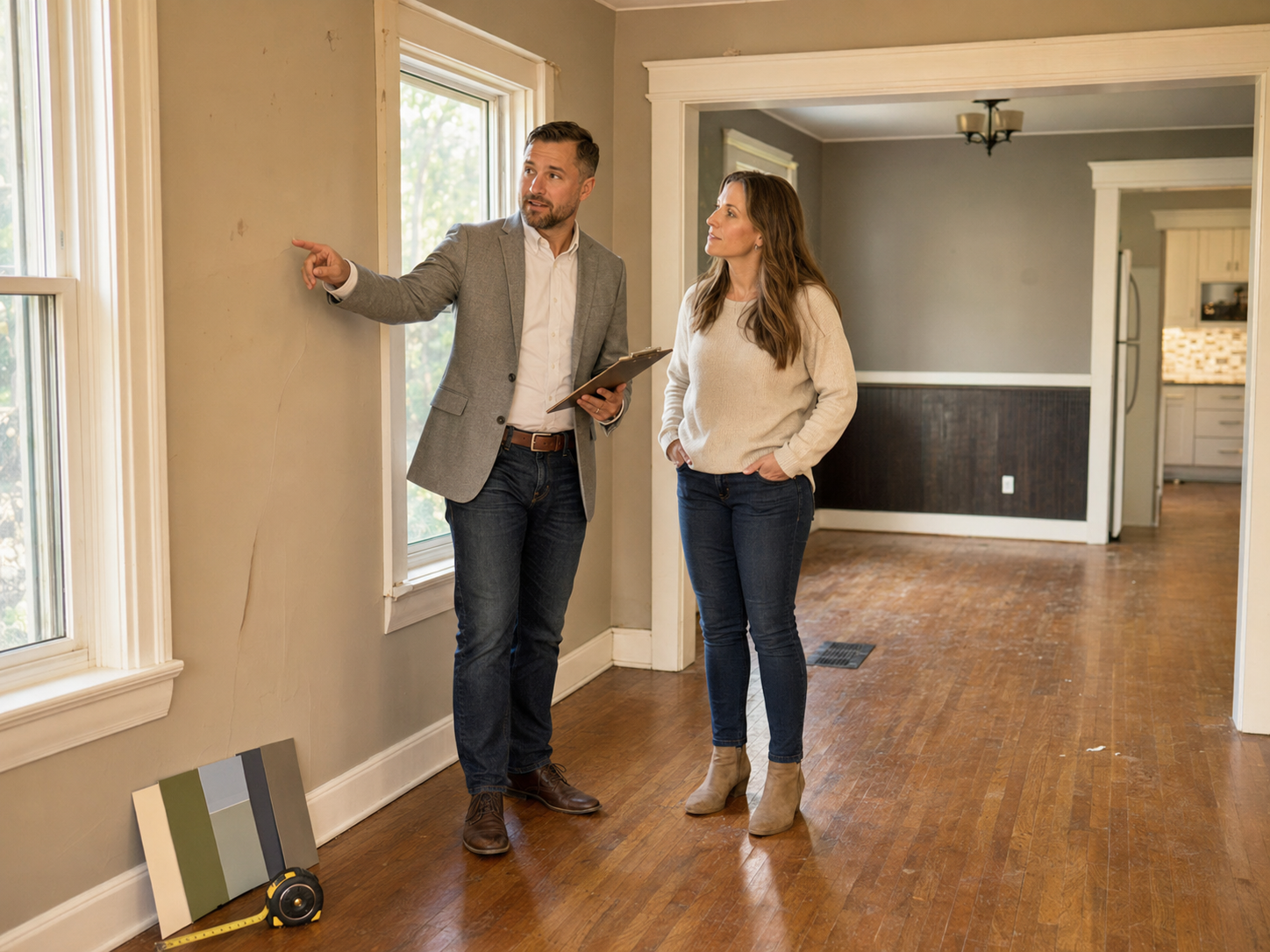
A Real Deal: What This Looks Like in Practice
I want to give you a concrete example of why this matters.
A few years back, I was working with a buyer in the Northland who had lost three consecutive offers on traditional listings. We kept getting beaten out. The houses were priced right, the offers were competitive, and we still kept finishing second.
We shifted the approach. I started monitoring distressed activity in their target zip codes, specifically pre-foreclosure filings and properties that had gone bank-owned but had not yet generated significant market attention. We identified an REO property in a solid Northland neighborhood that had been sitting just long enough for most casual buyers to scroll past it. The as-is terms and the bank's specific offer submission process had created friction that eliminated most of the competition.
My background as a builder made the as-is piece a non-issue. I could walk that property and give my client a clear repair picture in real time, not a vague estimate, not a contingency guess. I have built over 100 homes from the ground up. I know what a foundation issue costs versus what a cosmetic fix costs, and I know the difference between a problem that kills a deal and one that just kills the enthusiasm of buyers who are not used to seeing a house mid-renovation.
We submitted a clean offer with pre-underwritten financing, minimal contingencies, and a tight timeline. The bank accepted. My client got a house in one of the best neighborhoods in Kansas City at a price point they could not have touched on a typical retail listing. They built equity on day one.
That is the real value of understanding the foreclosure pipeline. It is not about chasing distressed properties for the sake of it. It is about accessing inventory that most buyers have already eliminated from consideration, which means you are competing with two or three buyers instead of twelve.
Check out our featured listings and available Kansas City properties here.
The Preparation That Makes This Strategy Work
Understanding the opportunity is the first step. Actually executing on it requires preparation that most buyers skip entirely.
Here is what I tell every buyer client before we start pursuing foreclosure or distressed inventory.
Get your financing fully underwritten, not just pre-approved. A pre-approval letter from an online lender is the bare minimum, and in this market, it may not be enough. Fully underwritten approval means the lender has already verified your income, assets, and credit. All that is left is the appraisal on the specific property. Bank sellers and motivated distressed sellers both move faster and more confidently toward buyers whose financing is bulletproof.
Know your number before you walk in. On a pre-foreclosure or REO, you will likely be buying as-is. That means you need to evaluate the condition of the property and price in the repairs before you make an offer, not after. Most buyers try to negotiate repairs after the fact and then the deal falls apart. If you understand what you are buying and your offer already reflects the condition, you are negotiating from strength instead of starting a fight.
Want to know what your current home is worth before you make a move? Get a quick estimate here.
Move fast when the right property shows up. Distressed inventory has a short window at every stage. Pre-foreclosure sellers are under time pressure. Bank asset managers are measured on days to close. If you have done your preparation work and you find the right property, hesitation kills the deal. Buyers who win in this market have already made most of their decisions before they find the property.
Work with an agent who has evaluated properties at scale. I analyze somewhere between 10 and 12 deals per week, and I have been doing that for nearly two decades. When I walk a property with a buyer, I am not just thinking about whether it feels nice. I am running the numbers in real time. ARV, repair costs, comparable sales, neighborhood trajectory. That combination of investor analysis and retail agent access is what separates clients who find the right property from clients who keep spinning.

The Neighborhoods Where This Strategy Works Best in Kansas City
Not every part of the metro generates the same foreclosure activity. Knowing where to look matters as much as knowing how to look.
The Northland, including communities like Platte City, Liberty, Smithville, and Kearney, has strong, sustained demand from families relocating into the metro. Clay and Platte counties continue to see strong demand due to their proximity to the airport and Northland commercial hubs. That demand means values stay supported even on distressed inventory, which is exactly the condition you want when you are buying a property that needs work or comes with bank-sale terms. Alpinekansascity
Johnson County continues to lead the metro in average sales price, driven by top-tier school districts and corporate expansions in Overland Park and Olathe. Foreclosure inventory here is less frequent but when it surfaces in the right neighborhoods, the buyer pool often shrinks faster than you would expect because of the as-is terms. The buyers who are prepared for that dynamic can step into a Johnson County REO with far less competition than they would face on a retail listing in the same ZIP code. Alpinekansascity
Jackson County and the inner ring of Kansas City proper carry higher foreclosure activity and stronger price flexibility for distressed inventory. This is where my experience flipping properties across the metro pays off most directly. Not every neighborhood here is on the same trajectory. Some are appreciating steadily. Others have variables that require a more careful look. Understanding which is which before you make an offer is the difference between a solid investment and a headache.
For buyers who want to explore what is available across Kansas City neighborhoods right now, this is a good place to start.
What Happens to Sellers in Foreclosure and Why That Creates a Buyer Opportunity
This is a piece of the puzzle that most buyers never think about from the seller's perspective, and understanding it makes you a sharper buyer.
When a homeowner in Kansas City falls into foreclosure, their primary concern is almost never squeezing the last dollar out of their equity. Their concerns are time, their credit record, and getting out from under a situation that has become unmanageable. As long as the foreclosure has not yet been completed, a homeowner typically has the right to sell the property voluntarily and use the proceeds to pay off the mortgage. If the sale price exceeds what they owe, they may be able to keep the remaining equity. Acting before the process is complete can meaningfully change their outcome. Home Offer KC
That urgency is what creates a genuine alignment between a motivated pre-foreclosure seller and a prepared buyer. The seller needs speed and certainty. The buyer wants a property at a fair price with less competition. When those two needs meet at the right moment, you have a transaction that works for everyone.
This is also where my Cash Offers+ program comes into play. I run an active cash buying operation in Kansas City that gives me ongoing visibility into distressed and pre-market inventory across the metro. That is not just useful for sellers who need a quick exit. It is useful for buyer clients who want access to the pipeline before it ever reaches a portal listing. If you want to understand what that inventory looks like right now, you can get a sense of what cash buyers are seeing in this market.

How to Stop Losing Offers on Traditional Listings Using What Foreclosure Buyers Know
Here is a truth that most agents will not tell you. The habits that make a buyer successful on foreclosure and distressed properties are the exact same habits that make a buyer competitive on traditional listings.
Buyers who have been through one REO or pre-foreclosure transaction show up differently. They already have fully underwritten financing. They already know how to evaluate a property on the spot without relying entirely on a seller disclosure. They already understand how to structure clean terms with minimal contingencies. They already know how to move fast without panicking.
Buyers who are well-prepared, realistic about pricing, and working with an agent who knows the micro-market can find good homes and negotiate reasonable terms. That preparation does not happen by browsing Zillow. It happens by working with a Kansas City real estate agent who runs these transactions regularly and who can compress your learning curve before you lose three more offers. Magnoliakcgroup
For a look at the complete marketing and buyer strategy system I use for every client I work with.
Frequently Asked Questions
How do I find pre-foreclosure homes for sale in Kansas City?
Pre-foreclosure properties do not show up on the typical home search portals with a foreclosure label. They surface through public notice of default filings, courthouse records, and through agents who actively monitor distressed inventory. Working with a Kansas City real estate agent who runs an active cash buying operation gives you access to that pipeline before it ever becomes a competition.
Do I need cash to buy a foreclosure in Kansas City?
For REO and pre-foreclosure properties, no. Conventional financing, FHA loans, and renovation loan products like the 203k can all be used, depending on the property's condition and the bank's specific requirements. For courthouse auction properties in Missouri, yes, cash is required. Most of the real buyer opportunities in this market are at the pre-foreclosure and REO stages, where traditional financing is an option.
Is it risky to buy a foreclosure in Kansas City?
The risk is manageable when you understand what you are buying before you make an offer. As-is sale terms put the burden of condition evaluation on the buyer. Working with an agent who has direct construction and renovation experience changes that equation significantly. I have personally built and rehabbed properties across Kansas City for nearly 20 years. That is a different level of analysis than an agent who has never picked up a hammer.
What is the Missouri foreclosure timeline, and why does it matter for buyers?
Missouri uses a non-judicial foreclosure process. Once a homeowner hits 120 days past due, the trustee publishes a notice of sale, and the property can go to auction within roughly 20 to 30 days after that publication. From the first missed payment to the sale typically takes 5 to 6 months. That window before the auction is where pre-foreclosure buyer opportunities exist. Understanding the timeline helps you recognize when a motivated seller is in the window where a direct transaction still makes sense for both parties. Kcdefensecounsel
What Kansas City neighborhoods have the best foreclosure buying opportunities?
Activity shifts over time. The Northland, Jackson County inner ring, and parts of Wyandotte County on the Kansas side have historically generated the most activity. The right agent can point you to current opportunity areas rather than neighborhoods that were active two years ago.
The Bottom Line
Winning in the Kansas City real estate market in 2026 is not primarily a bidding problem. It is an access problem. The buyers who keep losing offers are all looking at the same inventory at the same time. The buyers who win are finding inventory earlier, evaluating it faster, and showing up with offer structures that stand out before price ever becomes the deciding factor.
The foreclosure pipeline is one of the clearest examples of where that access advantage lives. But it only benefits buyers who are prepared to move when the window is open.
I have built over 100 homes and flipped over 150 homes personally, so I know a thing or two about the process. That experience does not just help my seller clients maximize their net. It changes the level of analysis I can provide for buyers who want to compete in a market where preparation is the real differentiator.
If you want to talk through your specific situation and whether this strategy makes sense for your search, schedule a call here.
For more on stopping foreclosure in Kansas City if you are a homeowner currently facing that situation, read this.


