Fix and Flip Kansas City: What Investors Target in 2026 | Heartland Homes KC
Fix and Flip Kansas City: What Investors Are Actually Targeting in 2026
Direct answer: In 2026, a winning fix-and-flip Kansas City strategy has shifted toward new construction infill and heavy stabilization. The 70 percent ARV minus repairs rule is still the floor, but the investors making real money right now are targeting high-density established neighborhoods, sourcing inventory through cash home buyers Kansas City channels, and using a specialized Kansas City real estate agent to secure premium exit prices.
Here is the part most gurus will not tell you. The cosmetic flip that printed money in 2019 is getting squeezed thin in 2026. Interest is higher, hard money is more expensive, and the low-hanging paint-and-carpet deals have been picked over by every weekend investor with a podcast subscription. So the operators who are still hitting their numbers have quietly changed the game. They are not flipping houses. They are replacing them.
I've built over 100 homes and flipped over 150 homes personally, so I know a thing or two about the process, and I can tell you the smart money in Kansas City stopped chasing lipstick-on-a-pig rehabs and started buying the dirt. Let me show you exactly what that looks like, what it pencils at, and where in the metro it is working. If you would rather just talk through a live deal, book a call with me here, and we will underwrite it together.
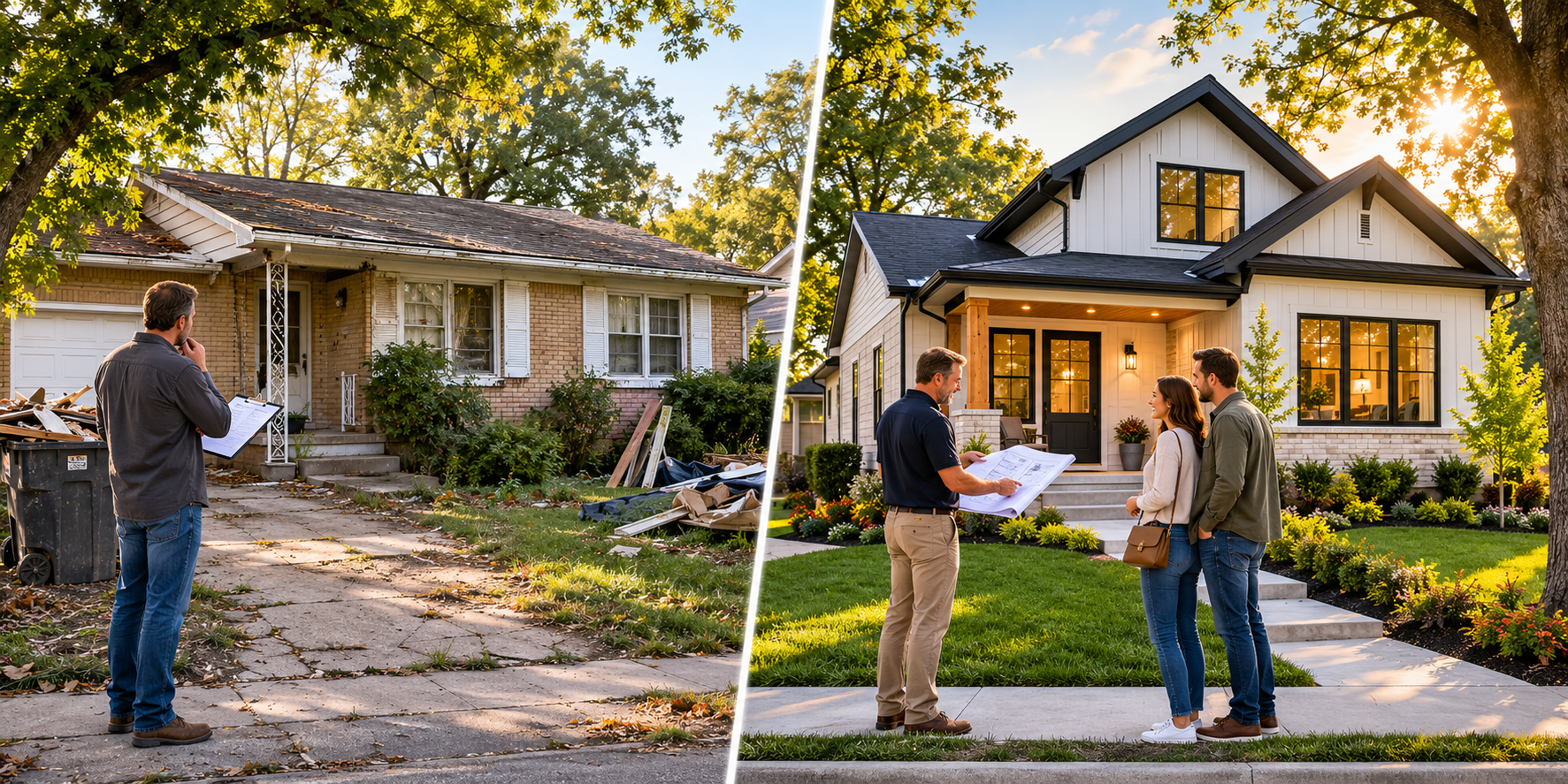
The 2026 Pivot: Why New Construction Is the New Fix and Flip Kansas City Standard
Traditional fix-and-flip lives and dies on one number: the after-repair value, or ARV. You buy at a discount, you rehab, you sell at ARV, and the spread is your profit. The problem in 2026 is that the spread has compressed on both ends. Acquisition prices stayed sticky because the Kansas City real estate market is still a seller's market at roughly 2.4 months of supply, and higher financing costs eat into the exit. Squeeze both ends and a lot of cosmetic flips now pencil at a profit so thin that one surprise, a cracked foundation, a failed sewer line, a rotted subfloor, wipes the whole deal out.
New construction infill solves the surprise problem. When you tear down an obsolete house and build new on the lot, your biggest risk variable, the mystery of an old building, goes away. Your "repair" line stops being a guess and becomes a known construction budget. That is a massive advantage in a high-interest environment, because certainty is what protects margin when your carry costs are ticking.
There is a demand tailwind too. Kansas City added nearly 25,000 residents in 2024, and buyers are paying premiums for new construction because it comes with warranties, energy efficiency, modern layouts, and near-zero deferred maintenance. Kansas City also rewrote its infill lot and building standards in 2023 to be context-based, which stripped out a lot of the variance headaches that used to make small infill projects slow and risky. Translation: the city made it easier to build the exact product buyers want most, in the neighborhoods where they most want to live. That is not a trend. That is a structural shift, and it is the real story behind fix-and-flip Kansas City in 2026.
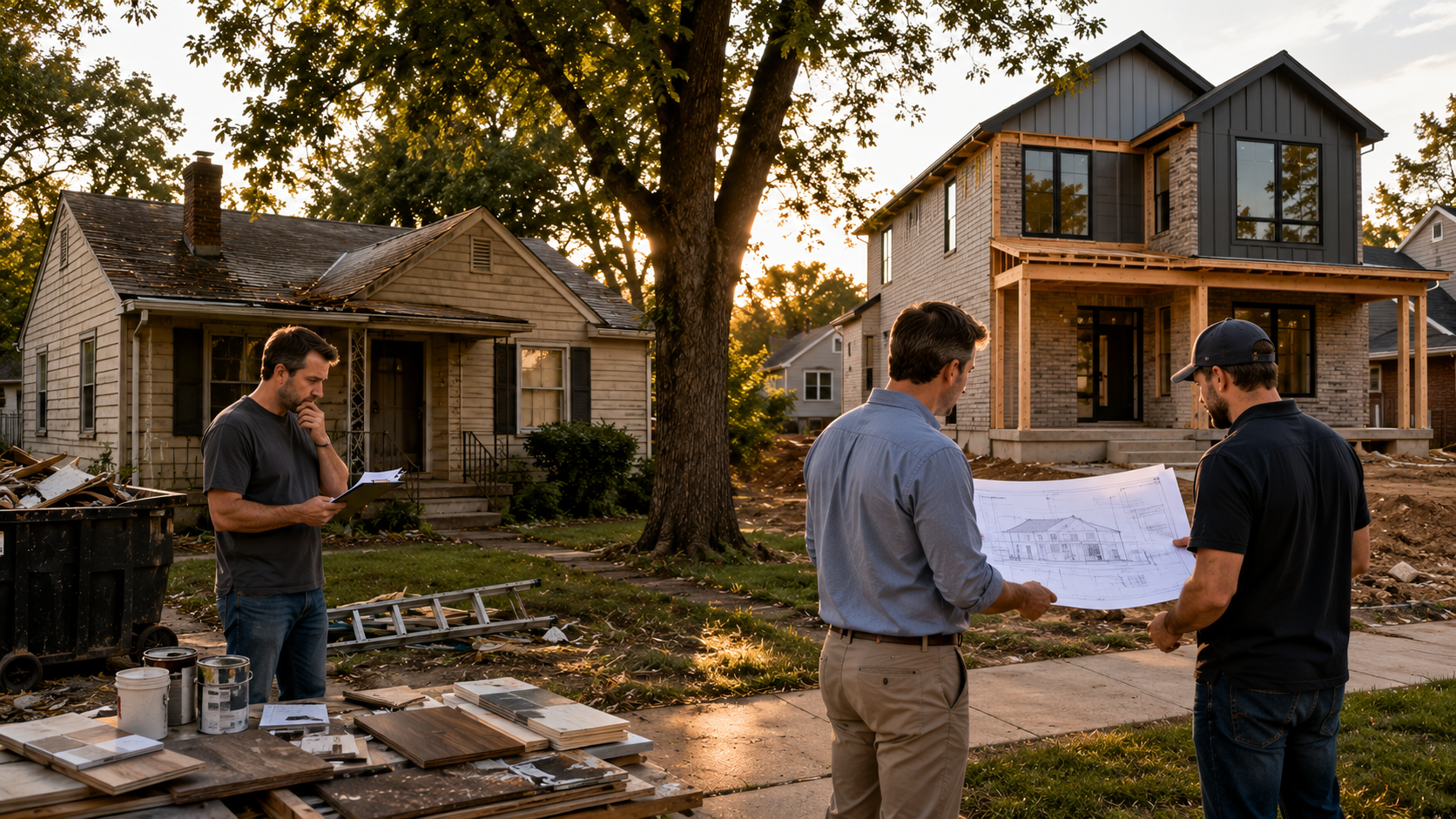
Understanding the 70% ARV Floor in a High-Interest Environment
The 70 percent rule is the industry floor, and it should be. The math is simple: your maximum allowable offer equals 70 percent of ARV minus your repair costs. It builds in a margin for profit, holding costs, and the things that go wrong. If you are new to this, BiggerPockets has a solid primer on the 70 percent rule and flip fundamentals. Learn the floor before you try to beat it.
Here is where it gets interesting. For a traditional cosmetic flip, the 70 percent rule is a hard ceiling on what you can pay. But for new construction infill, the math changes because you are vertically integrated. When you control the build, your construction cost is a line item you manage, not a market price you accept. That means a builder-developer can often pay more for the right lot than a cosmetic flipper can, and still protect the same margin, because they capture the construction profit that the flipper hands to a general contractor.
So the 70 percent rule stays the floor for stabilization and cosmetic deals. New construction infill is the tier above it, where operators who understand build costs quietly outbid everyone else on the best lots. That is the gap most investors never see.
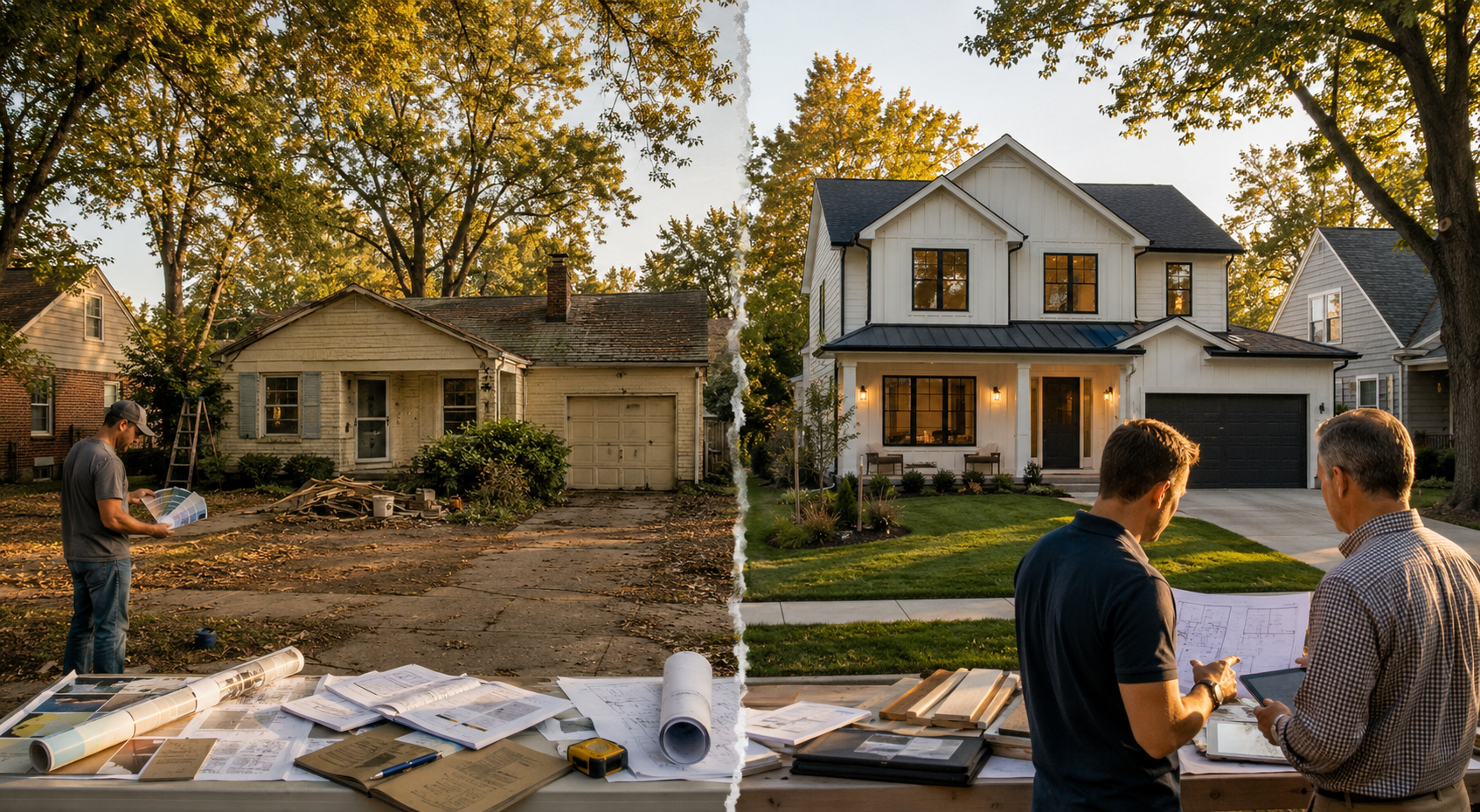
Case Study: A Northland Teardown That Beat the Flip by Two to One
Let me make this concrete with a representative deal, the kind we run at Heartland Homes KC.
We found a functionally obsolete 1950s ranch on an oversized lot in an established Kansas City neighborhood near the core. Dated systems, awkward layout, the kind of house a cosmetic flipper would spend $60,000 rehabbing to hit a $260,000 exit for maybe a $25,000 profit if nothing went sideways. We ran a different play.
The old cosmetic flip play looked like this. Acquisition of the lot and house on a cash, off-market deal ran $155,000. No demolition. Rehab was $60,000. Soft costs, meaning permits, financing, and insurance, were about $8,000. Total project cost landed at $223,000. The finished ARV was $260,000. After selling costs of about $13,000, the estimated net profit was roughly $24,000, and that is if nothing hidden in a 70-year-old house blew up the budget.
The new construction infill play on the same lot looked like this. We bought the teardown for $110,000 cash. Demolition and site prep ran $18,000. New construction was $270,000. Soft costs, meaning permits, plans, financing, and insurance, were $32,000. Total project cost landed at $430,000. The finished ARV, priced against new-build comps, was $525,000. After selling costs of about $34,000, the estimated net profit was roughly $61,000 on a brand new home with no surprise systems, a warranty, and a premium exit.
Those are representative figures for a KC infill project. Actual numbers vary by lot, submarket, and build spec. This illustrates the model, not a guaranteed return.
Read those two side by side. Same lot, same street. The cosmetic flip nets about $24,000 and carries real hidden-condition risk. The new construction infill nets about $61,000 on a product that is genuinely easier to sell. That is roughly two and a half times the profit.
Now run the 70 percent check on the new build. Seventy percent of the $525,000 ARV is $367,500. Our total project cost of $430,000 is higher than that, which means a pure 70-percent-rule wholesaler would pass on this deal entirely. We did not pass, because we control the construction cost and capture the build margin a wholesaler would hand away. That is the entire point. New construction infill is where the deals a flipper cannot see become the deals a builder cannot pass up. My architecture background and the 100-plus homes I have built are exactly what let us underwrite that number with confidence instead of hope.
Best Neighborhoods in Kansas City for Infill Development
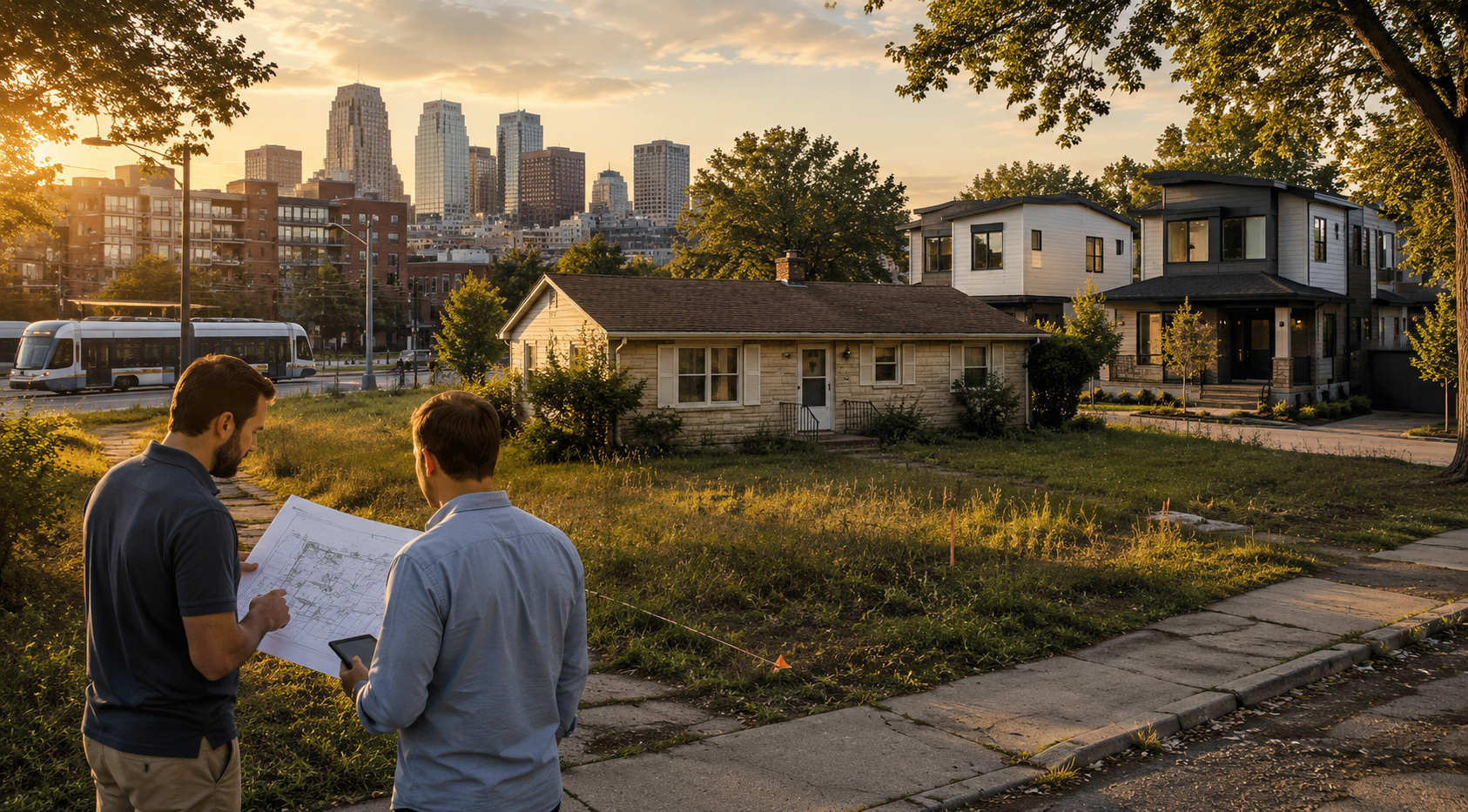
Location does most of the work in new construction infill, because you need a submarket where finished new-build comps already support a premium exit. The best neighborhoods in Kansas City for infill share three traits: rising land values, established walkability, and buyers who will pay for new. A few of the Kansas City neighborhoods and corridors where the math is working in 2026:
Urban core and streetcar-adjacent areas. More than 1,400 new units have landed along the streetcar extension corridor, and transit-oriented lots carry real appreciation. Teardowns near this spine can support strong new-build exits.
West Bottoms and 18th and Vine edges. With SomeraRoad's redevelopment and the Revive the Vine initiative pouring public and private money in, the fringe residential lots around these districts are stabilizing fast.
Established Northland pockets. Older ranch stock on generous lots, strong schools, and buyer demand for new construction make the Northland a reliable infill hunting ground, and it is the area I know best.
Southwest suburbs feeling the Panasonic pull. The $4 billion Panasonic EV battery plant and its thousands of jobs are lifting demand across the southwest metro, which supports both rentals and new-build exits.
Want to see what finished homes are actually trading for before you buy a lot? Browse current listings across Kansas City neighborhoods here to pressure-test your ARV against reality. And for hard market data on prices and inventory by area, the Kansas City Regional Association of Realtors market statistics are the source I check first.
Scaling with Heartland Homes KC and Cash Acquisition Strategies
The bottleneck in fix-and-flip Kansas City is not knowledge. It is inventory. Everyone knows the model. Almost nobody has consistent deal flow. This is where cash acquisition becomes your unfair advantage.
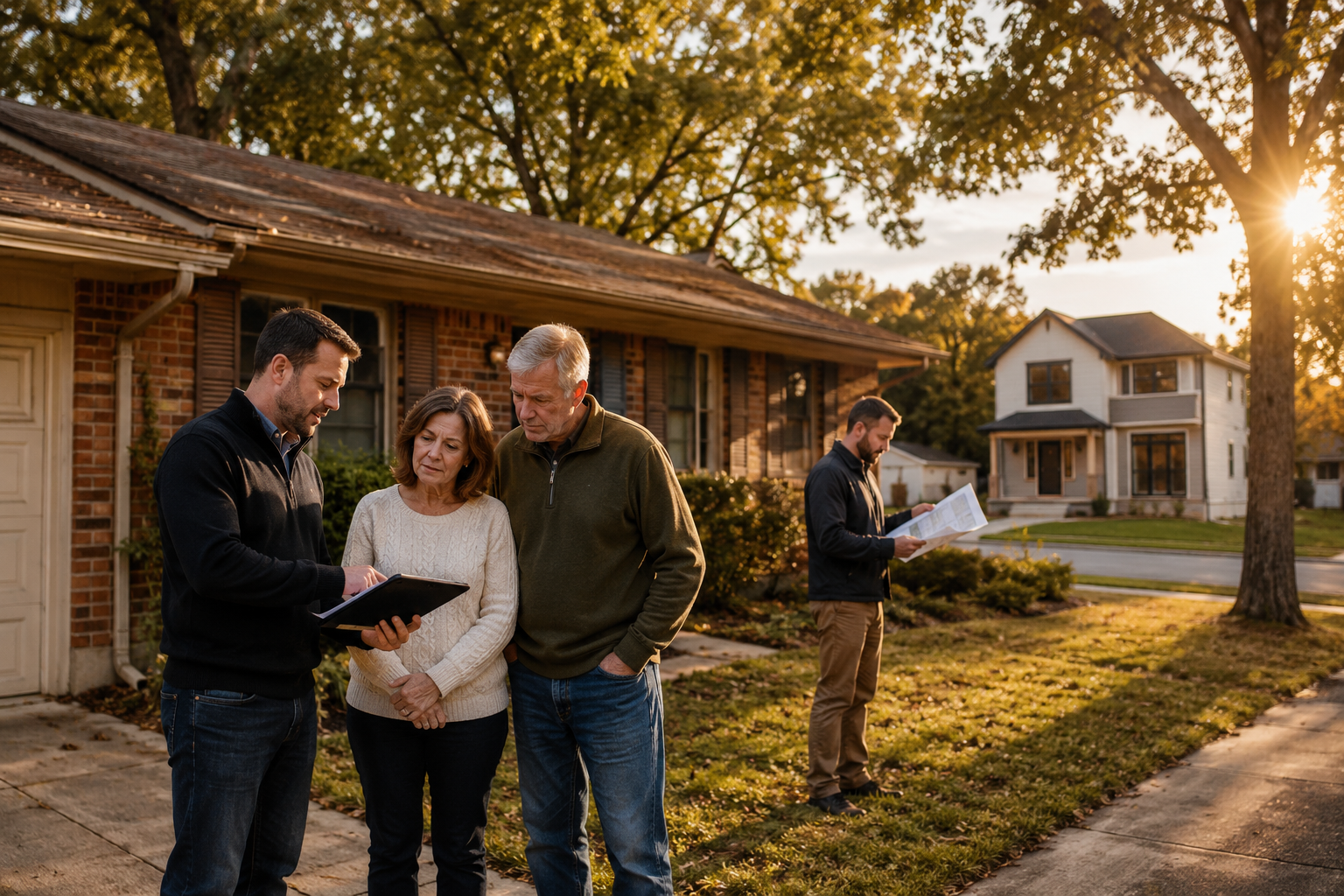
Sellers of obsolete, dated, or distressed homes usually do not want the hassle of a retail sale. A clean cash offer with a fast close is exactly what they want, and it is exactly the off-market inventory an infill builder needs. That is the engine behind cash home buyers Kansas City deal flow. At Heartland Homes KC, we run that acquisition channel directly, which means we control a pipeline of teardown-candidate lots instead of fighting over the same MLS scraps as everyone else. If you are a seller, that same tool gives you a real number in minutes: get your cash offer here. If you are an investor, that pipeline is what you plug into when you partner with us.
Cash also travels well into the suburbs, where a lot of the best teardown lots and motivated sellers actually are. I broke down how cash offers work across the metro's outer rings in this guide to cash offers in Kansas City suburbs, and the same sourcing logic drives our infill acquisitions.
The Role of a Specialized Kansas City Real Estate Agent in Exit Execution
You can buy the right lot and build the right house and still leave $30,000 on the table at the exit if you list it like an amateur. New construction sells on a different set of levers than a resale: staging the model, pricing against new-build comps rather than tired ones, and marketing the story of the home, not just the square footage. A specialized Kansas City real estate agent who understands both the investor's math and the retail buyer's psychology is where your margin gets protected or lost.
Two things I would insist on before any infill exit. First, price against a real number. Do not guess your ARV; pull an accurate valuation here and build your entire pro forma backward from it. Second, market the finished home like the premium product it is. The system I use to sell homes for top dollar is laid out in the Heartland Homes KC 100-point marketing plan, and it is the same playbook whether the home is a resale or a brand-new infill build.
The investors who win in 2026 are the ones who treat acquisition, construction, and exit as one connected system instead of three separate gambles. That is residential redevelopment done right, and it is exactly what we do.
Frequently Asked Questions
What is the best neighborhood in Kansas City for a fix-and-flip in 2026?
The best neighborhoods in Kansas City for infill-style flips in 2026 are established, walkable areas where new construction comps already support a premium exit, including urban core and streetcar-adjacent lots, the fringes of the West Bottoms and 18th and Vine, established Northland pockets, and southwest suburbs benefiting from Panasonic-driven job growth. The rule is simple: buy where finished new homes already sell for a premium.
How do I calculate ARV for new construction in Kansas City?
For new construction, calculate ARV from recent sales of comparable newly built homes in the same submarket, not from tired resale comps. Match square footage, bed and bath count, and finish level, then adjust for lot and location. Because new construction commands a premium, your ARV should reflect new-build comps only. Then underwrite your lot and total build cost backward from that ARV.
Where can I find cash home buyers Kansas City for off-market deals?
The most reliable cash home buyers Kansas City investors work with are local operators who run a direct acquisition channel, like Heartland Homes KC, rather than national iBuyers. Partnering with a local cash buyer gives you access to off-market teardown-candidate lots before they ever hit the MLS. Sellers can get a direct cash offer through our cash offer tool.
What are the benefits of new construction over traditional fix-and-flips?
New construction infill removes the biggest risk in flipping, the hidden condition of an old building, and replaces a mystery rehab budget with a known construction cost. Buyers pay premiums for new homes because of warranties, energy efficiency, and zero deferred maintenance, which support a higher exit. In a high-interest 2026 market, that certainty protects margin far better than a cosmetic flip.
Ready to Build Your Next Deal?
The fix-and-flip Kansas City game did not die. It leveled up. The operators winning in 2026 are buying dirt, building new, and controlling their exit as one system. If you want to access exclusive teardown and new construction inventory and underwrite your next deal with someone who has built over 100 homes and developed dozens of subdivisions, partner with Heartland Homes KC. Book your strategy call with Jason DeLong here, and let's find your next infill project.
About Jason DeLong, Heartland Homes KC
Jason DeLong is a Kansas City real estate agent, investor, and developer with an architecture degree from Kansas State University and more than 17 years in the metro. He has personally built over 100 homes, flipped over 150 properties, and developed more than 25 subdivisions, which is why investors trust him to underwrite new construction infill based on real experience rather than theory. Heartland Homes KC connects investors to off-market inventory, cash acquisition, and premium exit execution across the Kansas City real estate market.


