
Buying a Fixer Upper in Kansas City: Costs, 203k Loans & Red Flags
The repairs that scare buyers are cheap. The ones that don’t are expensive. Here’s the list.
If you’re buying a fixer upper in Kansas City, that one idea will save you more money than any loan program or contractor discount. I’m Jason DeLong with Heartland Homes KC. I have a Bachelor of Architecture from Kansas State, I’ve been licensed since 2007, and I’ve flipped 100+ homes personally. I still analyze 10 to 12 deals a week. Most buyers walk into a house and react to what they can see. I’ve learned to spend my money on what I can’t see.
This guide covers the cheap scary stuff, the expensive quiet stuff, what it costs to gut a house here, how renovation loans actually work in 2026, and when to walk away. If you already have a house in mind, book a quick call with me and we’ll run the numbers together before you write an offer.
The Cheap Repairs That Scare Buyers Away
These are the items that make buyers leave a showing in five minutes. They are also the reason fixer uppers sell at a discount. That’s your opportunity.
Ugly paint. Whole-house interior painting in Kansas City runs roughly $3,000 to $8,000 for a typical home. Lime green bedrooms are not a structural problem.
Bad carpet. Mid-grade carpet installed runs about $3.50 to $7 per square foot locally. Pull it up first. Plenty of older KC homes have hardwood hiding underneath.
Popcorn ceilings. Removal in Kansas City runs about $2.45 to $4.30 per square foot. Test for asbestos first if the house is older.
Dated kitchens. Oak cabinets and laminate counters look tired, but if the layout works, paint, hardware, and new counters change everything.
Overgrown yards. A weekend, a trailer, and a dump run. Bushes swallowing the porch tell you nothing about the house.
Smells. Pet odors and smoke are mostly a flooring, paint, and cleaning problem. Musty smells are different. More on that below.
Dirty, cluttered, or dark rooms. Estate sales and vacant houses look rough. Lighting and cleaning are cheap.
I’ve written before about how little cosmetic work can cost when you know where to focus. My budget curb appeal guide for KC sellers breaks down how much a weekend of work can change a first impression. Buyers who learn to look past this stuff win deals other buyers are afraid of.
The Expensive Quiet Repairs That Wreck Budgets
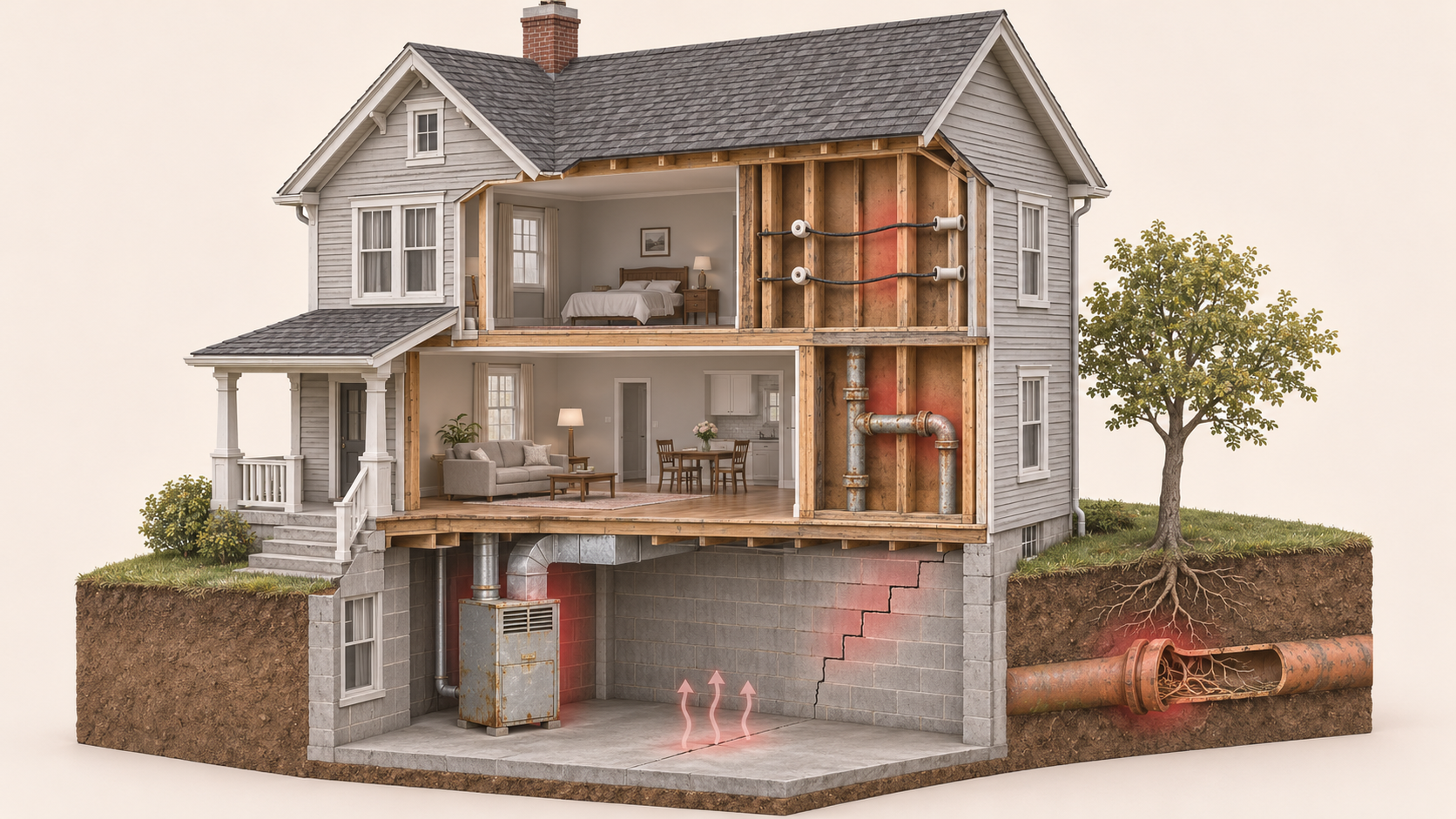
This is the core of buying a fixer upper. These items don’t smell, don’t look ugly, and rarely show up in listing photos. They are where rehab money actually disappears.
Foundation and Basement Walls
Kansas City sits on expansive clay. It swells when wet and shrinks when dry, and that push leans on basement walls year after year. Angi puts the average foundation repair in Kansas City at $5,569. Local foundation companies quote bowing wall repair at about $3,000 to $12,000 or more, and steel piers at $1,250 to $2,500 each, with many homes needing several. Look for horizontal cracks, stair-step cracks in block walls, and walls that lean in at the middle.
Sewer Line
This is the one I see buyers skip most often. Inspector Nick, a KC home inspector, recommends a sewer scope on every Kansas City home built before 1980 because those homes typically have clay lines. A scope costs a couple hundred dollars.Bright Side Plumbing puts typical sewer line replacement in the KC metro at $10,000 to $15,000, with complex jobs passing $30,000 and street-cut jobs running far higher. A $250 camera can save you a $15,000 surprise.
Electrical
Knob-and-tube wiring shows up in a lot of older KC homes. HomeGuide puts replacement at $12,000 to $35,000. Federal Pacific Stab-Lok panels are a known problem: in CPSC-contracted testing, two-pole FPE breakers failed to trip in 51% of individual-pole trials at 135% of rated current. Zinsco panels are another common red flag, and many insurers won’t cover either. HomeAdvisor puts replacing one at $1,500 to $4,000. Aluminum branch wiring from the 1960s and 70s is another flag.
Plumbing
Galvanized supply lines rust from the inside out, and old cast iron drains crack. Angi’s Kansas City data puts a whole-house repipe at about $1,388 to $13,875, with an average around $6,938. Low water pressure on the second floor is your clue.
Roof and HVAC
Angi puts an asphalt roof replacement in Kansas City at $5,345 to $10,337, averaging $7,680. Replacing both the furnace and AC runs about $4,625 to $11,563 locally. Neither is a deal killer on its own. Both together on a thin margin can be.
Water, Grading, and Drainage
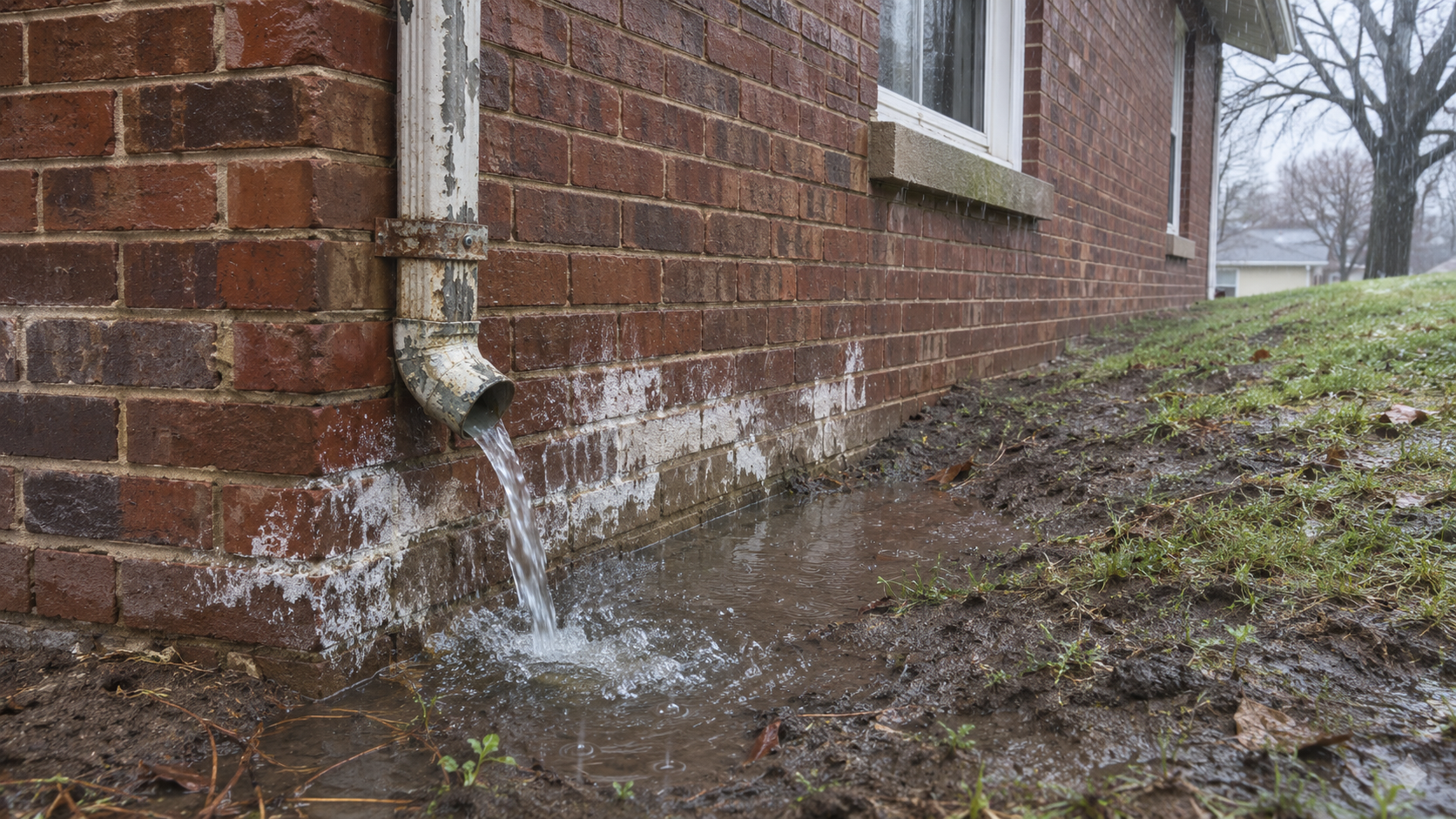
Musty basements, efflorescence on walls, and soil sloping toward the house are all warnings. Water is the root cause of most foundation problems here. Regrading, gutters, and downspout extensions are cheap. Ignoring them is not.
Radon, Lead, Asbestos, and Termites
The EPA places Jackson, Clay, Johnson, and Wyandotte counties in Radon Zone 1, its highest category. K-State Research and Extension reports the average Johnson County test at 5.3 pCi/L, above the EPA’s 4.0 action level. KC Pier, a local radon contractor, says most KC homes fall in the $900 to $1,500 range for mitigation, while Angi’s Kansas City data averages lower at $727. Any home built before 1978 may have lead paint. Angi puts lead paint abatement in Kansas City at roughly $1,478 to $5,520, and limited asbestos removal around $1,031 on average. Termite damage hides inside walls and sill plates, so get a wood-destroying insect inspection. None of these are scary when you budget for them. They are scary when you don’t.
How Much Does It Cost to Gut a House in Kansas City?
HomeGuide puts a complete gut-to-the-studs remodel at $60 to $150 per square foot nationally. Other 2026 cost guides put a full mid-tier gut at $100 to $200 per square foot. Kansas City labor generally runs below coastal markets, so local projects with builder-grade finishes tend to land in the lower half of those ranges.
For a 1,400 square foot Waldo or Raytown ranch, that means a real gut could run roughly $84,000 to $210,000. That spread is the whole story. Where you land depends on whether the foundation, sewer, wiring, and plumbing all need replacing, or just some of them.
My architect brain looks at this differently than most buyers do. If the bones are good, meaning the structure, the roofline, and the floor plan, a gut is a finish project. If the bones are bad, a gut is a rebuild with a fixer upper price tag on it.
What Is a 203k Loan? (203k Loan Explained)

The FHA 203(k) lets owner-occupants buy a house and finance repairs in one mortgage. It comes in two versions.
Limited 203(k)
For minor, nonstructural repairs.
Total rehab costs are capped at $75,000. HUD raised this from $35,000 through Mortgagee Letter 2024-13 for case numbers assigned on or after November 4, 2024. HUD’s October 2026 handbook update still lists $75,000.
Energy improvements can be financed on top of the $75,000 cap.
A HUD 203(k) consultant is optional.
Repairs must be finished within nine months. In June 2026, HUD also increased the number of draw requests allowed on Limited 203(k) loans.
Standard 203(k)
For structural work, major systems, and bigger projects.
Minimum $5,000 in repairs. No separate renovation cap, but the total loan must fit under the FHA loan limit.
A HUD-approved 203(k) consultant is required.
Repairs can run up to 12 months, and up to 12 months of mortgage payment reserves can be financed.
2026 Kansas City FHA Loan Limits
The 2026 FHA limit for a single-family home is $541,287 across the Kansas City metro, including Jackson, Clay, Platte, and Cass counties in Missouri and Johnson and Wyandotte counties in Kansas. Duplexes go to $693,050, triplexes to $837,700, and fourplexes to $1,041,125.
Down Payment, Credit, and Mortgage Insurance
3.5% down with a 580 or higher credit score.
10% down with scores from 500 to 579.
Many lenders set their own floor around 620 to 640.
Upfront mortgage insurance is 1.75% of the loan. Annual MIP is 0.55% for most borrowers, and it stays for the life of the loan if you put less than 10% down.
Timeline
Plan on a longer close than a regular FHA loan, often 45 to 60 days. Contractor bids, the consultant’s work write-up, and the as-completed appraisal all take time. In a competitive offer situation, that matters.
Other Renovation Loan Options in Kansas City

The 203(k) isn’t your only renovation loan Kansas City buyers can use. Here’s how the others stack up.
Fannie Mae HomeStyle Renovation. Conventional loan. Minimum 620 credit. As little as 3% down for eligible first-time or HomeReady buyers, typically 5% otherwise. Renovation funds can reach 75% of the lesser of purchase price plus renovation costs or the as-completed value. Owner-occupants, second homes, and investors are eligible. Mortgage insurance can be removed later, which is a big advantage over FHA.
Freddie Mac CHOICERenovation. Similar 75% structure to HomeStyle. Freddie Mac’s fact sheet requires renovations to be completed within 450 days. Many lenders start around a 620 credit score.
VA renovation loan. Zero down for eligible veterans. The VA itself sets no repair cap, but Bankrate notes that most lenders cap the rehab amount at $50,000 and require the work to be completed within 120 days of closing. Most lenders also want about a 620 score.
USDA. Only relevant in eligible rural areas around the metro edges. USDA purchase loans allow small repair escrows, and the Section 504 program helps very low-income rural owners make repairs.
Hard money and fix-and-flip loans. For investors only. Expect roughly 9.5% to 13% interest, 1 to 3 points, 6 to 18 month terms, and loans capped around 70% to 75% of ARV. Fast and expensive by design.
HELOC or cash-out refinance after purchase. Buy with a normal loan, then borrow against equity later. Simpler paperwork, but the house has to qualify for regular financing as-is, and you need equity to tap.
Is a Fixer Upper Worth It in Kansas City?
A fixer upper is worth it when the purchase price plus repairs plus a cushion still lands below what the finished home will appraise for. If it doesn’t, you’re paying retail for the privilege of doing construction.
Here’s the investor rule I use, and why buyers should use it too.
The 70% Rule as a Buyer’s Sanity Check
My formula is simple: Maximum Allowable Offer (MAO) = 70% of ARV minus repairs. ARV is the after-repair value, meaning what the house sells for when it’s done.
Example: if the finished home is worth $250,000 and repairs are $50,000, then 70% of $250,000 is $175,000. Subtract $50,000 and your investor-level max offer is $125,000.
That 30% gap covers closing costs, holding costs, financing, selling costs, surprises, and profit. On my own flips, I target about $25,000 in profit. As an owner-occupant, you don’t need that whole gap. You aren’t selling next month. But if you’re paying close to ARV minus repairs with no cushion at all, you have zero room for the sewer line or the bowing wall. Somewhere between the investor number and full retail is where a smart owner-occupant buys.
How I Walk a House
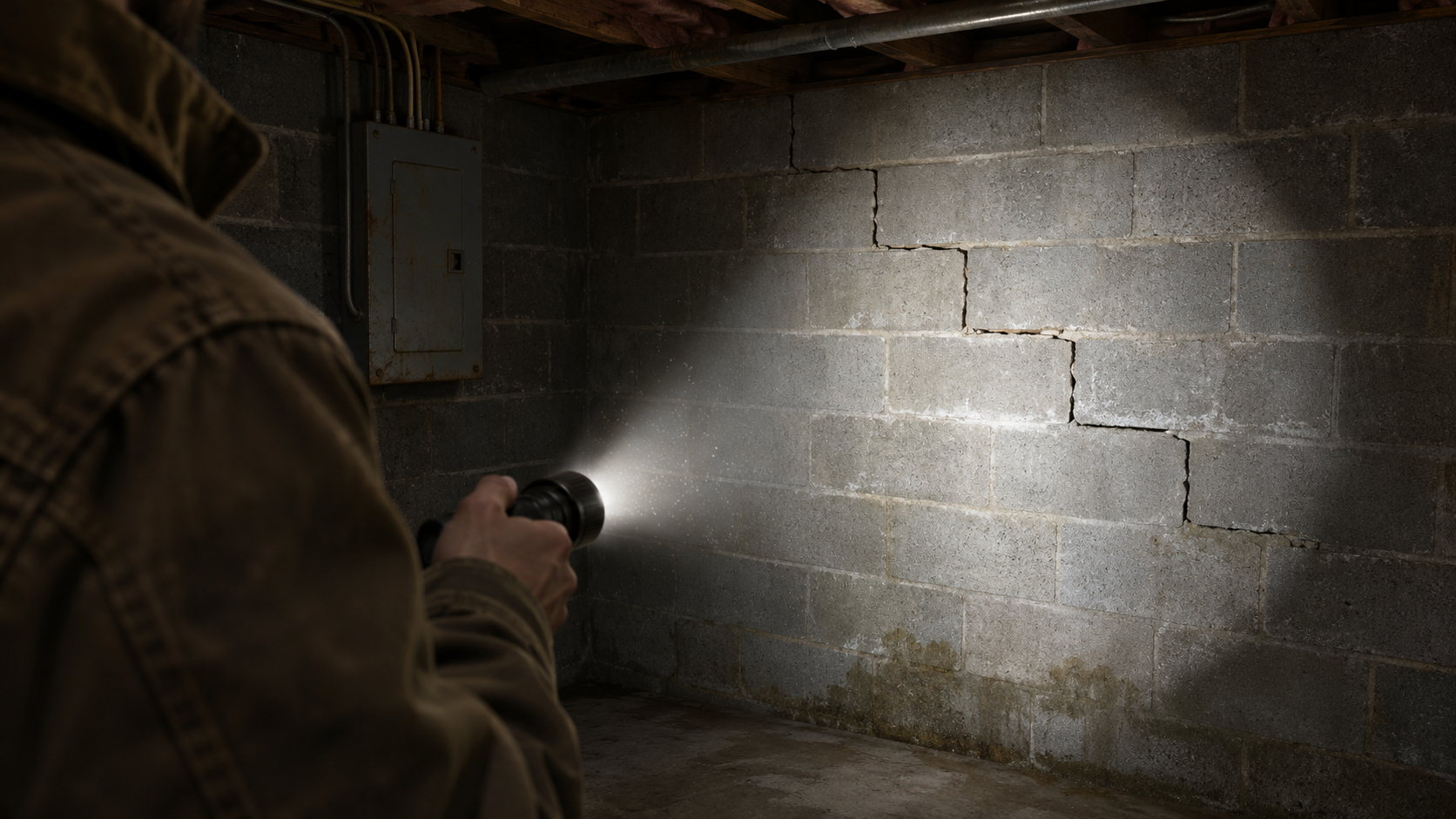
Basement first. Walls, cracks, water stains, and the panel.
Look up. Roof age, attic, and signs of old leaks.
Order the sewer scope on anything pre-1980.
Price the quiet stuff before I fall in love with the kitchen.
Kansas City Neighborhoods Where Fixer Uppers Make Sense
Kansas City’s housing stock is old, and that’s where fixer uppers live. In Kansas City, Missouri, Point2Homes’ Census-based data puts the median year built at 1969, with 21.3% of homes built before 1940. In Kansas City, Kansas, the median year built is 1961. Neilsberg’s 2026 data puts the median year built for the Kansas City metro at 1980, meaning half of homes there were built before 1980.
These are the kansas city neighborhoods where I see the most fixer upper opportunity:
Waldo and Brookside. 1920s bungalows and Tudors with great bones.Strong resale demand. Expect clay sewer lines and older electrical.
Midtown and Westport. Big old foursquares and character homes. Higher upside, higher systems risk.
Northeast KC. Historic homes at lower price points. Inspection discipline matters block by block.
Raytown and Independence. Mid-century ranches with simpler systems. Good starter fixer territory.
Older Northland pockets. North Kansas City, Gladstone, and older parts of Clay County. Solid 1950s and 60s housing.
Kansas City, Kansas. Real value plays, especially in Wyandotte County’s older neighborhoods.
Older Overland Park, Mission, and Prairie Village. Mid-century ranches on the Kansas side with strong school-driven resale.
I break down several of these value areas in my guide to the most affordable places to live near Kansas City. The best neighborhoods in Kansas City for a fixer are the ones where finished homes sell well and the gap between as-is and fixed-up price is wide.
When a Fixer Upper Is NOT Worth It: Red Flags to Walk Away
Major foundation movement plus water. Fixing walls without fixing water is paying twice.
The math only works if nothing goes wrong. Something always goes wrong.
Three or more big systems failing at once. Foundation, sewer, electrical, and roof together usually means a rebuild.
The ARV is capped by the street. The nicest house on a rough block rarely appraises.
Unpermitted additions or layout changes. Permits, structural fixes, and appraisal issues stack up fast.
You can’t absorb a 15 to 20% overrun. If your budget has no slack, buy something closer to move-in ready.
Sometimes the honest answer is that new or newer is the better buy. I compare those trade-offs in new construction vs resale in Kansas City.
Own a Fixer Upper? Your Options as a Seller

If you’re on the other side and own a house that needs work, you have more choices than most agents present.
Take a cash offer. If you’d rather skip repairs entirely, you can get a market-value cash offer from our network of cash home buyers Kansas City sellers trust. Our Cash Offers+ program can close in 7 to 14 days.
Fix It and List It. We handle the repairs with no upfront cost to you, then list the improved home. My wife Jana coordinates construction and operations, so you’re not managing contractors.
Trade-In Program. Buy your next home first, then sell the current one.
List it the right way. Our 100-point marketing plan is built to get the most net out of your sale.
Selling on your own? Read my for sale by owner guide for Kansas City before you start.
Not sure which path pays more? Start with a free home value estimate and we’ll compare every option side by side.
Frequently Asked Questions About Buying a Fixer Upper
What is the 203k loan limit in 2026?
The Limited 203(k) caps total rehab costs at $75,000, with energy improvements allowed on top. The Standard 203(k) has no separate repair cap, but the total loan must fit under the 2026 FHA limit, which is $541,287 for a single-family home in the Kansas City metro.
How much does it cost to gut a house?
A full gut-to-the-studs remodel typically runs $60 to $150 per square foot nationally, with some 2026 guides putting mid-tier guts at $100 to $200. In Kansas City, a 1,400 square foot house could run roughly $84,000 to $210,000 depending on how many major systems need replacing.
What are the most expensive hidden repairs in Kansas City homes?
Foundation movement from clay soil, clay sewer line failures, knob-and-tube wiring, and water intrusion. Sewer replacement often runs $10,000 to $15,000, and knob-and-tube rewiring can reach $12,000 to $35,000.
Can I use a 203k loan for an investment property?
No. FHA 203(k) loans are for owner-occupants. Investors typically use hard money, private money, or in some cases Fannie Mae HomeStyle.
Is buying a fixer upper worth it?
Yes, when the purchase price plus repairs plus a 15 to 20% cushion lands below the after-repair value. Use the 70% rule (70% of ARV minus repairs) as a sanity check, and always get a sewer scope and a foundation look before you commit.
Do I need a sewer scope in Kansas City?
On any home built before 1980, yes. Those homes typically have clay sewer lines, and a scope costing a couple hundred dollars can reveal a five-figure problem.
Ready to Buy a Fixer Upper the Smart Way?
Buying a fixer upper is one of the best ways to build equity in Kansas City. It’s also one of the fastest ways to lose it if you budget for paint and get hit with a sewer line. The difference is knowing where the money goes before you sign.
I’ve walked hundreds of these houses as an architect, a builder, an investor, and a Kansas City real estate agent. I’ll tell you what the house really needs, which renovation loan fits, and whether the numbers work. If they don’t, I’ll tell you that too.
Schedule a call with Heartland Homes KC and let’s run your deal before someone else does.


