Builder Rate Buydown in Kansas City: Is the Incentive Worth It?
That "free" rate buydown is priced into the house. Here's how to tell if it's actually a deal.
Walk into almost any model home in Kansas City right now and you'll hear the same pitch. Use our lender and we'll buy your rate down. It sounds like found money. Sometimes it is. Sometimes it's your own money moved to a different line on the closing statement.
I'm Jason DeLong with Heartland Homes KC. I've built over 100 homes and flipped over 150 homes personally, so I know a thing or two about the process. From 2005 to 2009 I also built 25 to 30 subdivisions around the metro. I've sat on the builder's side of the table, and I know how incentives get priced.
This guide breaks down how a builder rate buydown really works, when it's worth taking, and when you should push for something else. If you'd rather walk through a specific community and contract with me, book a quick call here.
Why Builder Rate Buydowns Are Everywhere in Kansas City Right Now
Builders aren't offering incentives because they feel generous. They're offering them because buyers are scarce.
Here's where the market sits heading into the end of 2026:
Freddie Mac's November 5, 2026 survey put the 30-year fixed rate at 7.18%. That was the third straight weekly drop, but it's still almost a full point above the 6.22% average from a year earlier.
Builder confidence fell to 29 in October, the lowest reading since June 2012, according to the NAHB/Wells Fargo Housing Market Index.
43% of builders cut prices in October. That's the highest share NAHB has recorded in the 2020 to 2026 period, and the average cut held at 6%.
65% of builders used sales incentives in October. That's the 19th straight month at 60% or higher.
Translation: buyers have more leverage on new construction than they've had in years.
You see it locally in the Northland, Johnson County, and Lee's Summit. National builders openly tie their best financing perks to their in-house lender. Lennar, for example, says using its mortgage company is optional, but rate buydowns and closing cost help on select Kansas City homes come with it.
Why Builders Prefer Buydowns Over Price Cuts
Every closed sale becomes a comp. If a builder knocks $20,000 off one house, the appraiser uses that sale for the next homes in the phase. Every owner who already closed sees their value take a hit.
A builder rate buydown hides the discount inside the financing. The base price stays intact. The comps stay protected. That's not a conspiracy. It's how a subdivision gets underwritten, and I underwrote plenty of them.
But it means the incentive serves the builder's spreadsheet first and yours second. Your job is to flip that order. I go deeper on the full incentive menu in The Truth About Builder Incentives in Kansas City Neighborhoods.
2-1 Buydown Explained in Plain English
A 2-1 buydown lowers your interest rate by two points in year one and one point in year two. From year three on, you pay the full note rate. The builder pays the difference upfront, and that money sits in an account that subsidizes your monthly payment.
Here's a real-world example. Say you buy a $450,000 new build with 10% down. Your loan is $405,000 at a 7.125% note rate. Principal and interest only:
Year 1 at 5.125%: about $2,205 per month
Year 2 at 6.125%: about $2,461 per month
Year 3 and beyond at 7.125%: about $2,729 per month
You save roughly $523 a month in year one and $268 a month in year two. The total cost to the builder is about $9,500.
That's real money. But notice what it isn't. It isn't a lower rate for the life of the loan. In month 25, you're paying the full rate.
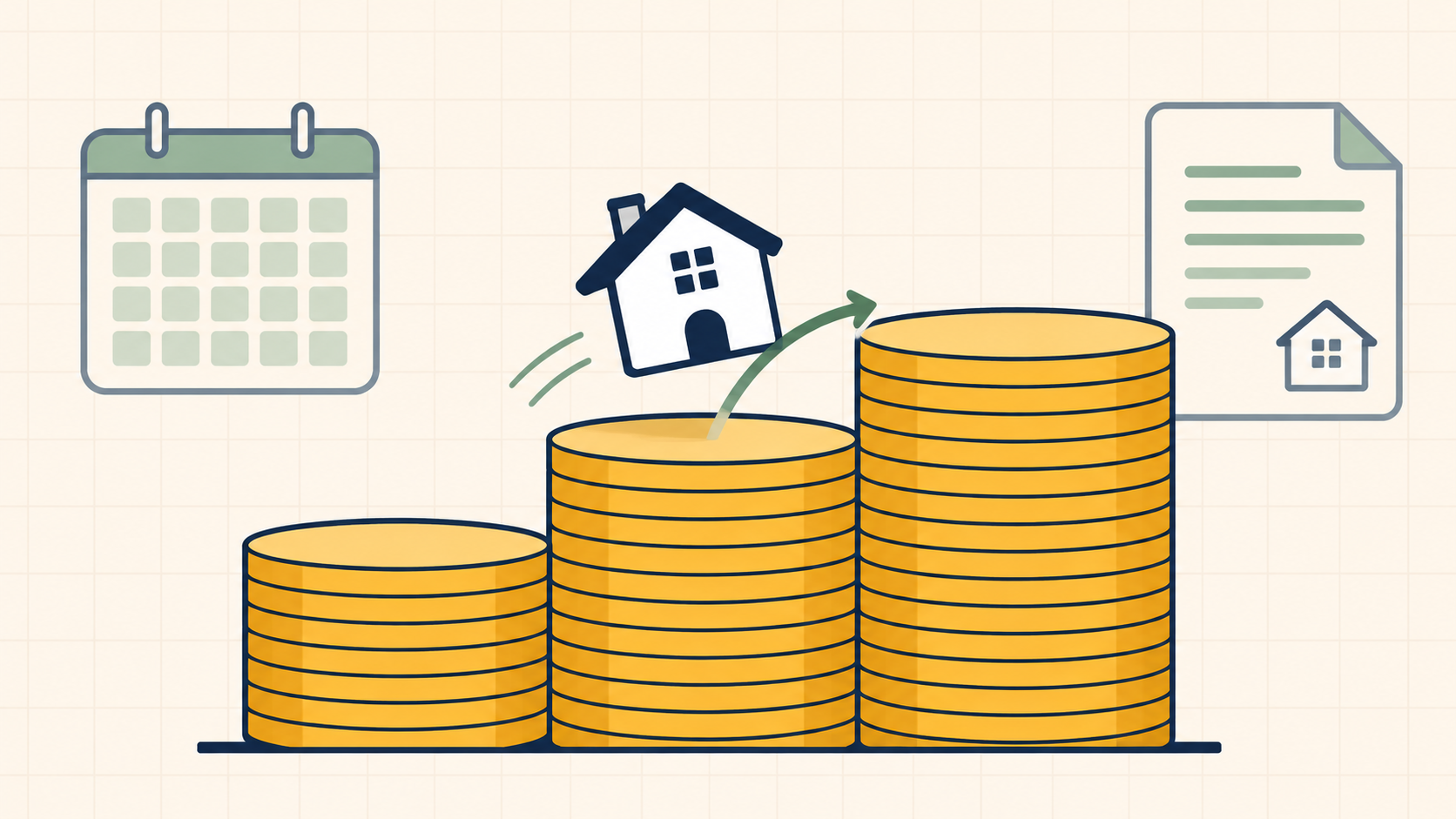
Temporary vs Permanent Buydowns
A temporary buydown (2-1, 1-0, or 3-2-1) steps your rate back up over time. A permanent buydown uses discount points to lower your rate for the entire loan.
A common rule of thumb: one point costs 1% of the loan and often lowers the rate around a quarter point. Pricing changes daily by lender, so treat that as a ballpark. On a $405,000 loan, that's about $4,050 for roughly $65 to $70 a month in savings. Break-even lands around five years.
Which one wins depends on how long you'll keep the loan:
Planning to refinance in the next couple of years? A temporary buydown front-loads your savings.
Planning to keep this loan seven years or more? A permanent buydown usually comes out ahead.
The Qualification Catch
On most conventional loans with a temporary buydown, the lender qualifies you at the full note rate, not the teaser rate. So a 2-1 doesn't help you afford more house on paper.
If you're stretching to qualify, a permanent buydown or a straight price reduction does more of the heavy lifting.
How to Tell If the Builder Rate Buydown Is Priced Into the House
This is where "free" falls apart.
Picture the same floor plan offered two ways. Option A is $450,000 with no incentive. Option B is $465,000 with a 2-1 buydown "on us." Same 10% down.
Option B gives you a $418,500 loan:
Year 1: about $2,279 per month
Year 2: about $2,543 per month
Year 3 through year 30: about $2,820 per month
Option A gives you $2,729 per month from day one.
Over the first five years, the buydown buyer pays about $4,350 less in principal and interest. Sounds good. But they also brought $1,500 more to closing, and they owe about $12,700 more on the loan at the end of year five. Net result: nearly $10,000 behind, plus about $91 more every month for the remaining life of the loan.
A higher contract price can also nudge your assessed value up, depending on the county. And if the market softens, a padded price is harder to appraise when you sell.
Run These Five Checks on Every Incentive
Ask for the price without the incentive. If the builder won't give you a number, that's your answer.
Pull closed comps in the same community and phase, including the concessions paid. A buyer's agent can see this in the MLS.
Convert every option to cash value. Compare the buydown cost to a price cut and a closing cost credit dollar for dollar.
Model your real hold period. How long will you actually keep this loan?
Ask what happens to unused buydown funds if you refinance or sell early. On many programs they're applied to your loan balance, but get it in writing.
Buydown vs Price Cut: The Simple Math
Take that same $9,500 and apply it as a price reduction instead. On the $450,000 home with 10% down, your payment drops about $58 a month for the life of the loan. You also start with a lower balance and a lower basis.
The buydown gives you $9,500 in savings over 24 months. The price cut gives you smaller savings that keep going, plus equity on day one. If you expect to refinance soon, the buydown front-loads the benefit. If you're staying put with this loan, the price cut usually wins over time.
Should I Use the Builder's Lender?
Short answer: get the builder lender's Loan Estimate, then get one from an outside lender for the exact same scenario. Then compare line by line.
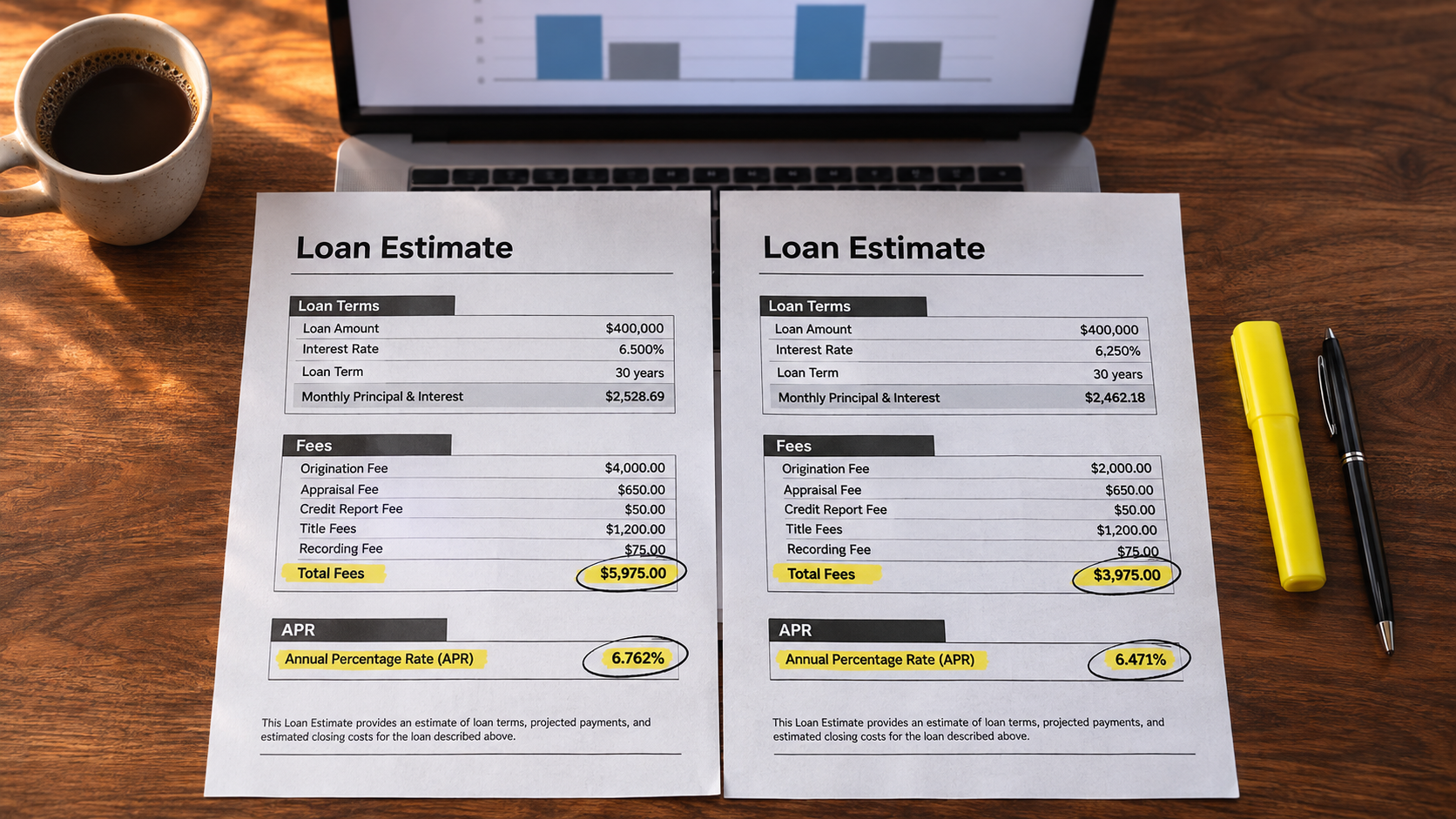
What to compare:
Note rate, and whether the reduction is temporary or permanent
Discount points and origination charges
APR, which folds fees into the true cost
Lender credits
Rate lock length and cost, since new builds can take months to finish
The builder's lender does have real advantages. They know the build schedule. They often offer longer locks during construction. And the incentive usually only applies if you use them.
The downside is pricing pressure. When the incentive is doing the selling, there's less reason to sharpen the pencil on rate and fees. Sometimes the builder package is genuinely the best deal. Sometimes an outside lender's rate plus a negotiated credit wins. You only know by comparing.
Negotiate the Form of the Incentive
Builders budget incentive dollars per house. You can often ask to move those dollars around. Same budget, different form:
Toward the purchase price
Toward a permanent buydown instead of a temporary one
Toward closing costs
Toward a mix of all three
Your leverage is strongest on finished inventory homes. A completed spec home costs the builder money every month it sits: construction loan interest, taxes, utilities, and insurance. That's my investor brain talking, but carry cost is real, and builders feel it.
Builder Closing Cost Credit: When It Beats a Buydown
A builder closing cost credit reduces the cash you bring to the table. It can cover lender fees, title charges, prepaid taxes and insurance, and in many cases discount points.
It often beats a buydown when:
You're cash-tight and need reserves. New builds come with costs that aren't in the base price, like window coverings, fencing, landscaping upgrades, and garage storage.
You plan to refinance soon anyway.
You want flexibility. A credit can be pointed at points to permanently lower your rate.
Know the Contribution Limits
Loan programs cap how much a seller or builder can contribute:
Conventional loans: 3% with less than 10% down, 6% with 10% to 25% down, 9% with more than 25% down
FHA loans: 6%
VA loans: 4% in concessions, separate from normal closing costs
If the builder offers more than your loan allows, the extra can go to waste unless it's redirected to price. Confirm the numbers with your lender before you sign.
New Construction Incentives 2027: Will Deals Get Better or Worse?
Nobody has a crystal ball, including me. Here's how I read it.
Incentives follow inventory and rates. If rates keep easing into 2027, buyer traffic picks up and incentives shrink. If rates stay above 7%, the pressure that pushed 43% of builders to cut prices doesn't go away.
Year-end also matters. Many builders push hard to close standing inventory before the calendar flips and winter slows traffic. That makes November and December a good time to negotiate.
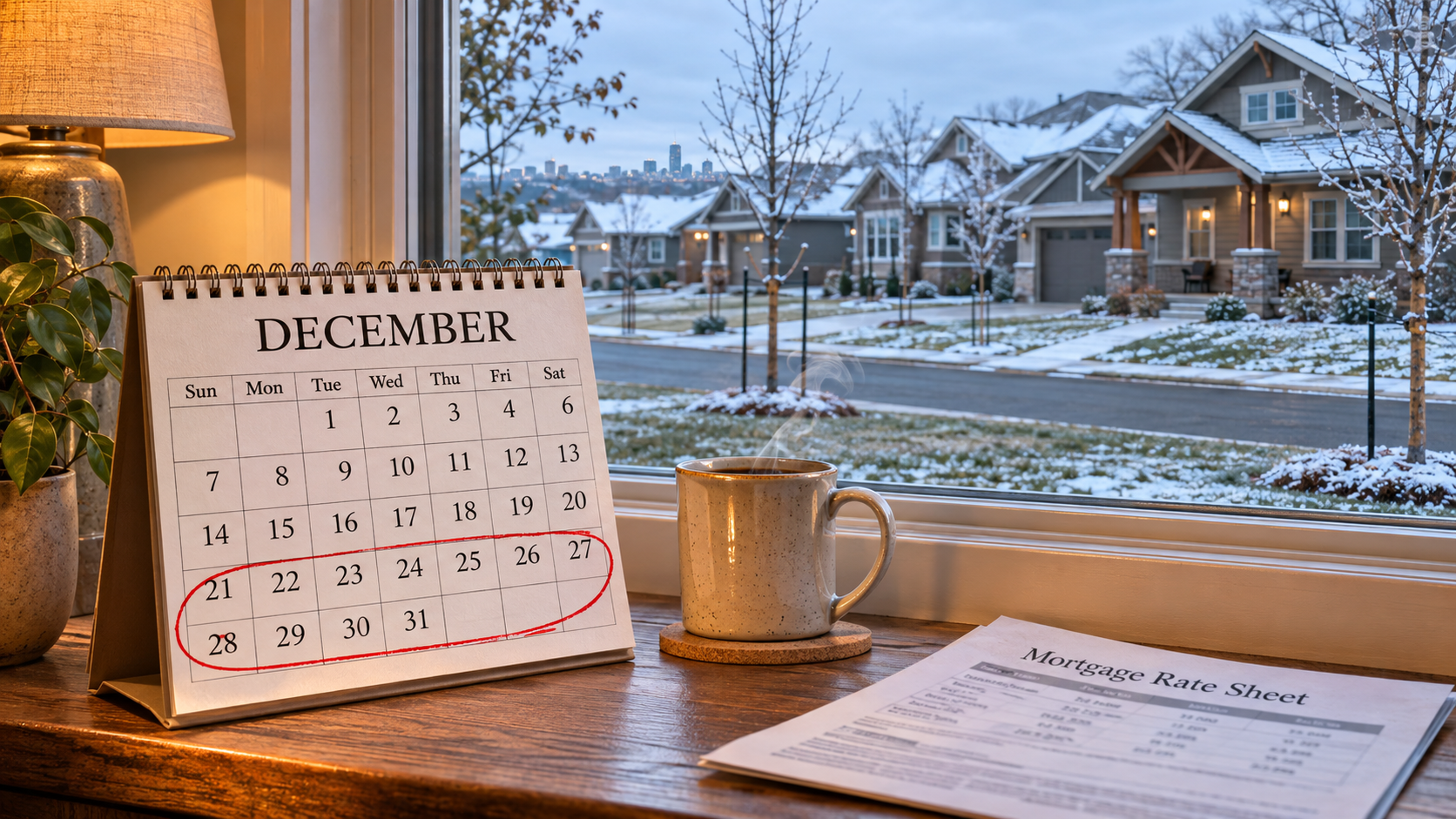
The bigger point: a rate can be refinanced later. A negotiation window can't be reopened. If you need the home and the payment works at the full note rate, today's incentives are worth capturing.
One warning. Don't buy a house you can only afford in year one. Underwrite yourself at the full rate, every time.
Pick the Community First, the Incentive Second
The best deal in the wrong neighborhood is still the wrong house. Incentives vary a lot across Kansas City neighborhoods, and so do school districts, lot premiums, and resale demand.
If you're comparing communities, start with my Lee's Summit new construction neighborhood guide and 7 Best New Construction Neighborhoods in Parkville MO for 2026. Both break down some of the best neighborhoods in Kansas City for new builds.
Bring Your Own Agent on the First Visit
The onsite sales rep works for the builder. That's their job, and many are great at it. But they're not negotiating for you.
Many builders require your agent to be with you on the first visit or registered in advance. Show up alone and you may lose your representation on that home. Call your Kansas City real estate agent before you tour.
Selling Your Current Home Before You Buy New Construction
Most new build buyers I talk to have a house to sell first. That's where deals get stuck. Many builders won't wait long on a home sale contingency, especially on finished inventory.
At Heartland Homes KC, we don't push one path. We lay out options so you can pick the one that fits your timeline and your net:
Know your number first. Get a quick estimate with our home value tool.
Need certainty fast? Compare offers from cash home buyers Kansas City sellers trust through our cash offer program. A firm sale date makes your new build offer much stronger.
Want top dollar? See how we market homes with our 100+ Point Marketing Plan.
Thinking about selling it yourself? Read our Kansas City FSBO guide before you commit.
The goal is simple: maximize your net, not just your price, on both sides of the move.
Builder Rate Buydown FAQs
What is a builder rate buydown?
A builder rate buydown is money the builder pays to lower your mortgage interest rate. It can be temporary, like a 2-1 buydown, or permanent through discount points.
Is a 2-1 buydown worth it in Kansas City?
It can be, if the home isn't priced higher to pay for it and you can comfortably afford the full rate in year three. Always ask for the no-incentive price and compare.
Do I have to use the builder's lender to get the incentive?
Usually, yes. Builders typically tie their best incentives to their affiliated lender. You can still use any lender you want, but you may give up the incentive.
Can I ask for a price reduction instead of a buydown?
Yes. Builders often prefer buydowns to protect comps, but many will redirect incentive dollars toward price or closing costs, especially on finished homes.
What happens to a temporary buydown if I refinance or sell?
It depends on the program. On many loans, unused funds are applied to your loan balance. Get the answer in writing from your lender before closing.
Talk Through Your New Build Deal Before You Sign
A builder rate buydown isn't good or bad on its own. It's a tool. The question is whether it's the best use of the incentive dollars on that specific house, for your specific timeline.
I'll run the numbers with you: buydown vs price cut vs closing cost credit, builder lender vs outside lender, and how to time the sale of your current home. No pressure, just math from someone who has built the houses and negotiated both sides.

Schedule your strategy call with Jason DeLong and Heartland Homes KC, and let's make sure your "free" incentive is actually working for you.


