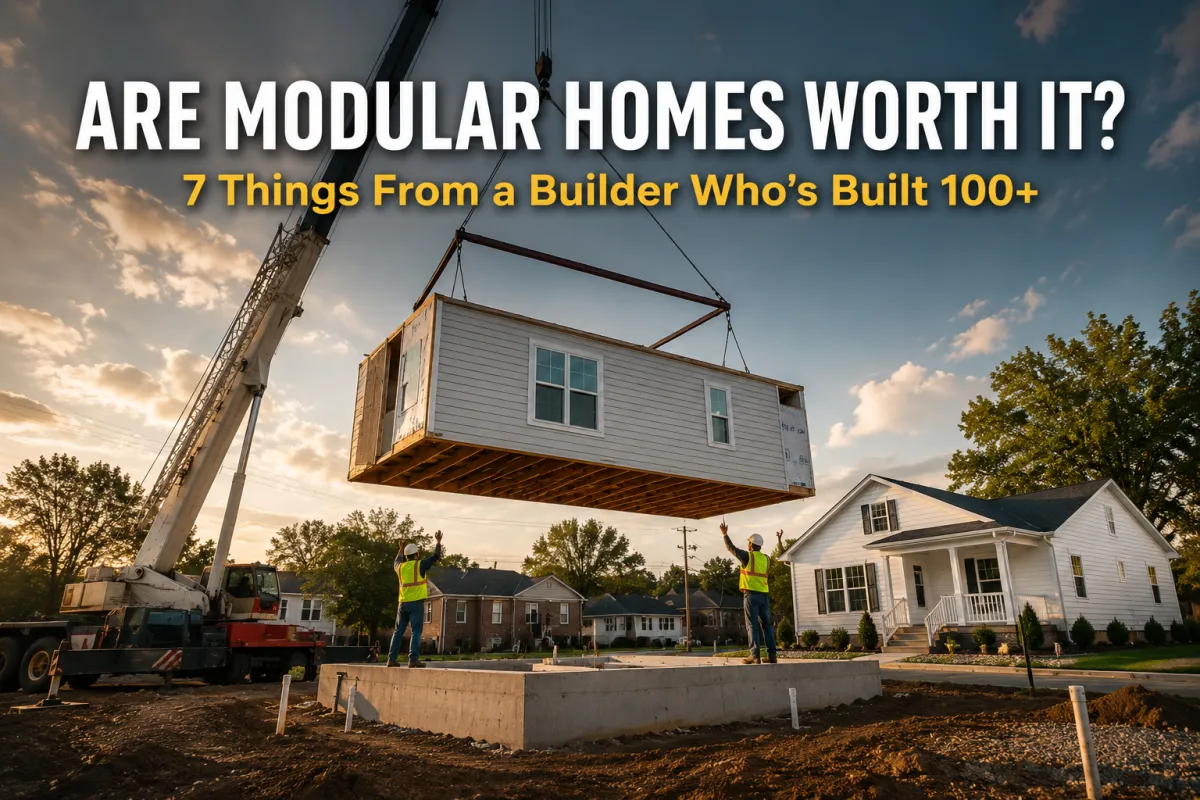
Are Modular Homes Worth It? 7 Things From a Builder Who's Built 100+
Most people asking "are modular homes worth it" are getting answers from websites that have never swung a hammer. Finance blogs. Contractor directories. Generic listicles written by people who could not tell you the difference between a rim joist and a ridge board.
I am Jason DeLong with Heartland Homes KC at eXp Realty. I have built over 100 homes and flipped over 150 homes personally, so I know a thing or two about the process. I have poured foundations, framed walls, argued with inspectors, and written checks to subcontractors who did not show up on time. I have also watched the modular housing industry evolve from something most builders laughed at to something that is now reshaping entire neighborhoods in Kansas City.
So here is my honest take. Not from a modular home company trying to sell you one. Not from a lender trying to finance one. From a builder and Kansas City real estate agent who has done this work with his own hands.
If you want to talk through whether modular makes sense for your situation, schedule a call with me here.
1. Modular Homes Are Not What You Think They Are
Let me clear this up first because I hear the confusion every week. A modular home is not a mobile home. It is not a manufactured home. It is not a trailer.
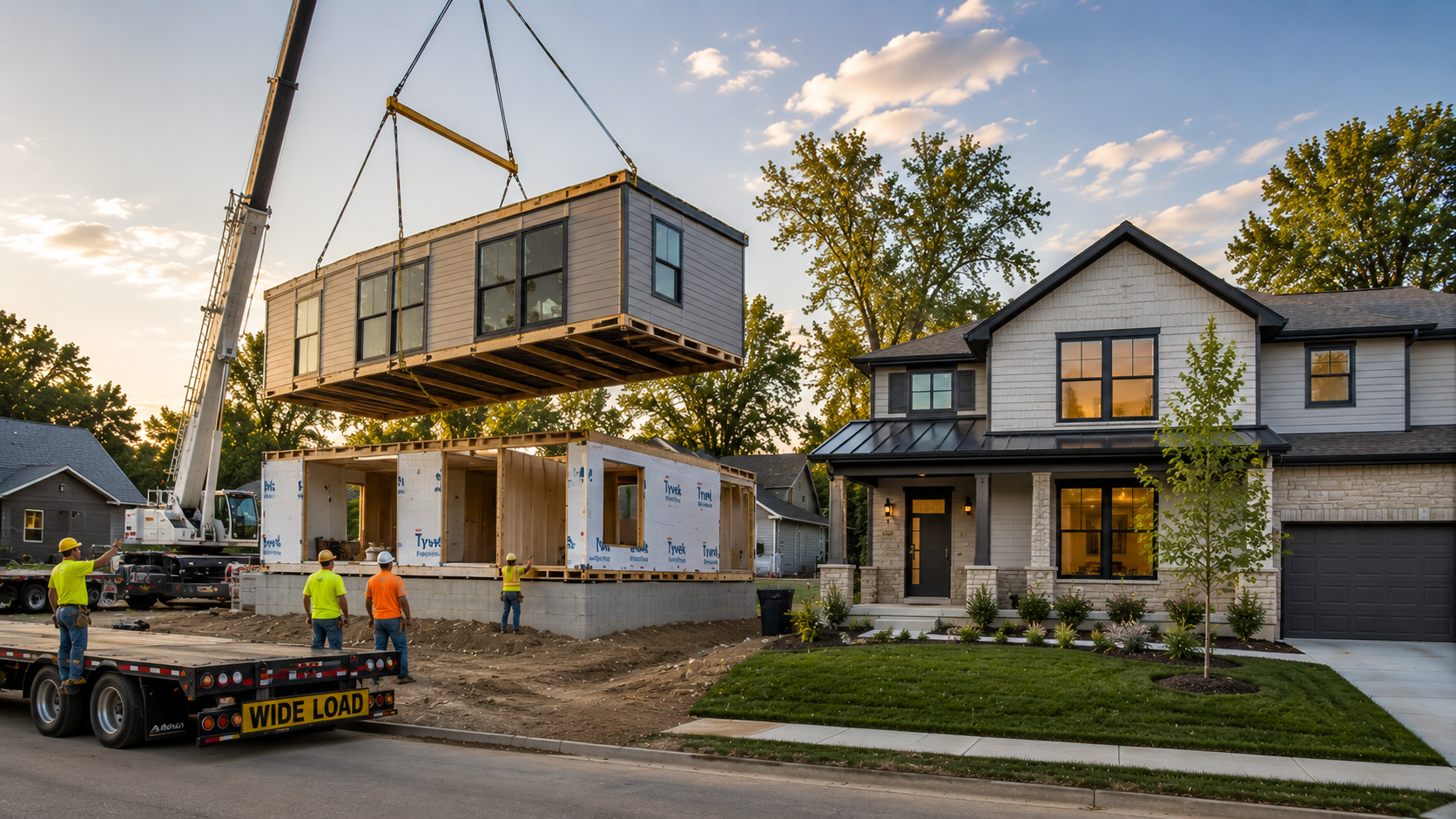
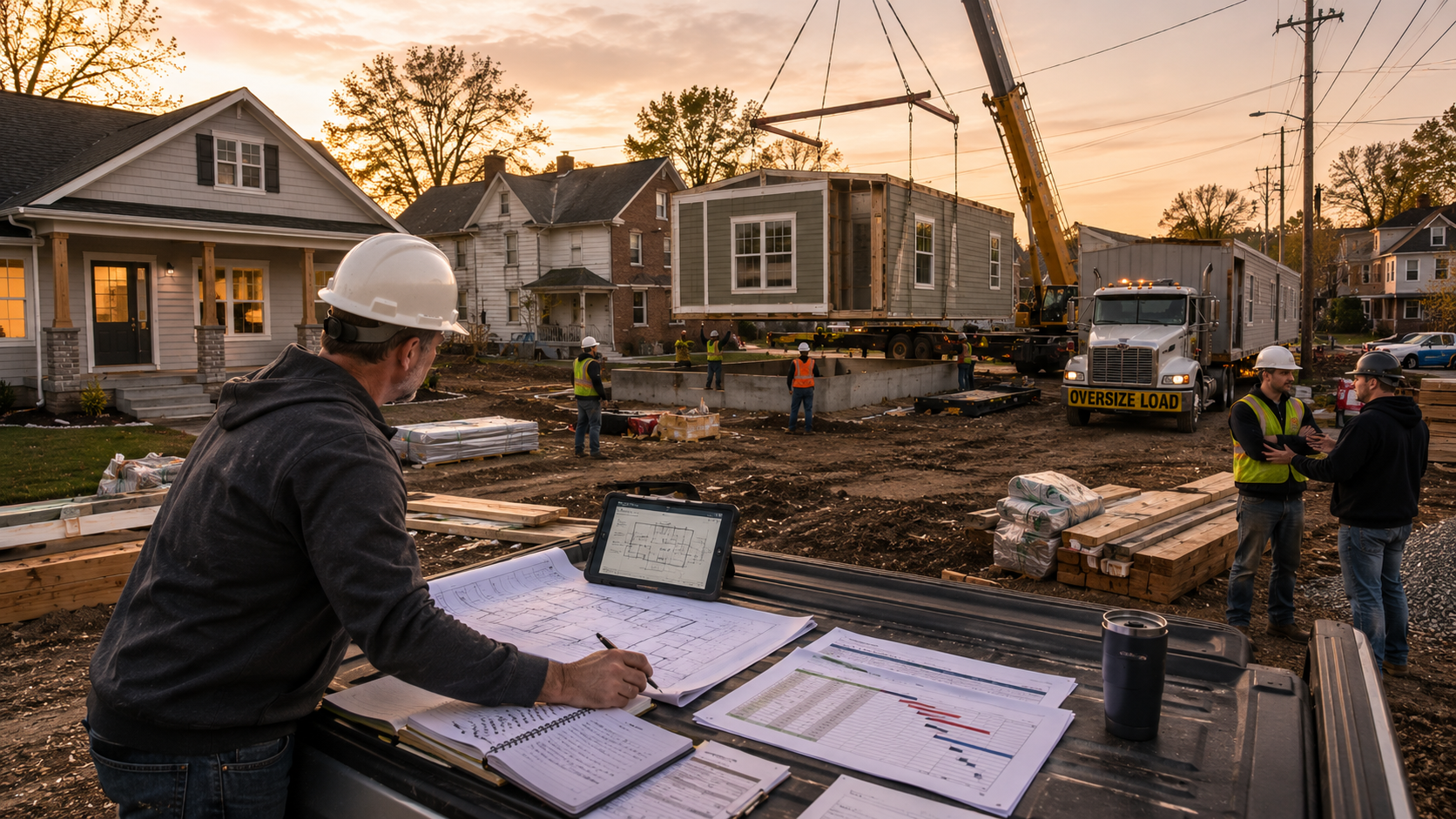
A modular home is built in sections inside a climate-controlled factory, transported to your lot on flatbed trucks, and assembled on a permanent foundation using a crane. Once the sections are set, local crews complete the utility hookups, interior finishes, and any site-specific work.
Here is the critical distinction: modular homes must meet the same International Residential Code (IRC) that every stick-built home follows. That means the same local building codes, the same inspections, the same structural requirements. Manufactured homes follow HUD federal code, which is a completely different standard.
When I build a stick-built home, I am working under the IRC. When a modular home gets set on a foundation in Kansas City, it is working under the same IRC. That matters for everything from insurance to appraisals to resale value.
2. The Real Cost Comparison: Modular vs Stick-Built
This is where most articles get lazy. They throw out "10 to 20 percent savings" without explaining what that actually means in practice.
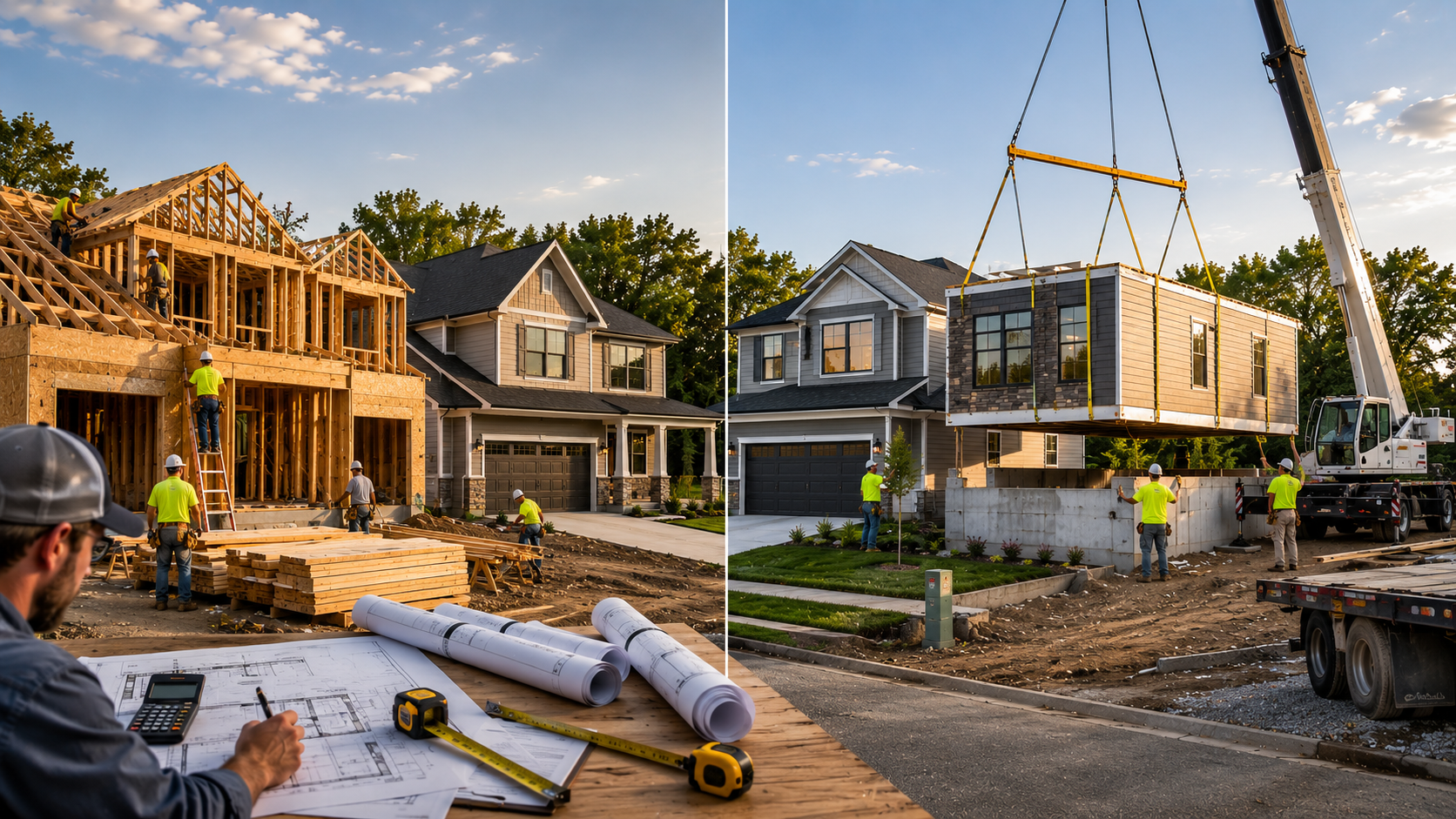
Here is how the math breaks down based on what I am seeing in the Kansas City market right now:
Stick-built new construction in the KC metro is running $150 to $200 per square foot for a modest spec home, depending on finishes, lot conditions, and subcontractor availability. A 1,200 square foot home comes in around $180,000 to $240,000 in construction costs before land.
Modular construction is running $120 to $160 per square foot for a comparable finished product. That same 1,200 square foot home comes in around $144,000 to $192,000 in construction costs before land.
But here is what the modular sales websites will not tell you: that number does not include site prep, foundation, utility connections, driveway, landscaping, or permitting. Those costs are the same whether you go modular or stick-built. And depending on your lot, site prep can account for 40 to 60 percent of your total project cost.
So the real savings on a modular build are typically 10 to 15 percent on the structure itself, not on the total project. On a $250,000 all-in build, you might save $25,000 to $35,000. That is real money, but it is not the "half the cost" number some websites throw around.
3. The Timeline Advantage Is Real (and It Is Significant)
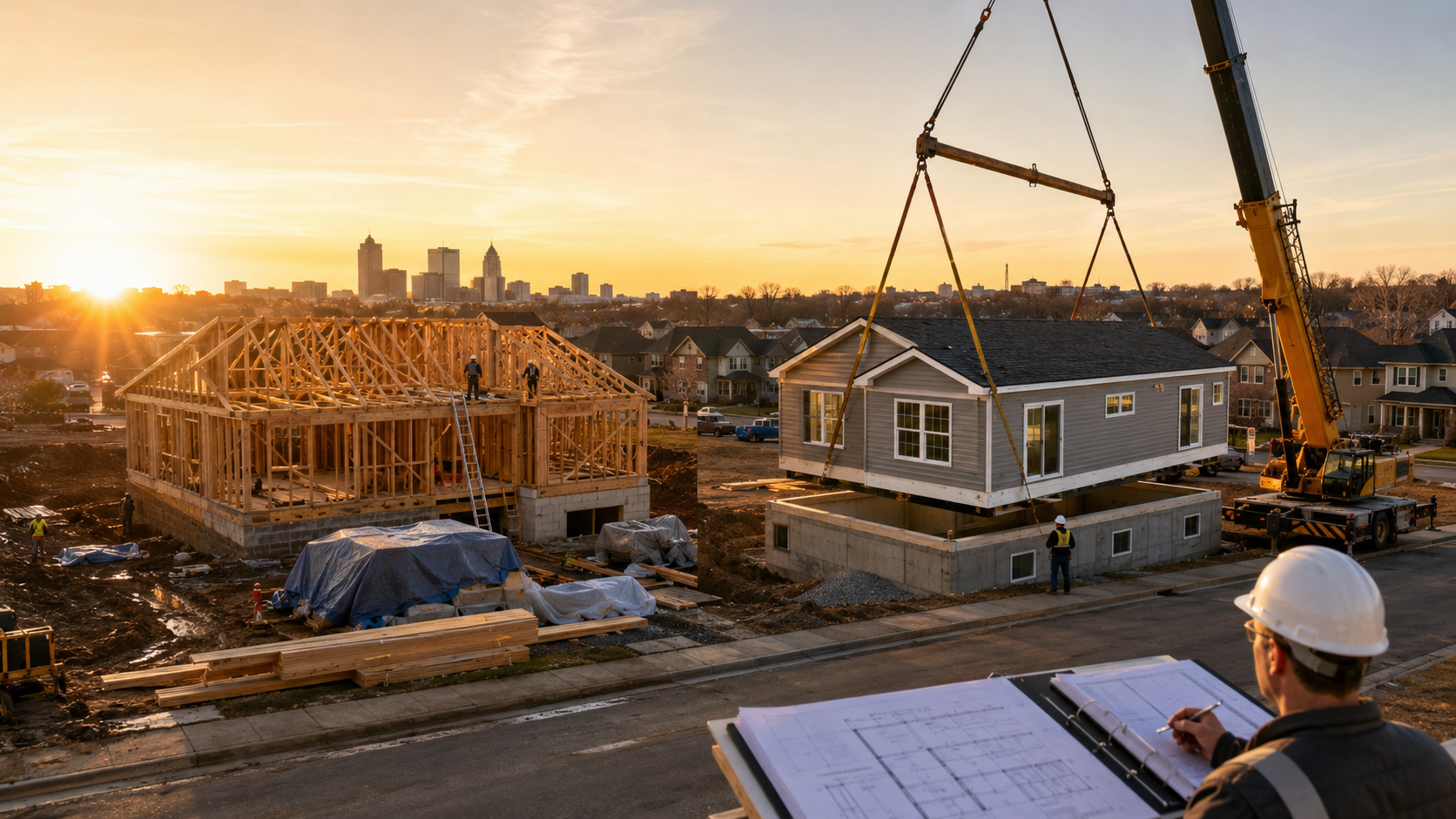
This is where modular genuinely wins. A stick-built home in Kansas City takes 5 to 8 months from permit to move-in, and that is if everything goes right. Rain delays, subcontractor no-shows, material backorders, and inspection scheduling can push that to 10 months or more.
A modular home can be factory-built in 6 to 10 weeks. Add another 4 to 6 weeks for foundation work, delivery, setting, and finish-out. Total timeline: 3 to 4 months from permit to move-in.
That is not a small difference. If you are carrying a construction loan, every month you are paying interest without living in the home. If you are renting while you wait, every month is money out the door. A 4-month savings on timeline can mean $8,000 to $15,000 in carrying costs you never have to pay.
For investors and builders working at scale, that timeline compression is where the real ROI lives. You can turn capital faster, which means more projects per year.
4. A Real Kansas City Case Study: What Is Happening in KCK Right Now
I do not have to speak hypothetically about modular homes in Kansas City. It is happening right now in Wyandotte County, and the results are worth paying attention to.
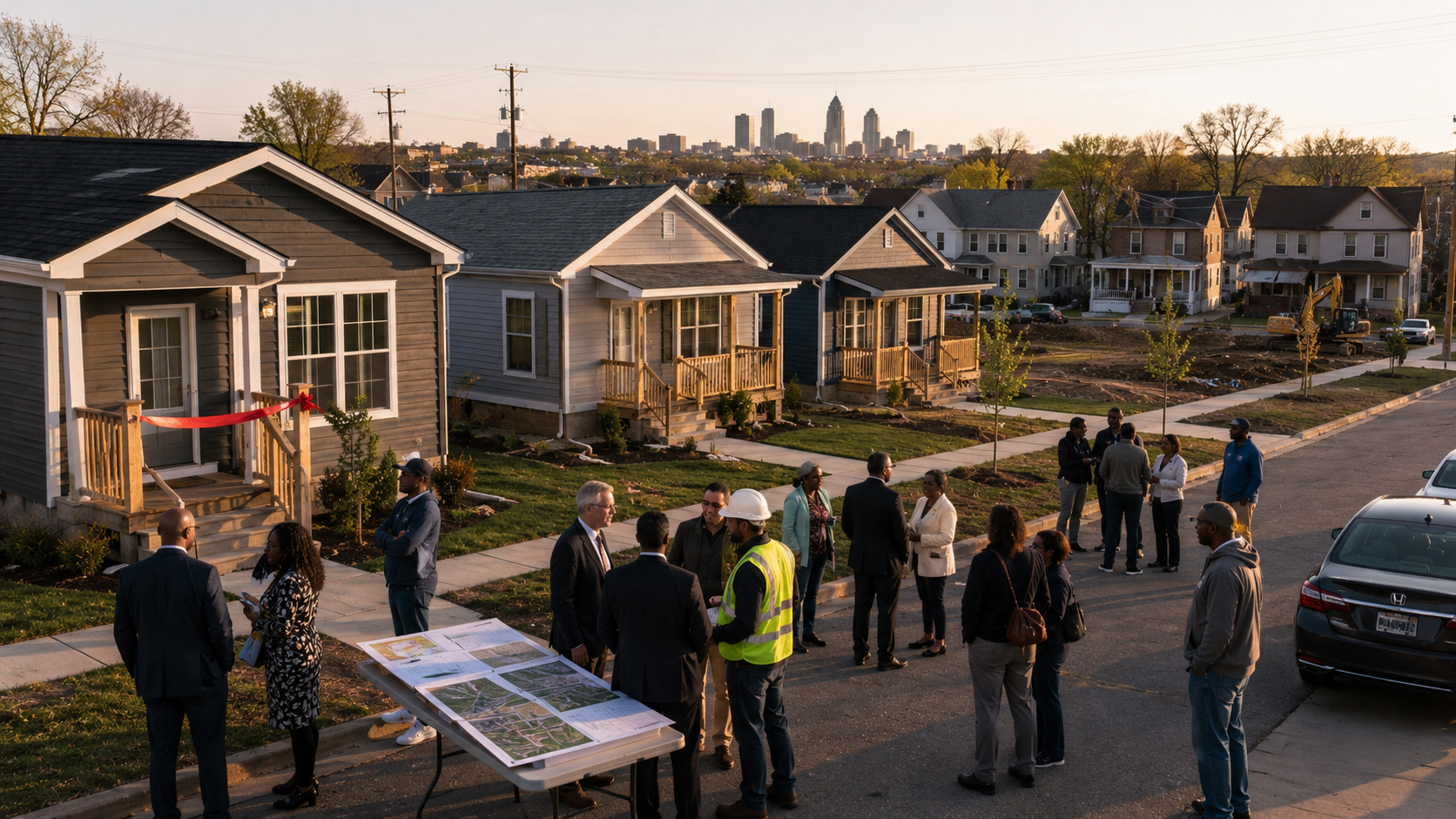
Developer Fran Sutton, who has over 21 years of experience in Wyandotte County real estate, partnered with the Unified Government of Wyandotte County, HUD, and Clayton Homes to build CrossMod-style modular homes on vacant land bank lots in the Klamm Park neighborhood. A ribbon cutting was held in March 2026 celebrating the first three completed homes, with 27 total planned in northeast KCK.
Here is what makes this project relevant to anyone asking "are modular homes worth it":
The price points. Sutton's homes in the Quindaro area are priced between $160,000 and $225,000 with grant assistance. Her Turner neighborhood builds are priced between $243,000 and $258,000. Those are attainable numbers for first-time buyers in a metro where the median home price is pushing $285,000 on the Missouri side.
The tax incentive. Buyers in Sutton's Turner projects get a 95 percent property tax abatement for five years. That is a massive carrying cost reduction that changes the entire affordability equation.
The community impact. Wyandotte County has over 4,300 vacant lots in its land bank generating zero property tax revenue. Every home built on one of those lots adds to the tax base, reduces blight, and raises property values for surrounding homeowners. If you own a home near these developments, check your home value here to see how the neighborhood trajectory is shifting.
5. The Appraisal and Resale Question (This Is Where It Gets Honest)
Here is where I have to give you the straight talk that modular home companies will not.
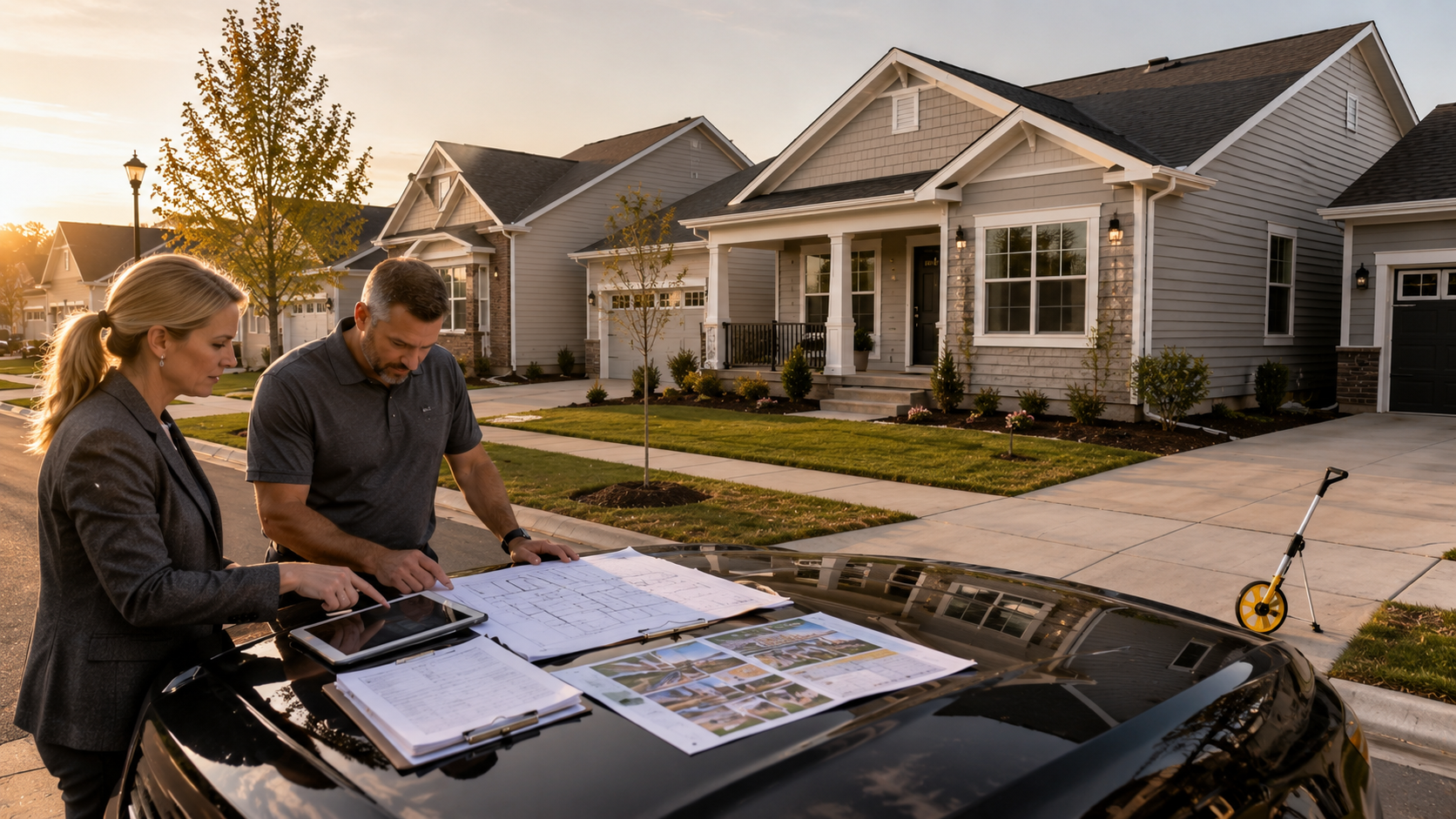
Appraisals can be tricky. Appraisers use comparable sales to determine value. If your modular home is the first one in a neighborhood of stick-built homes, the appraiser may struggle to find appropriate comps. That can result in a lower appraised value than your actual construction cost, which creates problems with financing.
However, and this is important, a modular home on a permanent foundation with a certificate of occupancy that was built to IRC code is legally and structurally identical to a stick-built home. Most appraisers will not even know the difference unless someone tells them. The MLS listing will not say "modular." The deed will not say "modular." It is a house.
Resale value depends on the same factors as any other home: location, condition, finishes, and comparable sales in the neighborhood. A well-built modular home in a good neighborhood with quality finishes will hold its value the same as a stick-built home. A poorly finished modular home on a bad lot will not, just like a poorly finished stick-built home on a bad lot.
The stigma is fading. Ten years ago, I would have told you modular hurt resale. Today, with buyers focused on affordability and new construction premiums climbing, the market does not care how the walls were assembled. It cares about what the home looks like, feels like, and costs.
6. The Modular Home Pros and Cons Nobody Else Will Tell You
I have seen enough construction projects go sideways to give you the real list, not the marketing version.
Genuine pros:
Faster build timeline reduces carrying costs and weather risk. Factory-controlled environment means tighter construction tolerances and less material waste. Cost per square foot is typically 10 to 15 percent lower on the structure. Energy efficiency is often better because factory assembly allows for tighter sealing of the building envelope. You get a finished home faster, which means you start building equity sooner.
Genuine cons:
Site prep and foundation costs are identical to stick-built, so total savings are smaller than advertised. Customization is limited compared to a fully custom stick-built home. Transportation logistics can be expensive if your lot is far from the factory or on a difficult road. Some lenders still treat modular construction differently in underwriting, so your financing options may be narrower. If the factory makes an error, fixing it on-site can be more expensive than fixing a stick-built error because the walls are already closed up.
The con nobody talks about: Finding a local general contractor willing to manage a modular set and finish-out can be difficult. Most GCs make their money on the full build. When you hand them a home that is 80 percent complete, their margin shrinks and their interest drops. That means you may end up managing more of the process yourself than you expected.
7. So Are Modular Homes Worth It? Here Is My Builder's Verdict
After building 100+ stick-built homes and watching the modular industry mature over the last decade, here is where I land:
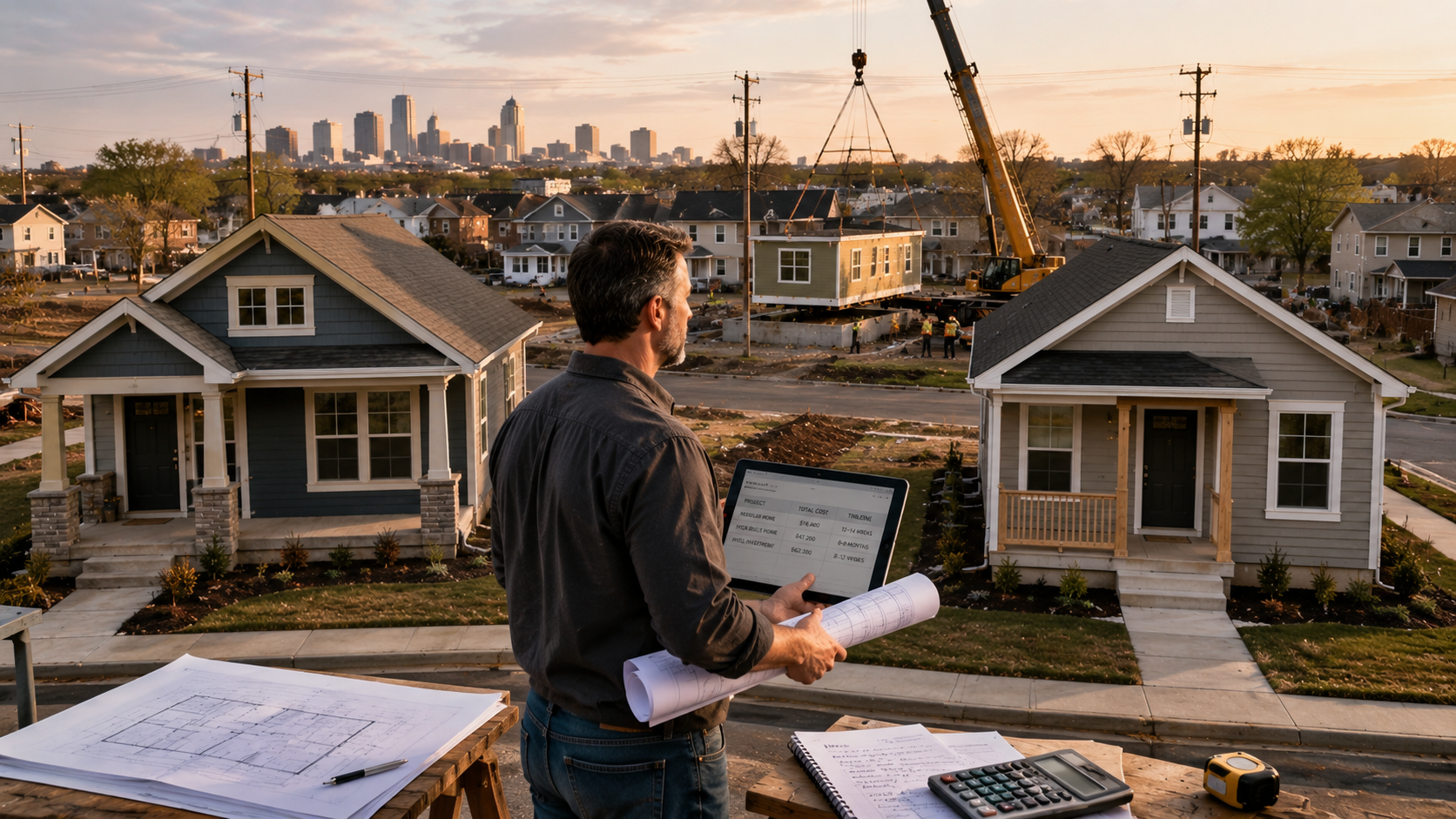
Modular homes are worth it if you are building on a lot with clean site conditions, you are working with a reputable modular manufacturer, you have realistic expectations about total project cost (not just the structure cost), and you value speed to occupancy.
Modular homes are especially worth it if you are an investor building multiple units on infill lots where time is money. The Fran Sutton model in KCK is proof of concept. Buy a land bank lot for a few thousand dollars, set a modular home, and sell for $160,000 to $258,000. The math works when you can compress timelines and control costs.
Modular homes are NOT worth it if you want a highly customized floor plan, your lot has significant grading or access challenges, or you are in a high-end market where buyers expect fully custom finishes. In those cases, stick-built is still the better path.
For most buyers and investors in the Kansas City market, the honest answer is: modular is a legitimate option that deserves serious consideration, especially at price points below $300,000 where every dollar of savings matters.
If you are an investor looking at cash home buyers in Kansas City opportunities and want to understand how modular fits into your deal flow, I analyze 10 to 12 properties a week and can walk you through the numbers.
Ready to Talk Through Your Options?
Whether you are thinking about building modular, selling a property near new construction, or exploring investment opportunities in the KC metro, I can help you run the numbers and figure out your best move.
Here is how to get started:
Get a cash offer on your property: Request your cash offer here
Find out what your home is worth: Free home value estimate
See how we market homes: Our 100-Point Marketing Plan
Browse active listings in KC neighborhoods: See featured listings
Talk to me directly: Schedule a call with Jason DeLong
I am Jason DeLong, the best realtor in Kansas City for buyers, sellers, and investors who want real construction knowledge behind their real estate decisions. Not guesswork. Not generic advice. Real numbers from someone who has actually built the homes.


