
2026 Election & Kansas City Real Estate: What Changes Now
Election 2026 and Kansas City Real Estate: What Happens to Home Prices and Mortgage Rates?
Nov 5, 2026 · @Jason DeLong
Hey, I'm Jason DeLong with Heartland Homes KC and eXp Realty. I've been a licensed Kansas City real estate agent since 2007. I've built over 100 homes and flipped over 150 homes personally, so I know a thing or two about the process.
The election just wrapped, and my phone hasn't stopped ringing. Buyers, sellers, and investors across the Kansas City metro keep asking me the same thing. What does this do to home prices and mortgage rates?
So let's answer it the way I underwrite a deal. Look at what moved rates and prices in the past. Look at what actually changed this week. Then decide what it means for your move. If you'd rather skip ahead and run your own numbers with me, schedule a call here.
One promise up front. This is facts only. No cheering and no blaming. Just what happened, what's on the table, and what the numbers say.
Published November 5, 2026. Figures are current as of this date. I'll update this post as results are finalized.
The Quick Answer
Did the 2026 election change mortgage rates? Not directly. Rates follow inflation, Federal Reserve policy, and Treasury yields.
Did it change Kansas City home prices overnight? No. Local supply, pricing, and condition still drive results.
What did change? The process. Starting in January 2027, Congress and the White House will be controlled by different parties. New housing or tax laws will take negotiation.
What did most people miss? A major federal housing law, the 21st Century ROAD to Housing Act, already became law in July 2026 with broad bipartisan support.
What should you watch? Real mortgage quotes, your county's property assessments, and your own monthly payment.
Same House, Same Loan, Different Decades
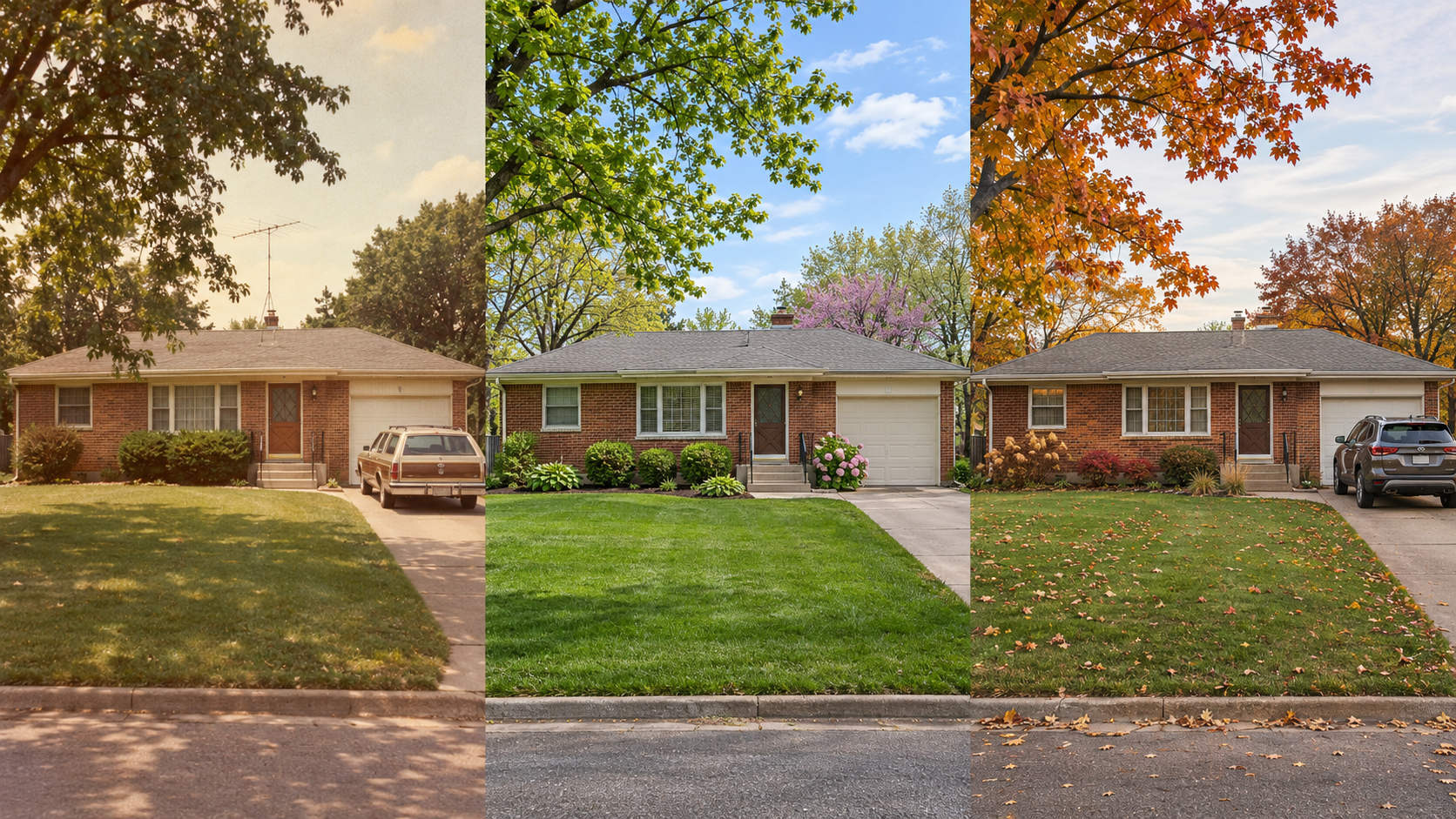
Here's the number that puts everything in perspective. Take a median-priced Kansas City home at about $332,000. Put 5% down. That leaves a loan of about $315,400.
Here's the monthly principal and interest on a 30-year fixed mortgage at four different moments in history:
October 1981 (18.63%): about $4,916
January 2021 (2.65%): about $1,271
October 2023 (about 7.8%): about $2,270
Today (about 7.3%): about $2,162
Notice what's missing from that list? An election result. The number that sets your payment isn't on the ballot.
These payments exclude taxes, insurance, and mortgage insurance. They're an illustration only, not a loan quote.
What Did the 2026 Election Actually Change?
Democrats won majorities in both the U.S. House and the U.S. Senate on November 3, according to the Associated Press and other major outlets. Some races are still being counted, so final seat totals can still move.
President Trump remains in office. The new Congress is seated in January 2027. That means divided government for the next two years. One party controls Congress. The other holds the White House. The country has been here many times before.
What It Means for Your Mortgage Today
Nothing about your mortgage, closing costs, or property tax bill changed on Wednesday morning. Every law on the books Tuesday is still on the books.
What It Means for Future Housing Laws
What changes is the process. A new housing or tax bill has to pass the House and the Senate. Then the president has to sign it, or Congress has to override a veto. That usually means negotiation. Sometimes it means gridlock. History has plenty of both.
How Have Mortgage Rates Changed Through the Years?

To understand today's rates, you need the whole timeline.
1930s to 1940s: Before the Depression, many home loans were short-term, often five to ten years, with a big payment due at the end. The Federal Housing Administration (1934), Fannie Mae (1938), and the GI Bill (1944) helped make the long-term fixed-rate mortgage the American standard. Those same programs graded neighborhoods by race, a practice called redlining. It shaped the map of Kansas City neighborhoods for decades.
1971: Freddie Mac began surveying lenders weekly. The first 30-year average, in April 1971, was about 7.3%.
1981: The all-time high. The week of October 9, 1981, the 30-year average hit 18.63% during the fight against runaway inflation.
1990s to 2000s: Rates drifted down. Since 1990, the average has been closer to 6%.
2008: The financial crisis. Fannie Mae and Freddie Mac went into federal conservatorship.
2010s: Rates mostly stayed between about 3.5% and 4.5%. 2016 had the lowest annual average on record, around 3.65%.
January 2021: The all-time low, 2.65%.
2022 to 2023: Inflation returned and the Fed raised rates fast. The 30-year average climbed from about 3.2% in January 2022 to roughly 7.8% in October 2023.
2026: Rates sat in the low 6s early this year, then climbed. Late October surveys put the 30-year fixed average right around 7.3%.
The Lesson I Learned Building Through 2008
I was developing subdivisions across the Kansas City metro from 2005 through 2009. I watched 2008 hit builders, buyers, and lenders all at once. What moved that market wasn't a ballot. It was credit drying up.
That's the pattern in every era above. Inflation, the Federal Reserve, a financial crisis, a pandemic. That's why most economists tell you to watch inflation reports, the Fed, and Treasury yields.
Is 7.3% Actually High?
Here's the part that surprises people. The average 30-year rate since 1971 is about 7.7%. Today's rate is higher than a year ago, but it's below the long-run average.
The unusual era wasn't now. It was 2021. Many owners locked into rates in the 2s and 3s are reluctant to give them up. Economists often cite that as one reason fewer homes come to market.
What Is Washington Doing About Housing?

Federal housing policy didn't start this week. And it hasn't belonged to one party. Three things happened in 2026 that most people never heard about.
January: The administration directed federal housing agencies to limit large institutional investors. It also directed Fannie Mae and Freddie Mac to buy $200 billion of mortgage bonds, aiming to lower rates.
June: Congress passed the 21st Century ROAD to Housing Act. The House vote was 358 to 32, and it cleared the Senate with wide bipartisan support. It's been described as the broadest federal housing package since 1990.
July 11: It became law without the president's signature. He neither signed nor vetoed it, so it took effect automatically after the ten-day window.
What's in the ROAD to Housing Act?
The law covers manufactured housing, FHA rules, and incentives for cities and counties to ease barriers to building.
It also stops large institutional investors from buying more single-family homes. The law defines them as owners of 350 or more single-family homes. That rule takes effect January 7, 2027. There are carve-outs, including some build-to-rent projects.
Here's the reality check. Institutional investors own only about 2% of single-family rentals nationally, per the Government Accountability Office. The rule doesn't force anyone to sell. Most analysts see it as a long-term shift, not an overnight inventory fix.
Where Each Side Says It Goes Next
Democratic leaders say affordability is their focus. They emphasize building more affordable homes and point to the ROAD to Housing Act as a model.
The administration and Republican leaders emphasize lowering borrowing costs and limiting large investors. The president has said interest rates are the bigger lever.
Economists add a point that applies regardless of party. Lower rates help your monthly payment. But if no new homes get built, more buying power can push prices up. Building more homes helps too, but it takes years.
As someone who has built over 100 homes, I can tell you that second part is real. Land, zoning, utilities, and permits don't move at the speed of a news cycle.
Several other bills sit in committee, including a first-time homebuyer tax credit and a proposal to raise the capital gains exclusion on home sales. They could move in a tax package or the next Congress. Could. Not will.
What Happened on the Missouri and Kansas Ballots?
A big piece of your monthly cost is decided closer to home than Washington. Property taxes and insurance often move your payment as much as a rate change.
Missouri
Amendment 7 asked voters to create the Show-Me Prosperity Fund, a state investment fund that supporters said could eventually replace some state taxes. Unofficial results show voters rejected it, so the current system stays in place.
Kansas
The open governor's race between Cindy Holscher (D) and Ty Masterson (R) was one of the closest in the region. Both candidates promised property tax relief, by different routes. If you own in Johnson County or anywhere on the Kansas side, watch what the next governor and legislature actually pass.
Jackson County Property Taxes
In 2023, Jackson County reassessments jumped sharply for many homeowners. A class action followed. The proposed settlement could return roughly $250 million to about 207,000 property owners through tax credits. The final approval hearing is set for November 23, 2026. No credits flow until the court makes it final.
None of these results means Kansas City homeowners will automatically see lower property taxes next year. Look up your own address. Don't guess. A good starting point is a free home value review, so you can compare what the county thinks your home is worth with what the market says.
What Is the Kansas City Housing Market Doing Right Now?
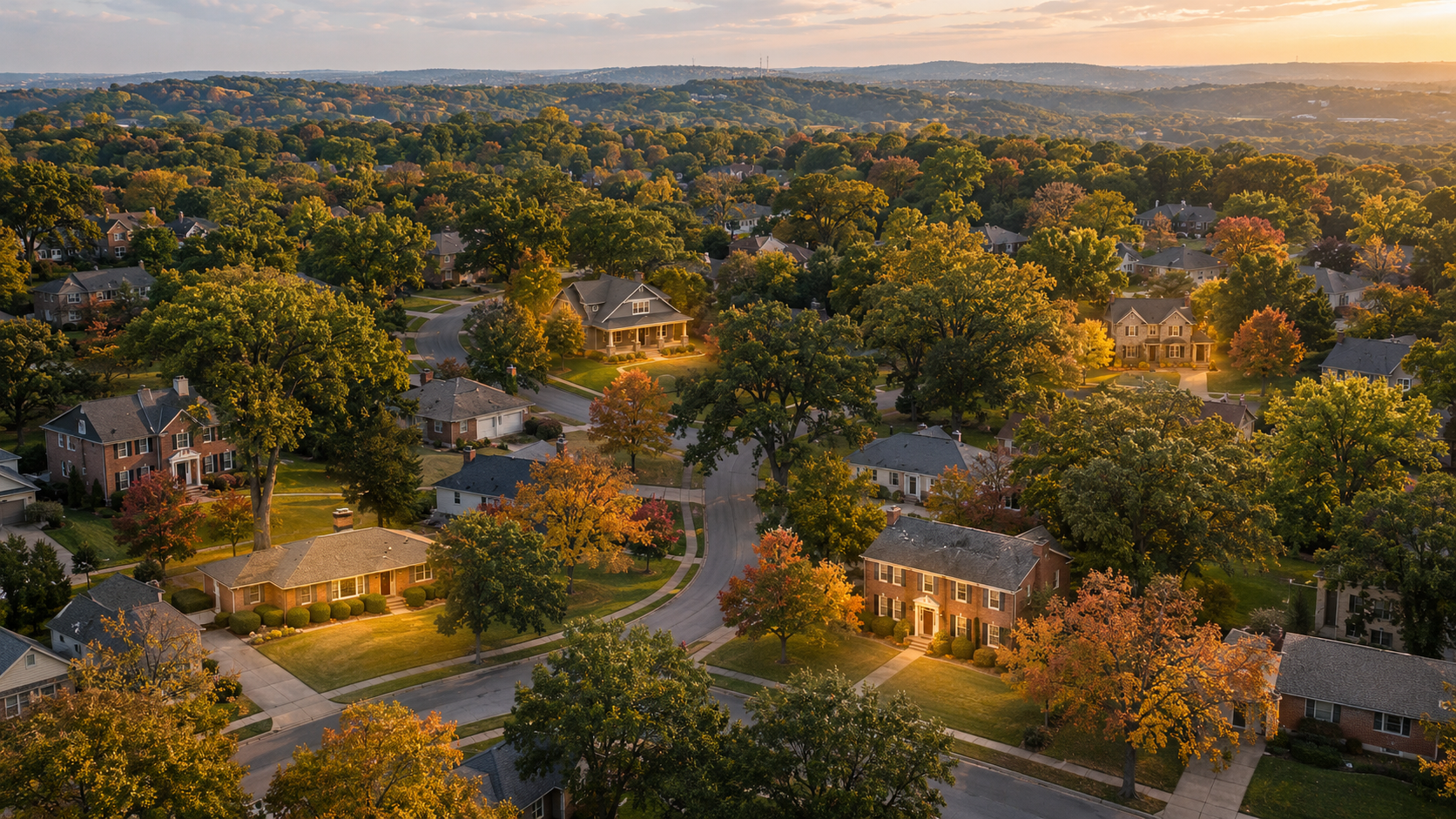
The latest Heartland MLS numbers for September 2026 show 3,116 closed sales, a median sale price of about $332,000, and about 2.8 months of supply.
For context, about six months of supply is considered balanced. At 2.8 months, the metro still leans toward sellers. It's not a frenzy and it's not a crash. It's a market where preparation matters.
Those are metro averages. Conditions vary a lot across Kansas City neighborhoods. Some of the best neighborhoods in Kansas City for families still see multiple offers on well-priced homes. Other pockets, especially at higher price points or with dated homes, are seeing longer days on market.
The Number I Watch Most
On that same $315,400 loan, a payment at 7.3% is about $2,162. At 6.3%, it's about $1,952. That's roughly $210 a month for every full point. Taxes, insurance, and mortgage insurance would be on top of both.
That's why I tell clients to compare monthly payments, not headlines. If you're wondering whether this market favors you, I broke down the current seller numbers in Is Now a Good Time to Sell My Home in Kansas City?
What Could Happen in 2027? (Scenarios, Not Predictions)
If Rates and the Economy Ease
More showings and offers
Shorter days on market
Less need for seller concessions
Better financing that helps new construction demand
If Affordability Stays Tight
Buyers stay selective and price sensitive
Homes sit longer
Rate buydowns stay useful
Builder incentives stay important
One thing I would not expect is a sudden wave of price drops just because Congress changed hands. A well-priced home in a good location with limited competition can still sell fast. An overpriced home with deferred maintenance can sit, no matter who won.
What Should Buyers, Sellers, and Investors Do Now?

If You're Selling
Price for today's market, not last year's. Fix what buyers notice first. And ask about concessions. In some cases, a seller concession can help a qualified buyer with an eligible rate buydown or closing costs, subject to the buyer's loan program and lender approval.
At Heartland Homes KC, I don't hand every seller the same plan. Some sellers want speed and certainty. If that's you, you can compare cash offers here and see what cash home buyers in Kansas City would actually pay. Others want top dollar on the open market, which is where our 100-point marketing plan comes in. And if you're thinking about going it alone, read our Kansas City for sale by owner guide first.
If you're competing with new homes in your area, my breakdown of new construction vs. resale in Kansas City shows how sellers win that comparison.
If You're Buying
Compare monthly payments, not just purchase prices. Get real quotes from a lender, and ask what's negotiable. If you're shopping new construction, read the truth about builder incentives in Kansas City neighborhoods before you sign anything.
If You're Investing
Underwrite today's rates, insurance, taxes, and realistic maintenance. Don't build the deal around a refinance you hope will happen. I analyze deals every week, and the ones that hurt investors are almost always the ones that only work at a lower rate.
The new investor limit applies only to owners of 350 or more single-family homes and starts January 7, 2027. For local investors, it changes very little in the short term.
If You're Building or Developing
Watch actual changes, not headlines. Track local zoning, county assessments, state incentives, and how cities and counties respond to the new federal law. With an architecture degree and decades of development behind me, I can tell you the opportunities show up in the zoning details long before they show up in the news.
Frequently Asked Questions
Will mortgage rates go down because of the 2026 election?
Not directly. Rates are driven mainly by inflation, Federal Reserve policy, and Treasury yields. The election may shape future housing and tax policy, but it doesn't set the rate you'll be quoted.
Will Kansas City home prices drop after the 2026 midterms?
There's no data showing an immediate drop caused by the election. In September 2026, the Heartland MLS median sale price was about $332,000 with about 2.8 months of supply. That still leans toward sellers. Local pricing and condition matter most.
What are mortgage rates right now?
Late October 2026 surveys put the 30-year fixed average around 7.3%. Your actual rate depends on your credit, down payment, and loan type.
Is 7.3% a high mortgage rate historically?
It's higher than a year ago but below the roughly 7.7% average since 1971. It feels high because rates were near 3% in 2021.
What is the 21st Century ROAD to Housing Act?
It's a bipartisan federal housing law that took effect on July 11, 2026. It covers housing supply, FHA rules, manufactured housing, and local building barriers. It also stops large institutional investors (350 or more single-family homes) from buying more, starting January 7, 2027.
Will property taxes go down in Kansas City after the election?
Not automatically. Property taxes are set largely at the county and state level. Jackson County has a pending assessment settlement, and both Kansas candidates for governor promised property tax relief. Check your own assessment.
Is Kansas City a buyer's market or a seller's market?
With about 2.8 months of supply in September 2026, the metro leans toward sellers. About six months is considered balanced. It varies by neighborhood and price range.
Who buys houses for cash in Kansas City without repairs?
Cash home buyers in Kansas City range from local investors to national iBuyers. The smart move is to compare several offers side by side against what your home could net on the open market. A local Kansas City real estate agent can lay those options out for you.
Is now a good time to buy or sell in Kansas City?
It depends on your timeline, finances, and goals. Compare your monthly payment at current rates, get a lender quote, and look at recent sales in your specific area before deciding.
The Bottom Line

Eighteen point six three percent in 1981. Two point six five in 2021. Around seven point three today. Every one of those moves had a headline. And every one was driven by inflation, the Fed, and the economy.
The election may change housing policy over time. It hasn't changed the basics of buying or selling a home overnight. Affordability, mortgage rates, inventory, and local pricing still drive the market.
So don't try to time politics. Make your decision based on the numbers and the opportunities in front of you.
Let's Run Your Actual Numbers
Thinking about buying, selling, or investing in the Kansas City metro? I'm Jason DeLong with Heartland Homes KC, and I'll walk you through every option, from a cash offer to a full market listing, so you can maximize your net, not just your price.
Schedule a call with me here, or call or text 816-651-5190.
Jason DeLong | Heartland Homes KC and eXp Realty
This article is for informational purposes only. It is not tax, legal, or financial advice and is not an endorsement of any party or candidate. Mortgage rates, programs, and eligibility vary. Talk with your lender and tax professional about your situation.


